by Thomas Lepeltier, Le Point, 19 October 2023 and 16 May 2024
Our civilisation is supposedly eradicating living things, technology is said to be a ‘cancer’ and degrowth a physical necessity: such are the theses of the astrophysicist Aurélien Barrau. Both articles examine them and conclude that they stand up neither to the data nor to logic.
In brief
- 19 October 2023: on the subject of the essay L’Hypothèse K, the author challenges the idea that technology is a ‘cancer’: if it had to be eliminated, the result would be destitution, and the astrophysicist himself says he does not want to go backwards.
- He considers the figures put forward to be stripped of their context: mortality from air pollution has been falling for decades, more than 90% of deaths are concentrated in low- and middle-income countries, and French forest cover has been growing for two centuries.
- 16 May 2024: the second article reviews the astrophysicist’s public statements: the eradication of living things by the West, degrowth presented as a physical necessity, and the rejection of nuclear fusion, space exploration and many recent technologies.
- For the author, a finite Earth does not require us to shrink straight away, and a number on its own means nothing without a trend.
- He does not deny environmental problems: he challenges the way they are presented, which in his view undermines the ecological cause.
1. The first article: the ‘K hypothesis’
Thomas Lepeltier, Le Point, 19 October 2023 · Read the article ↗
The first piece deals with the essay L’Hypothèse K. La science face à la catastrophe écologique (Grasset), published the day before. In it, the astrophysicist writes that science could ‘help to accelerate the collapse’ of life on Earth unless it is given back a poetic dimension, and argues for a ‘nomadic’ science that proudly bears ‘its inconsistencies and contradictions’. For the author, these formulations do not say clearly what they are proposing, whereas science needs clarity and rigour.
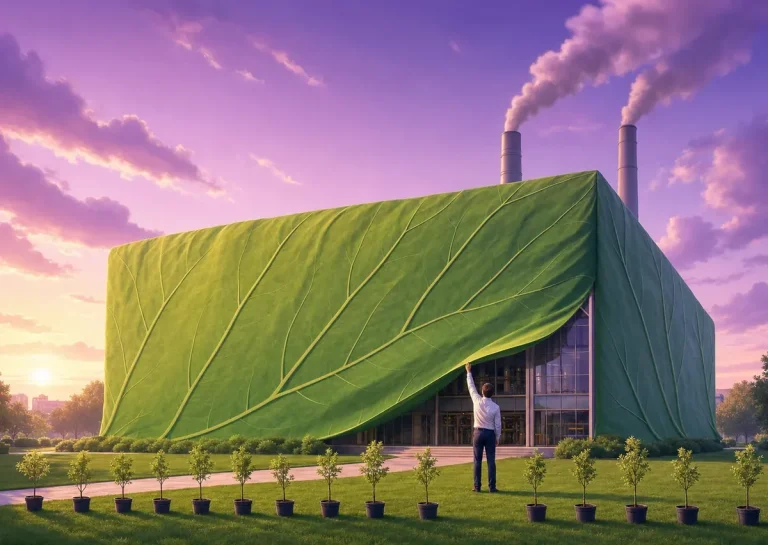
At the heart of the book is the ‘K hypothesis’: technology is said to be a cancer, hence the K for karkinos, the Ancient Greek word for crab. Yet, the author objects, if technology is a cancer, we must get rid of it, which leads to a society of destitution. The astrophysicist has in fact anticipated this: he says he does not want to destroy the technical arsenal or return to the age of the caves. But then, why speak of cancer? The thesis is, in the author’s view, either appalling or empty.
The environmental diagnosis is examined in the same way. The ‘hundreds of thousands’ of annual victims of air pollution? This mortality has been falling for decades, and more than 90% of deaths are concentrated in low- and middle-income countries. Two thirds of trees lost in a few millennia? In France, forest cover has been increasing for two centuries, and cutting down trees to build homes, heat them and cook food is hardly a desire to eradicate living things. Environmental problems exist, the author reminds us, but they are open to debate: he points to Jacques Lecomte’s book, Rien n’est joué (Les Arènes, 2023), which shows that the situation cannot be reduced to apocalyptic formulas and highlights the role of such discourse in eco-anxiety.
‘We need to make comparisons and assess trends if we hope to draw sensible conclusions.’Thomas Lepeltier, Le Point, 19 October 2023
2. The second article: from slogans to reasoning
Thomas Lepeltier, Le Point, 16 May 2024 (abridged version; full version on the author’s website) · Read the article ↗
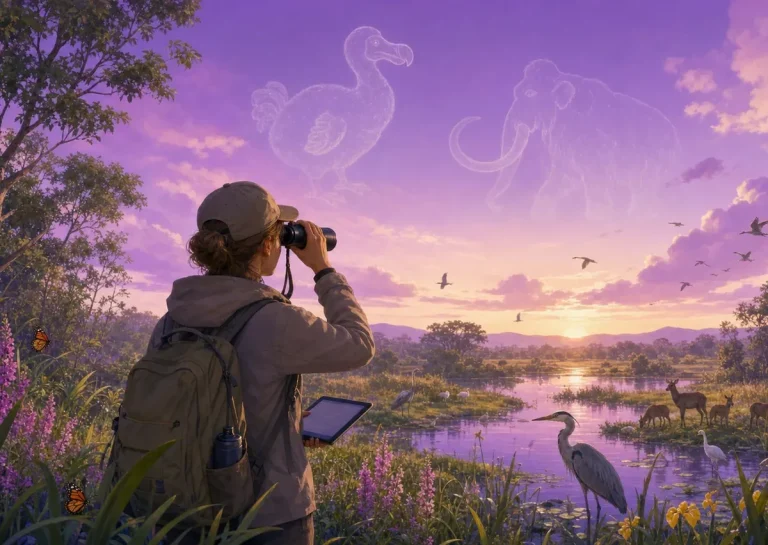
The second text starts from the astrophysicist’s talk at the Medef summer university in August 2022, and reviews the theses he repeats from one lecture to the next. First, the West is said to be eradicating living things: we supposedly wiped out two thirds of insects in a few years, of wild mammals in a few decades and of forests in a few millennia. According to the author, the figure on insects does come from scientific studies, but from localised studies that cannot be generalised; and these declines are above all the counterpart of housing and farming, not a will to exterminate. In France, forest lost around 70% of its area over two thousand years, but it has almost doubled since its low point in the early 19th century.
Next, our society is said to be inhuman: we often hear of 600,000 premature deaths a year in Europe due to air pollution and of a child dying of hunger every six seconds worldwide. The author replies that a number on its own means nothing without a trend: these deaths fall with development, people in less industrialised countries suffer most from air pollution (rudimentary heating and cooking), and growth has lifted millions of people out of poverty. Likewise, the fact that infinite growth is impossible on a finite Earth does not mean we must shrink straight away: growth can continue for decades, even centuries. It would be, he writes, like advising people to leave the solar system as quickly as possible because the Sun will not shine for ever.
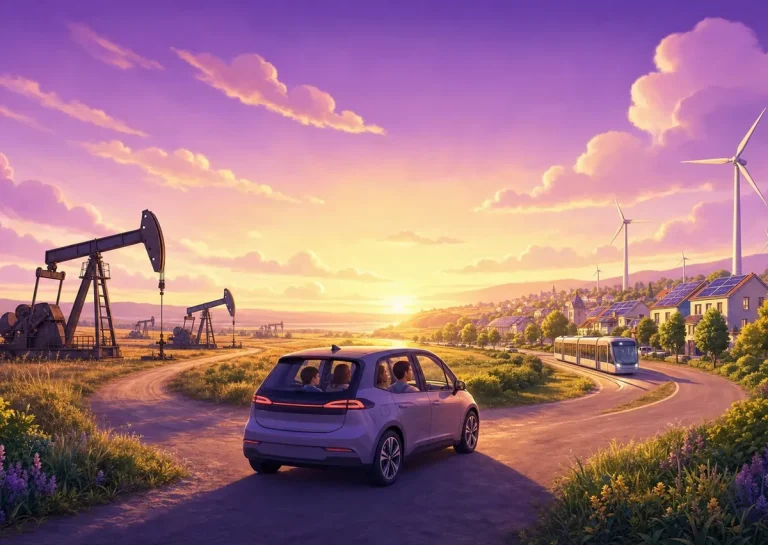
Lastly, technology: the rejection of nuclear fusion, whose success would be, according to the astrophysicist, the worst of catastrophes, as well as of space exploration, social media and artificial intelligence. The author also points out tensions: science should be ‘poeticised’ and has no privileged relationship to truth, yet the theses being defended are supposedly scientifically proven; degrowth would not require giving up either prosperity or advances in medicine. In his view, these slogans harm the cause they claim to serve, all the more so as they rely on the authority of a physicist.
‘a cause is never well served by bad arguments’Thomas Lepeltier, Le Point, 16 May 2024 (full version)
Why this debate interests us
Aurélien Barrau’s theses are very prominent in the public debate on ecology. APALA shares Thomas Lepeltier’s analysis: a cause is never well served by bad arguments, and ecology needs facts and trends rather than apocalyptic slogans. The first text, moreover, draws on the book by Jacques Lecomte, a member of our expert committee. The second article is sharper in tone: we retain only its arguments, which concern public theses and not the person.
Questions for debate
- Does catastrophist discourse mobilise people, or does it feed eco-anxiety?
- Is a single figure, even an accurate one, enough to judge the state of the environment without looking at trends?
- Does a finite Earth require us to shrink right now, or does it leave time for growth and innovation?
- Should science remain committed to rigour, or open itself to other registers, such as poetry?
To go further on apala.fr
Summary written by Claude (Opus 5.5 model), an artificial intelligence, for APALA, based on the two articles published in Le Point on 19 October 2023 and 16 May 2024 (the latter in its full version, on the author’s website). The positions expressed are those of the author. An error? Write to us.
Read the 2023 article on Le Point ↗Read the 2024 article on Le Point ↗Read the 2024 full version ↗

0 comments