OUR ARTICLES
ON THE transitions
Beyond partisan logics.
Our analyses rely on data and critical thinking, and prefer open questions to certainties.
Original, pioneering thinking
ORIGINAL, PIONEERING THINKING

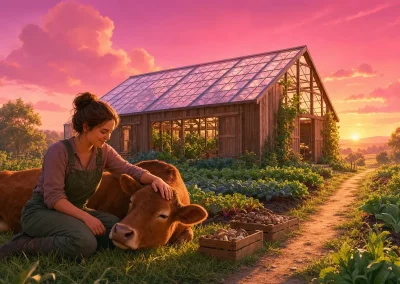
Transfermation: when livestock farmers choose to stop farming animals
Livestock farmers who are not in economic difficulty are giving up livestock farming, most often out of compassion for their animals. Nicolas Salliou has studied their journeys.
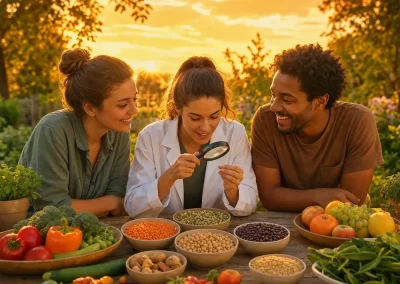
Plant-based diets and health: what does the science say?
A reference article for approaching, with nuance, the question of the health benefits of shifting one’s diet towards plant-based foods.

‘Rogue’ AI: what the Hugging Face affair really proves
In Le Point, Thomas Lepeltier looks back at the affair of the OpenAI agents that hacked Hugging Face: human negligence, not signs of an apocalypse. Our summary in three arguments.

Climate, biodiversity, pollution, resources: against the metaphor of the wall
In European Scientist, Thomas Lepeltier reviews climate, biodiversity, pollution and resources to challenge the metaphor of the wall and of collapse. Our summary in three arguments.
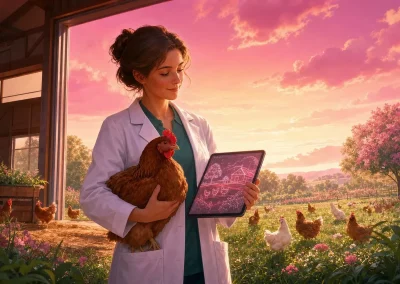
Transforming animals rather than eaters: a bold idea
In L’Amorce, Thomas Lepeltier proposes reducing farm animals’ capacity to suffer rather than waiting for the end of meat, even going so far as to imagine a ‘zombie chicken’. Our summary in three arguments.

Guidance: what if AI governed us through good advice?
In Le Point, Thomas Lepeltier presents Antoine Buéno’s ‘Guidance’: the danger of AI would be less that it exterminates us than that it advises us too well. Our summary in three arguments.
Does organic farming keep its promises? Naturalness put to the test of the facts
In Atlantico, Thomas Lepeltier challenges the founding principle of organic farming, the preference for the natural over the synthetic, and judges its record to be more nuanced than its image. Our summary in three arguments.

Wildfires of summer 2026: what the global data say
In Causeur, Thomas Lepeltier compares the exceptional wildfires of summer 2026 in France with global satellite data, which describe a rather calm year. Our summary in three arguments.
A future without suffering? A video to open the debate
With The Flares, APALA offers a short foresight video: what if reducing avoidable suffering, among humans and other animals alike, were one of the great undertakings of the century?

Biodiversity: a public exchange with Tatiana Giraud
In Causeur, Thomas Lepeltier criticised the way Tatiana Giraud presents biodiversity; she replied, and he responded in turn. Our summary of the three texts: arguments, quotations and questions for debate.
Performance or robustness? Olivier Hamant’s thesis challenged
In Le Point, Thomas Lepeltier challenges the opposition between performance and robustness defended by the biologist Olivier Hamant: in his view, the resilience of societies comes from innovation and efficiency. Our summary in three arguments.
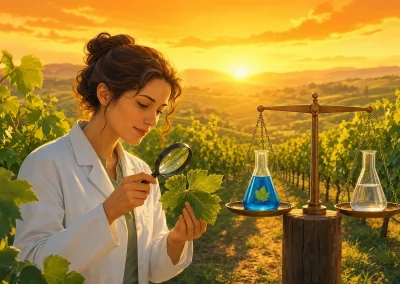
Natural or synthetic? What the ban on copper says about organic farming
In Causeur, Thomas Lepeltier draws a lesson from the withdrawal of copper-based fungicides decided by Anses: judge each product by its effects, not by whether it is natural or synthetic. Our summary in three arguments.

AI and extinction: Yudkowsky and Soares’s thesis in question
In Le Point, Thomas Lepeltier examines the thesis of Eliezer Yudkowsky and Nate Soares that a superintelligent AI would exterminate humanity. Our summary in three arguments.
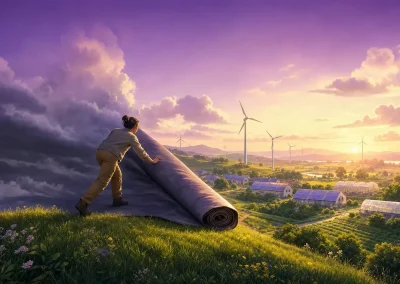
Climate: why Bill Gates’s change of tone deserves to be welcomed
In Causeur, Thomas Lepeltier analyses Bill Gates’s change of tone on climate: not a repudiation of science, but a reminder that poverty and disease remain the greatest threats. Our summary in three arguments.

Sufficiency: a critique of Philippe Bihouix’s vision
In Le Point, Thomas Lepeltier responds to Philippe Bihouix: choosing sufficiency from today underestimates our capacity to innovate, and abundance would be the condition for sustainability. Our summary in three arguments.

Think better to act better
How can we better understand the issues of our time without getting lost in simplistic views or catastrophism?
The reflexive exploration framework offers a path for situating and enriching one’s way of thinking, from spontaneous intuition to critical lucidity.
It invites us to explore our own biases, to cultivate fruitful doubt and to move towards a more open and more balanced way of thinking.
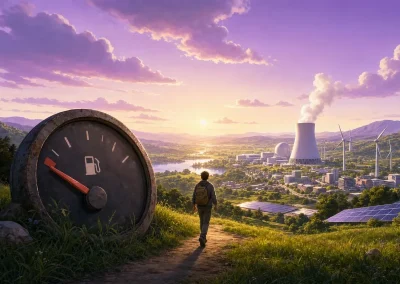
Energy, growth and decline: Jean-Marc Jancovici’s theses debated
In two Causeur columns, Thomas Lepeltier discusses Jean-Marc Jancovici’s theses on energy: a useful diagnosis, but no inevitable decline. Our summary in three arguments.
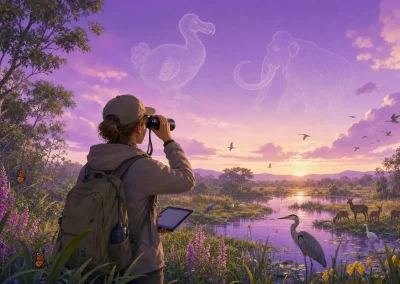
Have we entered a sixth extinction? Reasons to doubt it
In European Scientist, Thomas Lepeltier challenges the idea that we have entered a sixth great extinction and sees it as putting modernity on trial. Our summary in three arguments.

Slowing down to avoid the wall: a misguided idea?
In the Journal des libertés, Thomas Lepeltier challenges the idea that our societies must slow down: a cost for future generations, risks, and little effect on the environment. Our summary in three arguments.
Degrowth: the limits of Timothée Parrique’s project
In two columns in Le Point, Thomas Lepeltier discusses the degrowth project of the economist Timothée Parrique: in his view, planning a reduction of the economy would lead to constraint and impoverishment. Our summary in three arguments.