
Ecologists keep telling us that biodiversity is declining. We can trust them. But is it relevant to see this decline as a crisis? That is the question Thomas Lepeltier asks.

Almost every day, we hear about a biodiversity crisis. Specialists are unanimous: the diversity of the biological world is decreasing and, in particular, many living species are heading towards extinction. The message is taken up by numerous commentators who warn of a possible collapse of our society, or even the disappearance of life on Earth. The situation would therefore be grave. Yet, without disputing the analyses of ecologists, the specialists of biodiversity, it is possible to take a step back from these interpretations. In fact, a decline in biodiversity is not necessarily a problem, even if it is substantial. Admittedly, for an ecologist, whose profession is to study biodiversity, the impoverishment of the object of study can only be saddening. The same would be true of an archaeologist who watched the ruins he studies being destroyed. But that does not mean this decline in biodiversity is likely to cause a crisis for human societies. Let us not forget that humanity has prospered over the past millennia by steadily reducing the biodiversity of its environment. Of course, it is established that too great a decline in biodiversity would be harmful to it.
But, contrary to a frequently conveyed image, there is nothing to indicate that it is likely to collapse tomorrow like a house of cards. Not every decline in biodiversity should therefore be interpreted as a threat. After all, we are quite glad that there is not too much biodiversity in our homes, our cities and our fields. It is therefore important to rethink this widespread idea of a biodiversity crisis.
What value should be attributed to biodiversity?
Biodiversity refers to the diversity of the living world, whether the diversity of habitats or ecosystems (oceans, grasslands, forests, etc.), the diversity of the species that live in those habitats, or the diversity of individuals within each species. There is therefore no single linear scale of biodiversity from which its degree could be assessed. It is a threefold notion, partly qualitative, which moreover is constantly evolving. There is thus something incongruous about wanting to preserve biodiversity. When we say that the planet’s temperature must be maintained, we can at least refer to an average temperature. But with biodiversity, the injunction makes little real sense, since we are talking about a diversity of ecosystems, species and genes [1]. Which should be preserved? That said, if we overlook the imprecision of the notion of biodiversity, we could still consider that several of its levels ought to be preserved. This supposed duty of preservation, which implies that it is regrettable for biodiversity to decline, is nonetheless not easy to grasp [2].
Admittedly, in most of the discourse in which it is mentioned, biodiversity is regarded as having value in itself. It would be something good as such. For example, the famous ‘Convention on Biological Diversity’, established at the Earth Summit in Rio in 1992, states that it recognises ‘the intrinsic value of biological diversity’. Yet the meaning of this recognition is unclear, for the following reasons. Either the value increases with the level of biodiversity, in which case we would find ourselves in the absurd situation of always having to seek to increase the variety of ecosystems, the number of species and the genetic diversity within them. Or the value does not increase with the level of biodiversity, in which case a decline in that level is no longer a problem. A world in which a tropical forest has turned into savannah, then into a desert where only a few rare forms of life remain, would thus be no less valuable than a world where the forest had remained as it was. Why, then, seek to preserve the former? Even if this may seem shocking to those who remain subjectively attached to the level of biodiversity they are used to, from a logical point of view the supposed intrinsic value of biodiversity does not justify why it should be preserved.
Biodiversity has no intrinsic value
In any case, this idea of the intrinsic value of biodiversity lacks foundation [3]. An entity has intrinsic value if its existence matters to the entity in question, regardless of whether or not it matters to any other entity. For example, humans and many animals have intrinsic value insofar as what happens to them matters to them, independently of whether their existence matters to other entities. They can thus cling to their lives or wish not to suffer.
It can therefore be argued that, to a certain extent, their integrity should be preserved. But this is not the case for other entities, such as minerals, plants and ecosystems, which are indifferent to their fate. Nor is it the case for biodiversity, which is merely a concept reflecting a level of diversity. There is nothing in biodiversity that makes it matter to itself. At best, it can matter to other entities. It cannot therefore be said to possess intrinsic value [4]. Consequently, this notion cannot provide a justification for the idea that it must be preserved.
Humanity has constantly driven down the level of biodiversity
Let us not forget that the places on the planet with the highest levels of biodiversity are not necessarily the most welcoming.
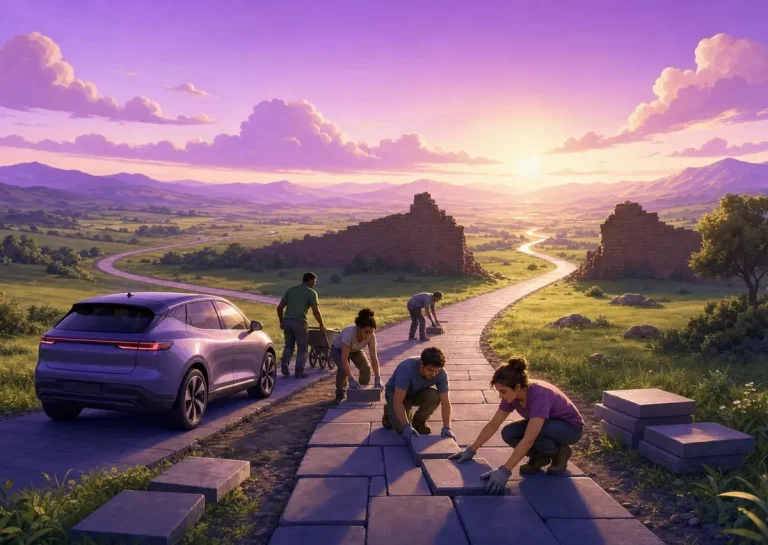
If biodiversity does not possess intrinsic value, it does possess instrumental value, that is, its level can have a positive or negative impact on entities that do have intrinsic value. If, for example, a certain level of biodiversity brings well-being to us humans, one might think that it should be preserved. It would therefore not be biodiversity that should be preserved simply because it is a good in itself, but this or that level of biodiversity because it would be beneficial to us. This is not so simple, however. Indeed, why seek to preserve a level that allows us to experience well-being? Would it not be better to try to reach the one that brings us the most? Yet it is unlikely that the current level of biodiversity, or the level it had before it began to decline a few centuries ago, is optimal for human well-being. Humanity has, in fact, constantly reduced the level of biodiversity in its environment in order to develop. It was not only by mistake that it did so. It had an interest in doing so. Let us not forget that the places on the planet with the highest levels of biodiversity are not necessarily the most welcoming. This is the world of tropical forests. One can live there. But for a society to develop there, it has to cut down trees to build dwellings, lay out paths to get around and clear its surroundings to grow edible plants. All these operations tend to reduce biodiversity. Of course, on a small scale, the impact is insignificant. However, as ecologists note, it is the transformation of land for urbanisation and agriculture that is the leading cause of biodiversity decline worldwide. A developing society therefore tends to reduce the biodiversity of its environment. Nor should we forget the interest a society may have in reducing the threat posed by certain predators or other nuisances arising from various forms of life. Everyone is rather pleased that wolves no longer roam the paths of our countryside and that certain wetlands are no longer breeding grounds for malaria-carrying mosquitoes. Biodiversity is sometimes better at a distance. The fact that biodiversity has declined over the centuries should therefore not always be seen as a problem [5]. It is also a sign of the development of human societies.
The risks of too rapid a decline
If the speed of biodiversity decline were so damaging, we should already have observed it putting a brake on development.
Even if they acknowledged that the decline in biodiversity is not in itself a problem, many environmentalists would say that it is the pace of this decline that is worrying. This fear is, however, hardly justified in light of the past evolution of biodiversity on Earth. First, let us never forget that the speed of the decline merely reflects the speed of economic development. Rather than worrying, we might therefore rejoice. A developing society is one in which infant mortality falls, life expectancy rises and the population has more to eat. Then, if the speed of biodiversity decline were so damaging to human societies, we should already have observed it putting a brake on the development of those same societies, or even causing them to decline. Yet, although there may be problems here and there, notably concerning pollinators, no society seems to be suffering from it. Walking in the countryside or in nature parks, one can also see that the living world is not collapsing. Even if, after more or less careful observation, one can notice that some animal or plant populations are less present, overall, many plants and animals continue to occupy the land without being caught in a downward spiral.
Of course, it is always possible to project oneself into the future and show that the current decline is not sustainable. Any downward or upward trend, extrapolated over a sufficiently long period, can suggest that a collapse or an overshoot is looming on the horizon. But before extrapolating, one must check that the extrapolation is justified. Yet it is highly debatable when it comes to the decline of biodiversity. Let us recall once again that ecologists consider the transformation of land (for agriculture and urbanisation) to be the main cause of biodiversity decline. This transformation is directly linked to the growth of the human population over the last two centuries. In 1800, there were one billion humans on earth; in 1900, two billion; in 1960, three billion; and in 2000, six billion. It is obvious that, if this dynamic were extrapolated, the human population would continue to increase considerably and, as a consequence, biodiversity would continue to decline just as much. But everything indicates that the human population will soon stabilise and, very probably, decrease. Pressure on natural areas will therefore probably ease. This is all the more so because the development of agricultural techniques means that, nowadays, less space is needed to produce the same quantity of food as a few decades ago. This improvement in agricultural yields has, moreover, already made it possible, in places where population pressure is not too strong, to farm less land; as a result, on land left fallow, biodiversity has begun to increase [6]. With yields that may be even better tomorrow, biodiversity is therefore not condemned to decline under the blows of agricultural production [7].
Some nonetheless raise the spectre of a collapse of biodiversity. This is the idea of the house of cards, in which each card is supposed to represent a species. A few cards can be removed (or a few species can disappear) without anything happening, but at a certain point, after the removal of one more card, the structure collapses. This metaphor, however, does not reflect how ecosystems work [8]. At the very least, we have never witnessed the collapse of an ecosystem following the gradual disappearance of a given number of species. The disappearance of a few species can have cascading effects and, possibly, lead to the disappearance of other species. Even so, this process does not go as far as the collapse of the ecosystem, that is, the near-disappearance of the life forms it shelters. At the very least, there is – to our knowledge – no scientific study that has documented such a near-disappearance of life in a given place following the disappearance of a few species [9]. This is easily explained: when a few species disappear, other species quickly move into the ecosystem, or the populations of species that were already present but in competition with the vanished species begin to grow.
With yields that may be even better tomorrow, biodiversity is not condemned to decline under the blows of agricultural production.
In the end, we are left with an ecosystem that is certainly different, but which also exhibits a certain diversity of living forms [10]. Yet why would the shift from one ecosystem to another be problematic? Admittedly, many conservationists will implicitly consider that this shift from one ecosystem to another is unwelcome, but this position is based more on intuition than on demonstration.
Some environmentalists will retort that there have already been five mass extinctions in the past. The current decline in biodiversity could thus lead us towards the sixth. Anything is of course possible, but one should not be mistaken about the characteristics of a mass extinction. It corresponds to the disappearance of 75% of species or genera (the difference is not always easy to establish for remote times) over a period of several hundred thousand years [11]. Speaking of a sixth extinction in connection with the current decline in biodiversity therefore amounts to a blatant extrapolation which, as we saw above, does not seem justified. Given the decline in human fertility and the gains in agricultural productivity, it is unlikely that human societies will continue to nibble away at natural areas until three quarters of biodiversity has disappeared.
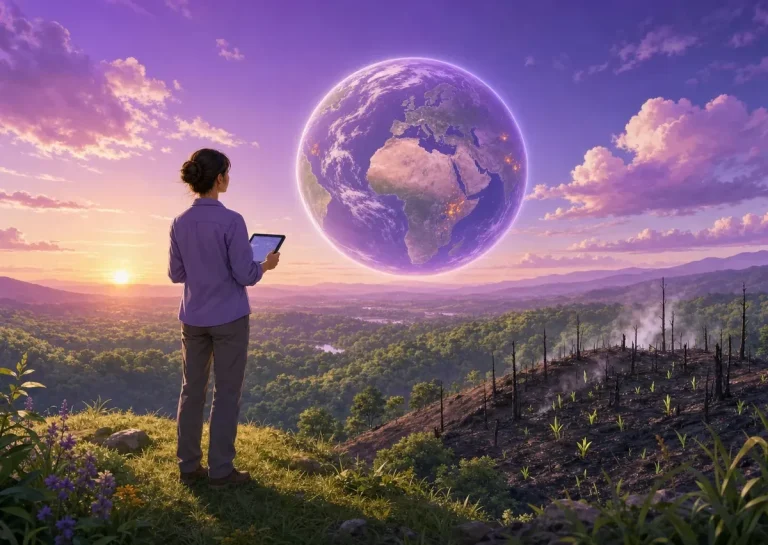
One can always imagine that human societies, in spite of themselves, set off a process of destruction of the living world that would end in its extinction. The first culprit envisaged is of course global warming. But even this hypothesis is highly debatable. Through its speed, warming can undoubtedly trigger extinction processes that may have harmful consequences for human societies. But, overall, a moderate warming of the earth favours the development of life more than cooling would [12]. It is not for nothing that there is more biodiversity in the tropics than in the cold regions of the globe. Of course, this warming must not become too great. Beyond certain temperatures, forests turn into savannahs, then into desert. In that situation, there is indeed a mass extinction of plants and animals. But in that case, the biodiversity crisis would above all be a global warming crisis. Otherwise, as long as it does not exceed two or three degrees above the pre-industrial level, which is still conceivable, it will not cause a mass extinction. Here again, it is therefore not correct to claim that we are currently experiencing a biodiversity crisis.
Many species are doing well today
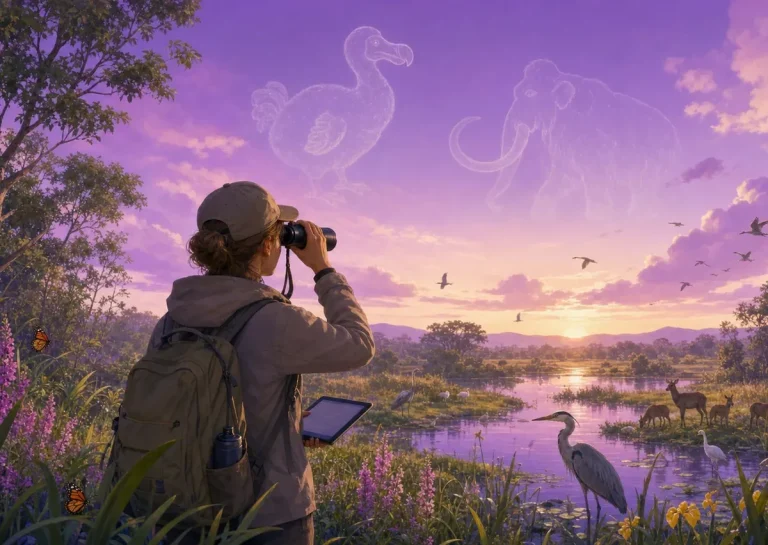
Contrary to a despairing view of the state of biodiversity, it should also be remembered that many species are doing well today, even those we often imagine to be endangered [13]. For example, everyone has heard about the possible disappearance of insects. It is true that their numbers have fallen sharply in some places, notably in Europe. But this decline, which concerns populations more than species, cannot be confirmed on a global scale. There are many places where no decline has been observed. Insects are therefore not vanishing from the face of the planet [14]. Next, again in Europe, there are many species, such as beavers, chamois, lynxes, otters, badgers and others, whose numbers had fallen sharply by the middle of the 20th century. Their disappearance was a real fear. Yet these animals are once again very much present on European soil [15]. Globally, the same is true of most whales. Close to extinction in the 1960s, some populations have since grown a hundredfold [16]. Admittedly, some of these animals benefited from reintroduction programmes or protection measures, but their return in large numbers clearly shows that biodiversity is not collapsing.
The question of ecosystem services
When it is not a matter of protecting biodiversity for its own sake (which, as we have seen, means little), its defenders say they want to preserve it for the ecosystem services it supposedly provides to human societies. The whole Ipbes report (the equivalent of the IPCC for biodiversity) is even pervaded, from beginning to end, by the claim that nature provides us with services and that we should therefore take care of it [17]. But this insistence on the role of nature is surprising, given how obvious it is that nature enables us to live, starting with the air we breathe and the food we eat. It is also obvious that we cannot live without a minimum of biodiversity, for the simple reason that we need a diversity of plants to live. But, contrary to what this insistence might suggest, ecosystem services do not systematically increase with the level of biodiversity [18]. They can even decrease. For example, a field is, by definition, a stretch of land that has been cleared, that is, where various types of plants have been eliminated and many animals that could live there have been driven out, so that only one type of plant (carrots, potatoes, maize, etc.) can grow there. Here, then, it is the reduction in biodiversity that benefits human societies. Admittedly, too great a reduction in biodiversity, which would result, for example, in too few earthworms or pollinators, may work against the intended effects. Consequently, there may be, here and there, a problem caused by a certain lack of biodiversity. But the idea that, if biodiversity declines, nature will necessarily find it harder to provide ecosystem services is, to say the least, debatable.
Another reason often invoked in defence of biodiversity is that it strengthens the resilience of ecosystems. It is true that it has this effect. An environment with great biological diversity is better able to withstand the risk of epidemics and climatic hazards. But our objective with regard to our environment cannot be to live in the most resilient environment. It is to live in the environment that both allows us to maximise our well-being and is relatively stable or robust. It is like a house: the aim cannot be to stake everything on security. It must be made as pleasant as possible to live in, while still being able to protect us.
There is thus a trade-off to be found between security and well-being. The same applies to biodiversity. A compromise must be found between resilience, which is stronger the higher biodiversity is, and a well-being which, while requiring a certain level of biodiversity, does not call for its highest level. Here again, then, invoking resilience does not allow us to interpret every decline in biodiversity, even a significant one, as a crisis.
Biodiversity and the animal question
Finally, a defence of biodiversity could be made in the name of animals. If human societies develop by reducing, up to a certain level, the biodiversity of their environment, some will say that animals suffer from this reduction. Then, challenging an anthropocentric view of the environment, they will add that these other inhabitants of the earth must be taken into account. It is clear that, at the time biodiversity declines, the members of the affected species survive or reproduce less well. That is why they eventually disappear. However, there is no reason to think that animals always benefit from a relatively high level of biodiversity. In natural spaces, coexistence between species is not always a happy one. Between parasitism, predation and competition for food, wild animals suffer from a thousand ills [19]. Moreover, if many species thrive in places where biodiversity is not at its maximum, it is surely because the members of those species can find some benefit in living there. Then, even in their preferred environment, it is very likely that their situation is not optimal. That is, incidentally, why humans, for their part, have never stopped modifying their environment, thanks to their technological capacity. Unfortunately for them, other animals do not have this ability. In the wild, nearly all animals die of hunger, thirst or disease, or under the teeth of a predator, before reaching reproductive age. The adults we observe are the rare survivors of this harsh ‘law of the jungle’. Consequently, we should not assume that, for animals, whether human or not, maximum biodiversity corresponds to maximum well-being. So, here again, there is no reason to consider that the current decline in biodiversity represents a crisis.
Conclusion: the optimum level of biodiversity
This critique of the idea that there is a biodiversity crisis, and that biodiversity must be restored at all costs to the level it had several centuries ago, does not in any way mean that there are no problems here and there because of the disappearance of certain species or the shrinking of certain animal populations. The typical example is that of pollinators. Their decline can indeed have negative effects on human societies. The latter must therefore try to restore a certain degree of biodiversity so that pollinators regain a greater place in our countryside. But it should not be concluded that humanity is facing a global biodiversity crisis that threatens its existence.
This exaggeration stems from a sacralisation of biodiversity, which amounts to wrongly attributing an intrinsic value to it and encourages the belief that human societies should place themselves at its service. Hence all those recurring pronouncements calling for it to be preserved as a priceless asset and casting opprobrium on societies that supposedly failed to respect it. Yet in reducing the levels of biodiversity in their environment, human societies did not commit a sin for which they must atone by placing the restoration of bygone biodiversity at the heart of their concerns. In fact, these societies had good reasons for reducing the biodiversity of their environment. Admittedly, they sometimes went too far. There may be mistakes to correct. But calls to defend biodiversity make no sense. Human societies simply need to seek the level of biodiversity that is most favourable to their wellbeing and, where possible, to that of other animals. In short, the only objective that makes sense with regard to biodiversity is to establish its optimal level for the quality of life on Earth. Any other consideration merely reflects a vision tinged with religiosity towards it…
References
[1] On the conceptual problems raised by the notion of biodiversity, see Julien Delord, ‘La biodiversité : imposture scientifique ou ruse épistémologique ?’, in Elena Casetta and Julien Delord (eds), La Biodiversité en question. Enjeux philosophiques, éthiques et scientifiques, Paris, Éditions Matériologiques, 2014, pp. 83–116. doi.org/10.3917/edmat.delor.2014.01.0083
[2] This question of the defence of biodiversity has been analysed in depth by Jonathan Newman, Gary Varner and Stefan Linquist in their book Defending Biodiversity. Environmental Science and Ethics, Cambridge University Press, 2017. doi.org/10.1017/9781139024105
[3] For a critique of the idea that biodiversity has intrinsic value, see, for example, Katie McShane, ‘Is biodiversity intrinsically valuable? (And what might that mean?)’, in Justin Garson, Anya Plutynski and Sahotra Sarkar (eds), The Routledge Handbook of Philosophy of Biodiversity, Routledge, 2017, pp. 155–167. doi.org/10.4324/9781315530215
[4] As the philosopher Bernard Rollin writes: ‘It is senseless to attribute intrinsic value […] to a non-conscious natural entity.’ In Bernard Rollin, ‘Intrinsic value for nature. An incoherent basis for environmental concern’, Free Inquiry, 13, 1993, p. 20.
[5] This apparent paradox, whereby a decline in a place’s biodiversity is sometimes accompanied by an increase in the well-being of the people living there, is analysed in Ciara Raudsepp-Hearne et al., ‘Untangling the Environmentalist’s Paradox: Why Is Human Well-being Increasing as Ecosystem Services Degrade?’, BioScience, 60(8), 2010, pp. 576–589. doi.org/10.1525/bio.2010.60.8.4
[6] See, for example, Hannah Ritchie, ‘After millennia of agricultural expansion, the world has passed “peak agricultural land”’, Our World in Data, 30 May 2022. ourworldindata.org/peak-agriculture-land
[7] For an assessment of the impact of agriculture on natural spaces in the coming decades, see David Tilman et al., ‘Global food demand and the sustainable intensification of agriculture’, Proceedings of the National Academy of Sciences of the United States of America, 108(50), 2011, pp. 20260–20264. doi.org/10.1073/pnas.1116437108
[8] On the difficulties of grasping this idea of ecosystem collapse, see Alexandre Génin, Quand la nature s’effondre. Comprendre les transitions abruptes dans les écosystèmes, Éditions Matériologiques, 2023.
[9] This is also what Christian Lévêque points out in his book Érosion de la biodiversité. Enjeux et débats, ISTE Éditions, 2022.
[10] For a defence of the idea that, barring a cosmic catastrophe, life, and therefore biodiversity, will not disappear from the surface of the Earth, see, for example, Alain Pavé, Comprendre la biodiversité. Vrais problèmes et idées fausses, Seuil, 2019.
[11] A reminder that we are not yet in the sixth extinction can be found in Hervé Le Guyader, Biodiversité. Le pari de l’espoir, Éditions Le Pommier, 2020. Then, for a critique of the recurring claim that we are already in, or heading straight for, a sixth extinction, see Christian Lévêque, ‘“La 6ème extinction c’est un slogan qui participe au climat anxiogène”, interview de Christian Lévêque’, European Scientist, 16 April 2021. europeanscientist.com/fr/article-of-the-week-fr/la-6eme-e…
[12] An example of an increase in biodiversity is studied by Gabriel Yvon-Durocher et al., ‘Five Years of Experimental Warming Increases the Biodiversity and Productivity of Phytoplankton’, PLOS Biology, 13(12), 2015, e1002324. doi.org/10.1371/journal.pbio.1002324
[13] For a non-catastrophist view of the state of the planet and, among other things, of biodiversity, see, for example, Jacques Lecomte, Rien n’est joué. La science contre les théories de l’effondrement, Les Arènes, 2023.
[14] See, for example, Roel van Klink et al., ‘Long-term abundance trends of insect taxa are only weakly correlated’, Biology Letters, 18(2), 2022, 20210554 (doi.org/10.1098/rsbl.2021.0554). For a non-technical presentation of this article, see Volker Hahn, ‘While some insects are declining, others might be thriving’, iDiv, 23 February 2022. idiv.de/while-some-insects-are-declining-others-might-be-…
[15] See, for example, Bertrand Alliot and Christian Lévêque, ‘Biodiversité : faut-il vraiment paniquer ? Lorsque tant d’espèces se portent mieux…’, Les Études d’Action Écologie, no. 3, December 2022. actionecologie.org/biodiversite-faut-il-vraiment-paniquer…
[16] Estimate, along with others pointing in the same direction, reported in Damian Carrington, ‘Oceans can be restored to former glory within 30 years, say scientists’, The Guardian, 1st April 2020. theguardian.com/environment/2020/apr/01/oceans-can-be-res…
[17] Sandra Díaz et al., Le rapport de l’évaluation mondiale de la biodiversité et des services écosystémiques. Résumé à l’intention des décideurs, Plateforme intergouvernementale scientifique et politique sur la biodiversité et les services écosystémiques (IPBES), 2019. files.ipbes.net/ipbes-web-prod-public-files/2020-02/ipbes…
[18] For a critique of the idea that ecosystem services always increase with the level of biodiversity, see, for example, Mark Vellend, ‘Are local losses of biodiversity causing degraded ecosystem function?’, in Peter Kareiva, Michelle Marvier and Brian Silliman (eds), Effective Conservation Science. Data Not Dogma, Oxford University Press, 2018. doi.org/10.1093/oso/9780198808978.003.0004
[19] On the suffering of wild animals, see Oscar Horta, ‘Debunking the Idyllic View of Natural Processes: Population Dynamics and Suffering in the Wild’, Télos. Revista Iberoamericana de Estudios Utilitaristas, 17(1), 2010, pp. 73–90. revistas.usc.gal/index.php/telos/article/view/284

0 comments