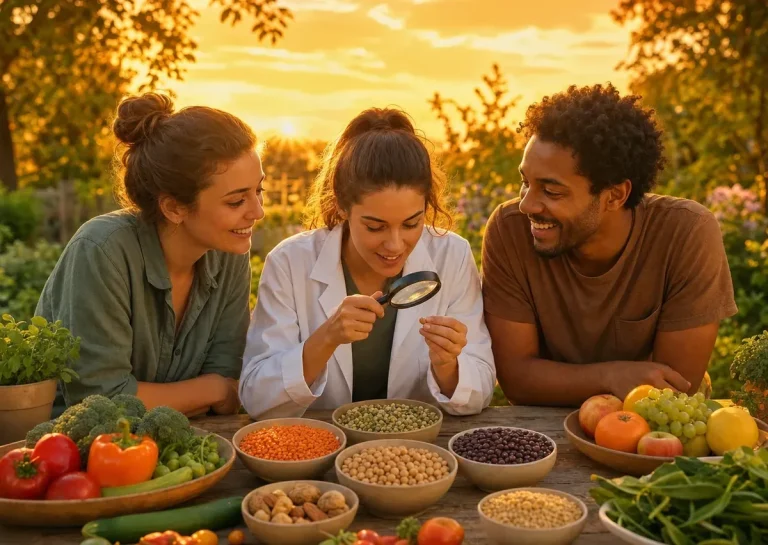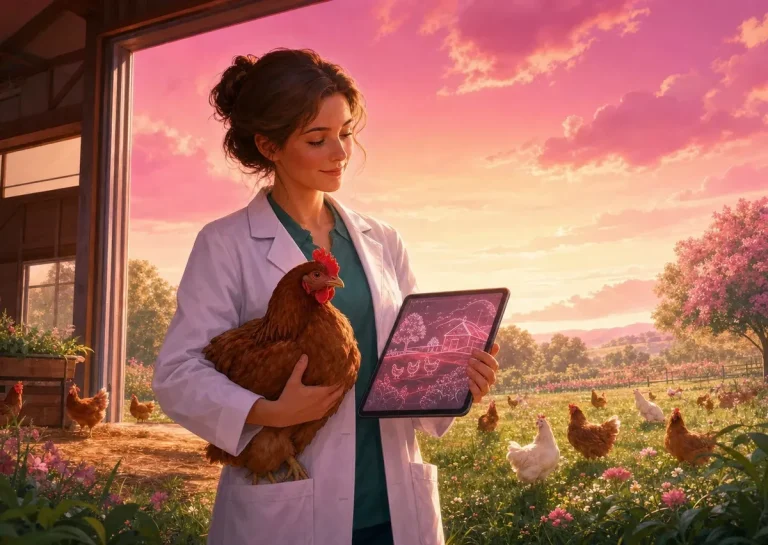
A future without suffering? A video to open the debate

by Jonathan Guéguen | 10 Jul 2026 | APALA articles, Ethics, Foresight

Reading time is .

Key points

  • Imagining the future shapes our choices: seeing only catastrophes leads us to give up; naive optimism makes us forget real risks.
  • A question for the century: what if reducing avoidable suffering, among humans as among other animals, became one of its great undertakings?
  • Connecting subjects rarely brought together: health, medicine, plant-based food, life sciences, the condition of animals, including wild ones.
  • Foresight, not a programme: several avenues remain speculative and call for research, caution and debate.
  • Debate rather than dismiss: these questions challenge our habits; they deserve to be discussed calmly, on the basis of available knowledge.

🎬 A future without suffering?

[ ⏱️ Estimated reading time: 2 minutes ]

🌍 Changing the narrative
Stories about the future are often dominated by collapse and bad news. With The Flares, we wanted to ask a different question: what if reducing avoidable suffering, among humans and other animals alike, became one of the great undertakings of the century?

🎥 A short foresight video
Made as part of Transitions Sonores 2026, it links subjects rarely brought together: health, medicine, plant-based diets, life sciences and the condition of animals, including wild ones.

🧭 An invitation, not a programme
The video does not propose intervening in ecosystems tomorrow. Several avenues are speculative and raise scientific, ecological and ethical questions that call for research, caution and debate.

💬 Questions to ask ourselves together
Which forms of suffering are already avoidable? How far does our responsibility towards other animals extend? How can we avoid the unintended effects of our interventions? Who should decide?

Thank you to The Flares for this collaboration. Video and article available on our website.

#Prospective #FutursDésirables #Éthique #ConditionAnimale #Science #TheFlares #APALA

🎬 A future without suffering?

What if the future were not only about avoiding crises, but also about reducing suffering?

With The Flares, APALA has made a short foresight video as part of Transitions Sonores 2026. It brings together health, medicine, plant-based diets, life sciences and the condition of animals, including wild ones, in a single story of rational hope.

It is not a plan of action: several avenues are speculative and raise genuine scientific, ecological and ethical questions. It is an invitation to think, to distinguish what is established, what is possible and what is still only a scenario, and to discuss it calmly.

👉 Watch the video and tell us what it inspires in you: enthusiasm, doubts, objections… all are welcome.

#Prospective #FutursDésirables #Éthique #ConditionAnimale #TheFlares #APALA

🎬 A future without suffering?

What if one of the great undertakings of the century were to reduce avoidable suffering, among humans and other animals alike? 🌍

With The Flares, we have made a short foresight video as part of Transitions Sonores 2026 🎶

🧬 Health, medicine, plant-based diets, life sciences, the condition of wild animals: subjects rarely linked in a single story.

🧭 Not a programme, but an invitation to think: some avenues are speculative and call for research, caution and debate.

💬 Enthusiastic, sceptical? Tell us what you think in the comments.

🔗 Video and article: link in bio

#Prospective #FutursDésirables #Éthique #ConditionAnimale #Science #Biosphère #TheFlares #APALA #TransitionsSonores #Nantes

Stories about the future are often dominated by collapse and bad news. With The Flares, we wanted to ask a different question: what if one of the great undertakings of the century were to reduce avoidable suffering, among humans as among other animals?

  • ⏱ Under 10 minutes
  • 🎬 The Flares × APALA
  • 🎶 Transitions Sonores 2026
  • 💬 An invitation to debate

Why this video?

Imagining the future is not a luxury. The futures we deem possible shape the choices we make today: if we see only catastrophe, we risk giving up on taking action. Conversely, naive optimism makes us forget the very real risks.

The Flares, a collective of independent video makers who explore what the future might be, shares with APALA this fine line: taking dangers seriously without giving in to fatalism. This video also extends one of our values, recognising the worth of all beings capable of suffering and of experiencing pleasure.

What the video proposes, and what it does not

It proposes

  • To link subjects rarely brought together: health, medicine, plant-based diets, life sciences, and the condition of animals, including wild ones.
  • To look, over the long term, at forms of suffering that are today considered unavoidable.
  • To open an informed debate, on the basis of available knowledge.

It does not propose

  • An immediate plan of action.
  • To present scenarios as certainties: several avenues belong to foresight and call for research, caution and debate.

Questions to ask ourselves together

Which forms of suffering are already avoidable today, and why are they not yet avoided?
How far does our responsibility towards other animals extend?
How can we avoid the unintended effects of our interventions, in nature and elsewhere?
Who should decide, and according to what criteria?

These questions have no simple answer. They deserve to be discussed calmly, on the basis of available knowledge, rather than dismissed out of hand because they challenge our habits.

The voices behind the project

Gaëtan SelleDirector of the video, co-founder of The Flares, an association that explores the future through science fiction and documentary

Thomas LepeltierHistorian and philosopher of science, director of APALA’s think tank

Jonathan GuéguenFounder and Managing Director of APALA

Conclusion: a horizon to be discussed

We are sharing this video as an invitation to think, not as a certainty. If it makes you question, excites you or leaves you sceptical, then it has fulfilled its purpose: opening up the discussion.

Organise a screening and debate?

We present the video and lead the discussion with your teams, your students or your residents.

References

The Flares and APALA (2026). Une biosphère sans souffrance : est-ce possible ? [video]. YouTube. youtube.com/watch?v=_b9ihxStRyE

Bruers, S., Davis, A. J., Hojjat, S., Koskensilta, A., Lepeltier, T. and Pearce, D. (2024). ‘Nature without Suffering: Herbivorisation of Predator Species for the Compassionate Stewardship of Earth’s Ecosystems’. Journal of Applied Animal Ethics Research, 6, 175–204. doi.org/10.1163/25889567-bja10051

The Flares (n.d.). The Flares [YouTube channel]. youtube.com/@the-flares
Guidance: what if AI governed us through good advice?

In Le Point, Thomas Lepeltier presents Antoine Buéno’s ‘Guidance’: the danger of AI would be less that it exterminates us than that it advises us too well. Our summary in three arguments.

Wildfires of summer 2026: what the global data say

In Causeur, Thomas Lepeltier compares the exceptional wildfires of summer 2026 in France with global satellite data, which describe a rather calm year. Our summary in three arguments.

Does organic farming keep its promises? Naturalness put to the test of the facts

In Atlantico, Thomas Lepeltier challenges the founding principle of organic farming, the preference for the natural over the synthetic, and judges its record to be more nuanced than its image. Our summary in three arguments.

A future without suffering? A video to open the debate

With The Flares, APALA offers a short foresight video: what if reducing avoidable suffering, among humans and other animals alike, were one of the great undertakings of the century?

Biodiversity: a public exchange with Tatiana Giraud

In Causeur, Thomas Lepeltier criticised the way Tatiana Giraud presents biodiversity; she replied, and he responded in turn. Our summary of the three texts: arguments, quotations and questions for debate.

Performance or robustness? Olivier Hamant’s thesis challenged

In Le Point, Thomas Lepeltier challenges the opposition between performance and robustness defended by the biologist Olivier Hamant: in his view, the resilience of societies comes from innovation and efficiency. Our summary in three arguments.

Natural or synthetic? What the ban on copper says about organic farming

In Causeur, Thomas Lepeltier draws a lesson from the withdrawal of copper-based fungicides decided by Anses: judge each product by its effects, not by whether it is natural or synthetic. Our summary in three arguments.

AI and extinction: Yudkowsky and Soares’s thesis in question

In Le Point, Thomas Lepeltier examines the thesis of Eliezer Yudkowsky and Nate Soares that a superintelligent AI would exterminate humanity. Our summary in three arguments.

Climate: why Bill Gates’s change of tone deserves to be welcomed

In Causeur, Thomas Lepeltier analyses Bill Gates’s change of tone on climate: not a repudiation of science, but a reminder that poverty and disease remain the greatest threats. Our summary in three arguments.

Sufficiency: a critique of Philippe Bihouix’s vision

In Le Point, Thomas Lepeltier responds to Philippe Bihouix: choosing sufficiency from today underestimates our capacity to innovate, and abundance would be the condition for sustainability. Our summary in three arguments.

0 comments

make a donation!

Public-interest association: €10 from you means nearly €30 for us, after tax relief.

Understand how it works