Guidance: what if AI governed us through good advice?

by Thomas Lepeltier | 20 Sep 2026 | Our experts in the media, Artificial intelligence

Reading time is .

Key points

  • The book: ‘Guidance’, by Antoine Buéno, takes Huxley rather than Orwell as its starting point for thinking about the power of AI.
  • The thesis: big data, nudge and AI agents together form a ‘direction of conscience’.
  • The risk: a dependence born of the service rendered, without any malevolent machine.
  • The scenarios: several ‘AIcracies’ depending on who controls the guidance.

🤖 What if the danger of AI were not that it exterminates us, but that it advises us too well?

In Le Point, Thomas Lepeltier, Director of APALA’s think tank, presents ‘Guidance’, the essay by Antoine Buéno, a member of our expert committee.

🔎 The thesis
‘Big data + nudge + agent = spiritual direction’: tomorrow’s power would rest on advice rather than fear, more Huxley than Orwell.

🧭 Three ideas
1. Dependence arises from the service rendered: the more useful the agent, the more we delegate to it.
2. Everything depends on who is whispering in our ear: Big Tech, the state or citizens.
3. AI and biotechnologies could upend work, redistribution and inequalities.

💬 Why we’re sharing it
A concrete democratic question, far from extinction scenarios: how many decisions are we willing to delegate?

Our full summary:

What if the danger of AI were not that it exterminates us, but that it advises us too well? 🤖

In Le Point, Thomas Lepeltier presents ‘Guidance’, the essay by Antoine Buéno, a member of our expert committee: a power founded on advice rather than fear.

Our summary in three arguments, with the link to the original article 👇

What if the danger of AI were not that it exterminates us, but that it advises us too well? 🤖

In Le Point, Thomas Lepeltier presents ‘Guidance’, the essay by Antoine Buéno, a member of APALA’s expert committee.

Three ideas:
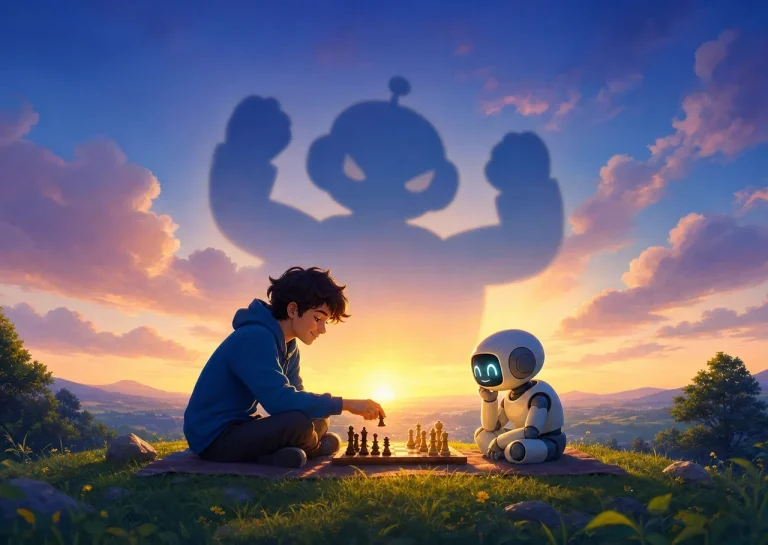
1️⃣ A dependence born of the service rendered
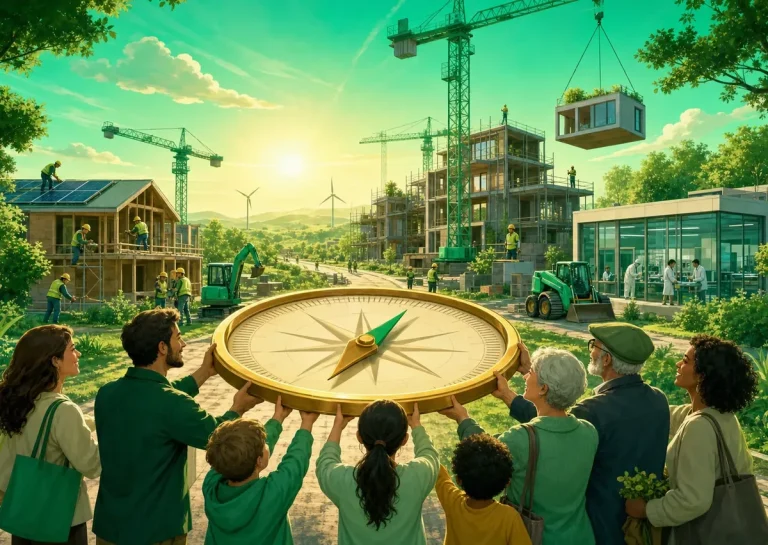
2️⃣ Who will be whispering in our ear?
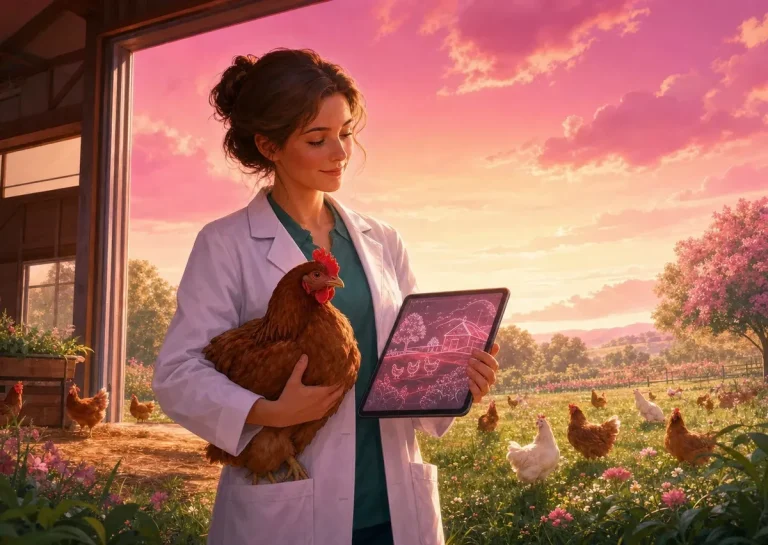
3️⃣ Work, redistribution, biotechnologies

Full summary and link to the article: link in bio.

#APALA #thinktank #transitions #AI #artificialintelligence #technology #progress #debate #LePoint #Huxley #AntoineBuéno #democracy

by Thomas Lepeltier, Le Point, 20 September 2026

The political danger of AI would come not from a hostile machine, but from an assistant so helpful that we would end up entrusting everything to it. This is the thesis of ‘Guidance’, Antoine Buéno’s essay, which this article presents and discusses.

In brief

  • In ‘Guidance’ (Tallandier), Antoine Buéno, a member of APALA’s expert committee, takes Huxley rather than Orwell as his compass: tomorrow’s power would rest on advice and incentive more than on fear.
  • His equation: ‘big data + nudge + agent = spiritual direction’. The more competent and benevolent the AI agent, the more decisions we would delegate to it.
  • The author welcomes a piece of foresight used as a thought experiment, without seeing it as a forecast to be validated point by point.

The article’s three arguments

1. The agent

A dependence born of the service rendered

Tomorrow, the AI agent will filter our messages, choose our information, and advise us on health or relationships. Each act of delegation seems harmless; it is their accumulation that could turn assistance into power.

2. The power

Who will be speaking in our ear?

Big Tech, the State or citizens: depending on who controls the guidance, Buéno sketches several ‘AIcracies’, from authoritarianism to a ‘democrAIcy’. Technology alone does not dictate the political regime that will emerge from it.

3. Society

Work, redistribution, biotechnologies

If AI made work scarcer, very different regimes might converge towards greater redistribution. Biotechnologies would then open up a choice between egalitarian use and an augmented elite.

‘The decisive question is then not whether AI will one day govern us, but how many decisions we will agree to delegate to it before realising that it has already begun to do so’Thomas Lepeltier, Le Point, 20 September 2026

Why this debate interests us

AI is at the heart of our work on progress, and two members of our expert committee are in dialogue here: Thomas Lepeltier presents Antoine Buéno’s essay. The book usefully shifts the debate: far from extinction scenarios, it raises a concrete democratic question, that of the decisions we delegate every day to useful tools, and of who steers them.

Questions for debate

  1. At what point does an assistant that advises us become a power that governs us?
  2. Who should control personal AI agents: companies, the state or users themselves?
  3. Can AI make economic planning effective, where it failed in the 20th century?

To go further on apala.fr

Summary written by Claude (model Opus 5.5), an artificial intelligence, for APALA, based on the article published in Le Point on 20 September 2026. The views expressed are those of the author. An error? Write to us.

Read the article on Le Point ↗

Guidance: what if AI governed us through good advice?

In Le Point, Thomas Lepeltier presents Antoine Buéno’s ‘Guidance’: the danger of AI would be less that it exterminates us than that it advises us too well. Our summary in three arguments.

Wildfires of summer 2026: what the global data say

In Causeur, Thomas Lepeltier compares the exceptional wildfires of summer 2026 in France with global satellite data, which describe a rather calm year. Our summary in three arguments.

Does organic farming keep its promises? Naturalness put to the test of the facts

In Atlantico, Thomas Lepeltier challenges the founding principle of organic farming, the preference for the natural over the synthetic, and judges its record to be more nuanced than its image. Our summary in three arguments.

A future without suffering? A video to open the debate

With The Flares, APALA offers a short foresight video: what if reducing avoidable suffering, among humans and other animals alike, were one of the great undertakings of the century?

Biodiversity: a public exchange with Tatiana Giraud

In Causeur, Thomas Lepeltier criticised the way Tatiana Giraud presents biodiversity; she replied, and he responded in turn. Our summary of the three texts: arguments, quotations and questions for debate.

Performance or robustness? Olivier Hamant’s thesis challenged

In Le Point, Thomas Lepeltier challenges the opposition between performance and robustness defended by the biologist Olivier Hamant: in his view, the resilience of societies comes from innovation and efficiency. Our summary in three arguments.

Natural or synthetic? What the ban on copper says about organic farming

In Causeur, Thomas Lepeltier draws a lesson from the withdrawal of copper-based fungicides decided by Anses: judge each product by its effects, not by whether it is natural or synthetic. Our summary in three arguments.

AI and extinction: Yudkowsky and Soares’s thesis in question

In Le Point, Thomas Lepeltier examines the thesis of Eliezer Yudkowsky and Nate Soares that a superintelligent AI would exterminate humanity. Our summary in three arguments.

Climate: why Bill Gates’s change of tone deserves to be welcomed

In Causeur, Thomas Lepeltier analyses Bill Gates’s change of tone on climate: not a repudiation of science, but a reminder that poverty and disease remain the greatest threats. Our summary in three arguments.

Sufficiency: a critique of Philippe Bihouix’s vision

In Le Point, Thomas Lepeltier responds to Philippe Bihouix: choosing sufficiency from today underestimates our capacity to innovate, and abundance would be the condition for sustainability. Our summary in three arguments.

0 comments

make a donation!

Public-interest association: €10 from you means nearly €30 for us, after tax relief.

Understand how it works