
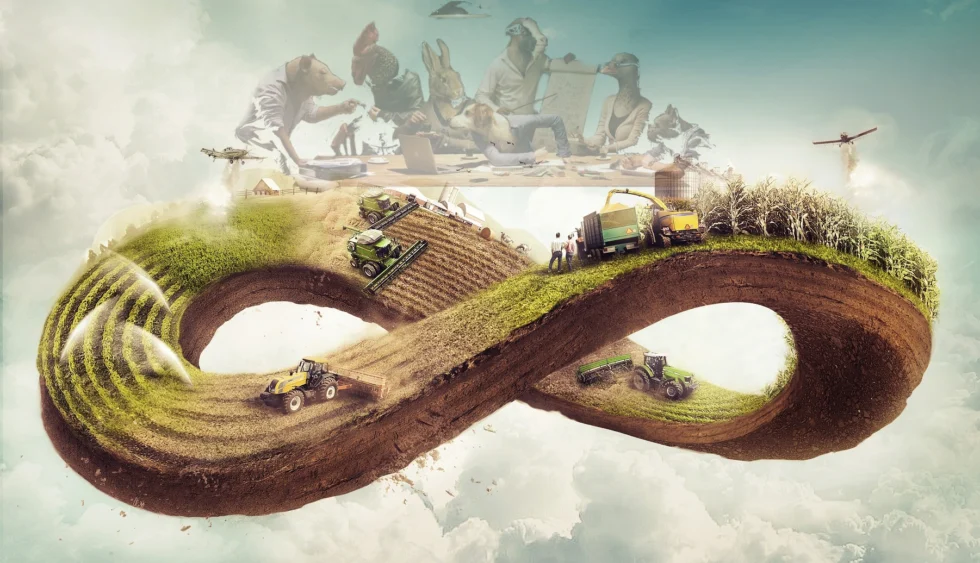
Drawing on the results of studies by the consultancy Carbone 4 and on large-scale international studies, we attempt to demonstrate that the needle is deliberately not pointing towards the best strategy for reducing GHG emissions.
Introduction
Our contemporary societies are emitting ever more greenhouse gases (GHGs), which warm the atmosphere by absorbing infrared radiation. They reduce our atmosphere’s tendency to send the sun’s energy back into space by keeping it on Earth. This heat trapping is the rise in average ocean and atmospheric temperatures better known as global warming. According to climatologists, more than 70% of this radiative forcing is attributable to so-called carbon-based energies. Yet we are consuming more and more fossil carbon-based energy, which comes from coal, oil and gas. So much so that from 2000 to 2018, coal consumption rose 11 times more than solar and 5 times more than wind worldwide. [1] We can thus see just how dangerous it is to count on the rise of renewable energies, which merely add their output rather than replacing existing sources. An increase of +1°C compared with the second half of the 19th century has reportedly already been measured, and the latest pessimistic projections predict +7°C by 2100. [2] To put this in perspective, 20,000 years ago, during the Ice Age, when it was on average 5°C colder than today, several kilometres of ice covered America and Northern Europe, France resembled present-day northern Siberia and the sea was 120 metres lower! [3] Today, the increase is 50 to 100 times faster. Faced with the fastest temperature rise the Earth has ever known, we must nevertheless adapt to a world of limited physical resources.
Principal author of the Bilan Carbone of ADEME (Agence de l'Environnement et de la Maîtrise de l'Énergie), Jean-Marc JANCOVICI founded Carbone 4, the consultancy on the low-carbon transition. He is the president of the association The Shift Project, which campaigns for the voluntary decarbonisation of the economy. Having just been appointed to the Haut conseil pour le climat, which is the body responsible for issuing opinions and recommendations on the implementation of public policies and measures to reduce greenhouse gas emissions in France, he is the unavoidable figure on the issue. Moreover, widely followed in our networks, he proves highly influential in environmentally aware circles. He is something of a ‘Mr Climate’ for France. That is why we believe it relevant to analyse the position of climate experts through him. Let us applaud the constant commitment he shows in countless conferences, round tables, interviews, hearings, videos, etc… in general, and in this article in particular, which helps raise the profile of the environmental question, notably through resource deposits.
Through a critique of his interview, ‘L’Europe est en décroissance énergétique depuis 2007’ [4], published in Socialter Special Issue no. 6, ‘L’avenir sera low-tech’, which we warmly recommend, we will try to highlight the gap between his findings and his recommendations, which is inevitably detrimental to us. Everything seems to confirm that even an expert like Jean-Marc Jancovici devotes more energy to secondary issues (such as transport) than to livestock farming, whose predominance in the global carbon footprint he himself nonetheless acknowledges.
The carbon case
In seeking ways to reduce the environmental impact of our actions, carbon footprint is the preferred indicator. As the global warming potential of greenhouse gas emissions is no longer in doubt, it is the benchmark measure that should guide our choices, at both collective and individual levels. Let us begin here with his explanations of carbon accounting, given to students at the Mines.
The United Nations Framework Convention on Climate Change (UNFCCC) [5], adopted at the Rio de Janeiro Earth Summit in 1992 by 154 states (plus the member countries of the European Community), is the first attempt, within the UN framework, to better understand what climate change is and how to address it. The conclusion, according to Mr Jancovici:
- We are going to set ourselves the goal of keeping entropic climate change at levels that do not present dangers to humankind.
Carbon accounting is in fact the carbon footprint assessment. It looks, using physical units (units of mass), at the quantity of carbon that is extracted from the ground and, once oxidised, released into the atmosphere. It was originally designed to give visibility on the contribution of our activities to the enrichment of the atmosphere in CO2 and, by construction, it also provides information (with the same metric) on the depletion of resources (carbon is originally extracted from a fossil fuel deposit). The same physical accounting therefore allows us to tackle both the question of the availability of fossil fuels and that of global warming.
The physical and chemical characteristics of greenhouse gases mean that it is legitimate to aggregate CO2 emissions wherever they come from. They have a very long chemical lifetime in the atmosphere, measured in decades or even centuries. Yet the atmosphere has a large-scale circulation system that means it is mixed in its entirety within a year or two. The place of emission is therefore of absolutely no importance. This is why, as far as greenhouse gas emissions are concerned, it is legitimate not to worry about where they are emitted when accounting for their impact on climate change. In other words, the atmosphere is a great common pot where no one will inherit the impacts of their own emissions. An inventory of emissions makes it possible to understand which processes an activity depends on. The carbon footprint assessment aims to characterise these relationships of dependency.
There is therefore a general human interest in considering everyone’s GHG emissions. Feeling concerned by them seems to be the first step.
From a rich and inspiring text…
An interesting cross-cutting approach
First of all, this interview is a good opportunity to learn new things: societies were apparently technically low-tech but also more rigid than today. Counter-intuitively, specialisation was greater, and it is technology that has given us a form of individual freedom. As for historical European and Asian civilisations, they showed ingenuity in making up for the local scarcity of a resource. Rather than ignoring the constraint, they acknowledged its limits in order to optimise its use.
His assessment is unequivocal: too many resources have been used indiscriminately, for optional extra comforts that make our way of life unsustainable. Reducing flows of raw materials and making explicit the trade-offs that are now implicit have become imperative.
Rebellious around the edges
While we know his positions on preserving nuclear energy to overcome climate disruption as a shock absorber for the contraction, he holds the media system responsible for the population’s lack of ecological awareness.
Disregarding convention, and with a touch of impertinence too, he advocates more or less radical changes, ranging from cutting car fuel consumption by a factor of 3 before switching to electric, to the question of the freedom of owners of vacant housing.
Aware that the new equilibrium point risks constraining our individual freedoms further, he invokes a desirable and playful regime in the hope of achieving it. Finally, rather than imagining a standard of living at the end, Jean-Marc Jancovici prefers to consider the dynamics of getting there, which suits us fine.
…to the problematic blind spot that is livestock farming
By addressing the climate question in a cross-cutting way, J.M. Jancovici questions subjects that seem, at first sight, far removed from energy issues. In this respect, he regularly takes radical positions in the hope of limiting our energy footprint. Reducing the human population sooner or later or banning organ transplants for people over 65 or 70 are two significant examples. It therefore seems legitimate to us to question the relevance of such remarks. Is it really on this kind of lever that the main room for manoeuvre lies? He himself states that the choices for reducing our environmental impact are poorly informed when it comes to deliberately going on a diet in order to last.
Paradoxically, Mr Jancovici underestimates his own lack of insight into the contribution of livestock farming to any hope of resolving the environmental crisis. By contrast, he prefers subjects such as aviation and digital technology, even though, according to his own results, the room for manoeuvre there is very limited.
Why do competent experts ultimately skew their own study results? What motivations might lead a scientist to downplay, consciously or unconsciously, his own figures?
How much GHG emission is livestock farming responsible for?
Also in his course entitled ‘La comptabilité carbone’ [6], Mr Jancovici put concrete cases to the expertise of students at the École des Mines, using the carbon footprints of a water distributor, a telephone operator, a construction company, a bank (excluding loans) and a public body promoting cultural exchanges. The aim was to reveal the relevance of this or that action that might at first have been widely favoured, and this short exercise in quickly analysing practical cases shows just how useful carbon footprints are. If a reduction in carbon emissions is wanted, the footprint makes it possible to account for each item of emissions and thus helps choose the action or actions with the greatest impact, in order to reach the desired result as efficiently and easily as possible.
For the French telephone operator, the electricity used to charge mobile phones thus turns out to be a marginal source of emissions compared with their manufacture, for example (a factor of 10). The most worthwhile action, meanwhile, seems to be to avoid switching to 5G, as one student very rightly points out. Of course, these trade-offs come at a price, which generally runs counter to the interests of the entity under study. Trade-offs can then be made in full awareness if the analysis reports any hidden costs that could potentially harm the company.
Like the various concrete cases presented to the students, the analysis of the global carbon footprint by sector tells us about the room for manoeuvre available for reducing entropic gases overall. On 5 March 2016, we sent an open letter to Jean-Marc Jancovici [7] concerning the assessment of the emissions genuinely attributable to the sector that appears predominant in the balance because of its sectoral interlinkages: livestock farming.
‘_Livestock farming alone would account for 14.5% of GHGs according to the FAO [8], but 51% according to the World Watch Institute [9], which claims to take into account the respiration of the world’s livestock. In your graphic ‘Décomposition des émissions mondiales en 2014’, 20% of emissions are attributed to agriculture in general. Deforestation also accounts for 8% of the total. Yet, again according to the FAO, livestock farming is responsible for 70% of current deforestation. So what emissions can really be attributed to livestock farming?_’
To this question he rightly pointed out to us:
‘On the share of livestock farming in global emissions, one must add up the direct emissions of the herd (rumination, manure), those from growing the cereals that feed the livestock (nitrous oxide after fertiliser spreading, tractor diesel), even the manufacture of N fertilisers for growing the cereals that feed the herd, and finally the upstream deforestation clearly attributable to animal feed (pasture, soy).’
Respiration does not come into the equation (not to be confused with rumination). Respiration returns to the atmosphere, in oxidised form, the carbon contained in the plants eaten by the animal, and this carbon comes… from the atmosphere. It is therefore a closed cycle.’
And he answered us without hesitation: ‘**Off the top of my head, I accept the idea that it makes up at least half.**’
Yet, as Mr Jancovici rightly pointed out, ‘pie-chart reasoning does not represent the dependencies that may exist between two slices.’ Deforestation and agriculture are a very good example of this.
_At least half_… it must be acknowledged that no such information has ever spread until now. Everyone seems to have retained that livestock farming alone accounts for a larger share than all transport combined (13.5%) [10], very far from a half. By his own account, this result would in fact be obtained by calculating the global warming potential (GWP) of methane and nitrous oxide over a period of 20 years instead of the 100 years commonly used [11]. Which timescale is then the most appropriate to use today? His answer seems to tell us about his view on this question. However, disagreements seem to remain over the methodology to be favoured. As simply moving from a 100-year to a 20-year timescale does not get us to half of global emissions, but rather to around 30%, what are the implicit factors that make it possible to get there?
French studies…
In his article ‘Combien de gaz à effet de serre dans notre assiette ?’ [12], Mr Jancovici concluded in 2010 that food accounted for roughly a third of French emissions. The latest update dates from 2017. In ‘Notre (r)évolution carbone’ [13], his consultancy Carbone 4 set out our carbon emissions precisely: 23.6% for food, of which 75% from meat and dairy products, or 17.7% of the total.
Already, a significant difference can be seen between the sector-based analysis and the individual average: the share of emissions linked to our diet falls from a third to a quarter. Only clarification of the calculation methods seems likely to explain these results.
In its latest report, ‘Faire sa part ?’ [14], Carbone 4 sets out the power and responsibilities of individuals, businesses and the state in the face of the climate emergency, once again using these well-known shares of emissions drawn from carbon footprints. We learn from it that switching from a meat-based diet to a vegetarian diet alone represents a 10% reduction in the total footprint (40% of the maximum total reduction resulting from the behavioural changes studied). A clarification is provided: ‘comparison of the emission factors “Average meal” and “Vegetarian meal” from ADEME’s Base Carbone. Side effects, such as the impact of ending the use of animal manure as soil amendments, have not been taken into account.’
Roughly the same figure is found by a simple cross-multiplication on the percentage reduction that removing meat from the diet would imply in ‘Notre (r)évolution carbone’ (9.7%). That seems logical, as Carbone 4 produced both studies.
…to international studies
According to a study published in 2013 based on the Swedish model (Åström et al. 2013) [15], a vegetarian diet would reduce the share of emissions from food by 46%. If this percentage is then applied to the share given in ‘Notre (r)évolution carbone’, we arrive at 10.9%, roughly the same reduction as that announced by Carbone 4, give or take a percentage point.
On page 9 of the report ‘Faire sa part ?’, the following remark appears: ‘Among the individual actions with the greatest impact, switching from a meat-based diet to a vegetarian, or even vegan, diet is significant’
These two diets are not the same, however, and their detailed sectoral analysis shows that dairy products alone account for 34% of the food share, or more than 8% of the total. Given that a well-planned vegan diet is viable for everyone at every stage of the life cycle, good for health and beneficial for the prevention and treatment of certain diseases (Craig et al. 2009) [16], why not consider such a diet accordingly? Although these are both dietary regimes, one more far-reaching than the other, one might say, conflating them is incomprehensible given such a difference in emission levels.
For its part, the German Foodwatch estimated that switching to a vegan diet would reduce food-related emissions by 87% [17]. Applying this percentage once again to our share of meat and dairy products in ‘Notre (r)évolution carbone’, we would arrive at a 20.1% reduction in GHG emissions on our total footprint. Not far from the 17.7% calculated from the Carbone 4 results. That is a reduction of one fifth of total GHG emissions.
These results are, of course, approximate. The raw cross-multiplications applied to the detailed Carbone 4 results do not take into account an increase in the ration of fruit, vegetables, cereals, oilseeds, nuts and so on, which we can expect. However, given the low emission rates of plant-based foods, and the fact that impacts such as ending the use of animal manure as soil amendments are not taken into account, we can reasonably consider these results.
An American study assessed that the emissions generated by a 100% locally sourced omnivorous diet are 7 times higher than those generated by a non-local vegan diet (Weber C.L. et al., 2008) [18]. It also found that, although food is generally transported over long distances (an average delivery of 1,640 km and an average life-cycle supply chain of 6,760 km), the GHG emissions associated with food are dominated by the production phase, which accounts for 83% of the 8.1 t (CO2e footprint per year for food) of the average American household. Transport as a whole would account for only 11% of life-cycle GHG emissions, and final delivery from producer to retailer only 4%.
The study by Poore and Nemecek (2018) [19]_ is said to be one of the largest food studies carried out to date. Published in the journal Science, it collected data from a sample of nearly 40,000 farms in 119 countries and covers 40 food products representing 90% of everything that is consumed. The overall impact of these foods was assessed: land use, GHG emissions, freshwater use, water pollution (eutrophication) and air pollution (acidification). It confirms the significant gap between the emissions of plant-based and animal-based products [20]. Mr Jancovici had presented this in a graph (Greenhouse gas emissions linked to the production of one kg of food, in kg carbon equivalent, broken down by gas, for so-called ‘conventional’ products) [21]. According to him, greenhouse gas emissions linked to the production of one kilogram of food in organic systems remain of the same order, or even increase slightly [22]_. He explains: this is due to lower crop yields, and to the fact that organic amendments (manure, for example) also lead to nitrous oxide emissions.
This significant gap emerges with every new study, whether the subject is greenhouse gas emissions, water consumption, arable land use and so on. The gap could be represented by two trend curves: one applied to plant-based products, the other to animal products. We would then see that there is clearly a quantitative leap in emissions, consumption and monopolisation of resources in the vast majority of cases, which is significantly not the case when comparing with local, organic, seasonal food.
Springmann et al. (2018) [23] produced another large-scale study which tends to confirm these results at global level. Researchers at the University of Oxford modelled the food systems of 159 countries on the basis of 62 agricultural products between 2010 and 2050, varying diets, the performance of farming practices and the reduction of food losses. Five indicators were considered: GHG emissions, blue water footprint (including irrigation), land use, and consumption of phosphorus and chemical nitrogen. Conclusion:
- Dietary change is the biggest lever of the transition.
_Brent F. Kim et al. (2019) [24]_ carried out a large-scale study modelling the GHG and water footprints of nine increasingly plant-based diets, aligned with the criteria of a healthy diet, specific to 140 countries. A theoretical transition to a vegan diet reduced diet-related per capita GHG footprints by 70% on average, compared with the baseline. Vegan diets had the lowest per capita GHG footprints in 97% of the countries studied. Given the low GHG footprints per kilocalorie of most plant-based foods, even a substantial increase in their consumption has very little effect on the overall emissions of diets. An interesting observation is that in 95% of countries, diets including animal products only for one meal a day emit less GHG than lacto-ovo-vegetarian diets (in which land and aquatic meats were entirely eliminated). This is partly explained by the considerable carbon equivalent weight of dairy products.
Finally, the study by GRAIN and the Institute for Agriculture and Trade Policy (IATP) tells us that if the growth of the meat and dairy sector continues as forecast, the livestock farming sector alone could absorb 80% of the annual ‘budget’ of greenhouse gas emissions compatible with limiting global warming to 1.5°C by 2050. In other words, four fifths of the permissible emissions!
Like Herrero et al. (2011) [25], we believe it is imperative to know the share of GHG emissions truly attributable to livestock farming, in its entirety, so that it can be addressed accordingly, that is, in proportion to its impact. Such disparities are incomprehensible: 14.5%, 20%, 30% and 51% differ by more than a factor of 3, and for proportions this massive it is the one and only case; the hypotheses decidedly fail to explain the results.
Our psychology to the rescue of the climate
At first glance, if we assume that we have all the information, we can reasonably hope to take action to curb climate disruption. Yet it seems that mechanisms resistant to change are at work. To change our habits, we have to step out of our comfort zone, and that is no easy matter. A genuine motivation must enable us to change our daily actions in a lasting way.
The first part of the programme ‘Sauver la planète : pourquoi est-ce si difficile ?’ from Xenius on ARTE (up to 7 min 30 s) tells us about how hard it is to change our behaviour despite our good intentions. The second part sorely misses its objective, as ever, but let us not dwell on it, since the underlying mechanisms are the same as in our case study.
Susan Fiske and Shelley Taylor coined the term ‘cognitive miser’ (‘avarice cognitive’) to describe the way that, in a situation of competition, everyone opts for the proposition that produces the greatest cognitive effect for the least mental effort. [26] Here, the environmental psychologist Ellen Matthies takes up this theory, telling us that human beings tend to think, analyse and perceive things by opting for the best-known cognitive biases. [27]
To change in practice, the brain must therefore first record new behavioural pathways. This is the role of a very specific brain structure: the basal ganglia. When we learn something new, such as driving, we repeat the same movements over and over. This leads to the formation in our brain of what we might call well-trodden paths. Each time we take them, they grow stronger. Little by little, our brain records this process in the basal ganglia, which allows us to develop automatic responses. We drive without having to think much. The problem is that, once ingrained, these automated behaviours are hard to change.
Again according to Ellen Matthies, what would really be effective is implementation intentions, which she illustrates with this example: to actually take the bike rather than the car, you need to picture your next planned errand, imagine the moment of going to fetch your bike and setting off. The more often you do this, the more effective it is. The brain would record this new behaviour more easily because we would already have thought through our plan of action before even being faced with the situation. At the start, it is advisable to set modest goals. A major problem is that our environment is full of information that floods our brain, making any new implementation difficult. She adds: ‘unfortunately, we are not able to form implementation intentions for all the behavioural areas that exist without risking overload’. It is therefore better to begin by concentrating on a single goal.
Implementation intentions would therefore be necessary for any lasting change in behaviour, with the goal being essential for moving into action. That said, it still has to be the right one!
It therefore seems particularly important to focus on the right goals in order to give ourselves a course of action. The following case study attempts to show these shortcomings, which go largely unnoticed by the public, even though it is the first to be affected.
Jean-Marc Jancovici’s approach as a textbook case
On average, switching to a vegetarian diet cuts CO2 emissions four times more than giving up flying. This leads us to a reduction of 2.12 t CO2/person/year for a vegan diet, which would be 7.8 times more than giving up flying… or 7.5 times more according to the Carbone 4 breakdown. Shouldn’t an individual action that would reduce one’s carbon footprint not by 10% but by 20% be clearly highlighted? Especially as there is no other individual action that can solve one fifth of the problem!
A ‘quick’ analysis of the Facebook posts on Mr Jancovici’s account [28] gives an overview of his pet subjects, which (let us assume) are representative of his state of mind. Individual authorship of the posts cannot be established, given the number of people who manage and therefore publish on his Facebook page.
Of 80 posts in one month, 6 deal more or less directly with livestock farming and 2 with industrial meat, which is largely responsible for Amazon deforestation. Only one post points strongly to livestock farming for the methane emissions of cattle, and the deforestation it has caused since the dawn of humanity, and only if you click on ‘See more’, because otherwise the title is not very telling: _Comment les sols et l’agriculture peuvent aider le climat [29]_. Reading through the article, we finally learn that “Grasslands used for livestock farming, moreover, have a recognised positive role for the climate: they are ranked among the best carbon stores in soils, along with forests, according to INRA.” On this point, the carbon storage of grasslands seems largely overestimated according to this short, very well-made reference video [30], but let us not digress.
Having followed Mr Jancovici’s talks regularly for more than 5 years, we can see the place that livestock farming takes in his thinking. Our open letter prompted a somewhat surprising response from him. We therefore tried to share this information as widely as possible and to get him to react, during his appearance on the programme Thinkerview, in a Facebook live, and in a number of posts relating to livestock farming, always citing and tagging him. Never have we had the pleasure of hearing him on this subject, even though it is at the heart of his daily commitment. Here, let us draw a parallel with what he says in a lecture in Loudun: “If the newspaper’s purpose were to represent the facts and nothing else, then for every 1 article that talks to you about solar power there should be 10 that talk to you about coal ”. [31] Logical, isn’t it?
It must be said that livestock farming is indeed a deliberate blind spot. Having kept up active monitoring since the creation of our association APALA (which aims to make our actions sustainable), we very regularly notice blunders such as the one on 26 June, when Carbone 4 published a visual summary sheet about their report [32]. It turns out that the most impactful individual action, namely becoming vegetarian, had been forgotten. After we pointed this out in the comments, the error was corrected, but visually, although it is listed first (which is rarely the case, so let us stress this), it appears to be on the same level as choosing to cycle or no longer flying. A factor of 4 would nonetheless seem considerable enough to make it more visible…
Unfortunately for our collective understanding, and therefore our capacity to act, many such examples could be given. The talk by Shafik Asal [33] (founder of Eco2initiaitive) at the 2018 Bon pour le Climat conference is revealing of these ‘strategic unintentional omissions’.
This blind spot prevents us from consistently ranking our priorities in the face of climate change, thereby skewing any trade-off that we would nonetheless need to consider pragmatically.
Livestock farming does not concern only the food sector
Here we are dealing ‘only’ with food. Beyond this sector, it should be possible to draw out an average emissions-reduction factor linked to replacing animal products with plant-based products.
As a reminder, animal products are used in many other sectors, such as:
- clothing, furnishing and decoration (leather, wool, silk, fats, hair, feathers and down)
- products from the chemical, cosmetics and pharmaceutical sectors
- tests carried out on animals (experiments)
- exploitation of animals linked to leisure activities such as shows, sports and other ‘recreational’ activities
But then, what share of the balance can be taken by the animals that we constantly choose to replace?
The economic indicator tells us about the scale of the situation
Jean-Marc Jancovici establishes a link between the change in oil production in volume terms and the change in GDP per person [34], with a time lag that would explain why the economy ‘reacts’ to the oil available. For her part, Véronique Seltz (doctor of economics at Université Paris Dauphine) attempted to observe what the advent of a vegan shock would do to the French economy. The total end of animal exploitation would give rise to constraints such that an upheaval in production techniques would have to be envisaged. _It would then be the source of the creative destruction dear to Schumpeter and would bring about a ‘qualitative and discontinuous change in economic evolution’, which is what is known as development [35]._
Without distinguishing between the creation and destruction of activity, she thus estimates that 64.57% (nearly two-thirds) of the French economy [36] would be affected by such a shock.
If such an average emissions-reduction factor linked to replacing animal products with plant-based products were calculated, we could then consider applying it to a significant share of our economy. Making this change would obviously be no small matter at national level alone, but also at international level, given that the FAO estimates that a billion poor people depend on livestock farming to feed themselves and ‘make’ a living [37]. While 815 million people suffer from hunger in the world today, nearly 80% of poor people live in rural areas and depend on agriculture, fishing and forestry as their main source of income and food [38].
The fact remains that today, animal processes are intrinsically dependent on plant processes, and not the other way round.
The energy dilemma
‘_We are nothing but energy converters_’ Jean-Marc Jancovici – Lost in Transition conference.
Poore et Nemecek (2018) tell us that only 18% of calories and 37% of protein are provided by products from livestock farming. How can such a small contribution for such a large impact be explained? The trophic network sheds some light on this.
As open dissipative systems, living beings constantly lose energy through entropy. This creates heat, which is why we all radiate according to the intensity of our activity. Imagine a radiator, with power proportional to the size and activity of the dissipative system in question, heating throughout its existence. That energy is lost and there is nothing we can do about it. No optimisation can reduce this energy leak other than marginally (methanisation, for example).
The links in a food chain are in fact trophic levels. In ecology, they are connected to one another by a transfer of energy and biomass (flows of carbon and nitrogen) within an ecosystem. _The term trophic refers to everything relating to the nutrition of a living tissue or organ. For example, a trophic relationship is the link that binds predator and prey in an ecosystem [39]._
Raymond LINDEMAN’s law (dating from 1942) tells us that the amount of energy passing from one link in the chain to the next is only 10%. Also known as the ‘10% law’ in basic textbooks, it states that only a fraction of the energy entering a given trophic level in a biocoenosis (the set of living beings established in the same environment) is passed on to organisms at higher trophic levels, as we learn in ‘Eléments d’écologie : Ecologie fondamentale’_. Estimates of the energy content of the various types of organisms, made for the whole biosphere, largely confirm LINDEMAN’s average assessment of the energy transfer rates between the various trophic levels of a biocoenosis [40]._
- From one link to the next, energy transfers therefore have a very poor efficiency.
A study by the FAO (A. Mottet et al., 2017) confirms that animals are poor converters of energy into human food. At equal protein content, producing 1 kg of boneless meat would require on average 2.8 kg of food fit for human consumption in ruminant systems and 3.2 kg in monogastric systems (Table 1, p.3) [41]. That amounts to conversion losses of 64% and 69% respectively. It is interesting to note that the ratio of proteins fed in to proteins produced across all animal products (including meat, milk and eggs) is 10 (10% yield, 90% loss) [42]. Might a law not sometimes bear that name?
In this exercise, it is appropriate to consider the gross conversion efficiency for the overall impact and the net conversion efficiency in the context of food availability. In this case, the average is 2.6 proteins consumed for every 1 produced (62% loss), with 81% of livestock farms being net consumers of protein. For more detail, I recommend the excellent article ‘Dix kilos de végétaux pour un kilo de viande : l’élevage se sert-il dans nos assiettes ?’. [43] Although locally it can be a protein contributor in specific cases, livestock farming massively wastes our resources.
According to Rastoin and Ghersi 2010 [44], animal production, from the harvesting of edible plants to human consumption, would cause more than 56% energy loss [45] (i.e. 2.3 proteins consumed for every 1 produced). Not far from the 62% of the previous study.
These studies clearly show that we are in food competition with livestock farming.
Is demography really a problem?
Like Jean-Marc Jancovici, we believe that helping countries to manage their demographic factor is necessary, but first and foremost for the emancipation of women. Although it would reduce the environmental pressure we exert at its root, by literally reducing the number of individuals consuming resources, we believe it is a chimerical lever that must imperatively be put into context.
_By digging a hole 1 km wide, 1 km long and 200 m deep, the entire human species (even fully dressed) can be made to disappear without difficulty. [46]_ This is the whimsical calculation indulged in by the original author Michel Dalmazzo, an occasional illustrator.
More seriously, to grasp what humanity represents on our planet, a study of the distribution of terrestrial biomass was carried out by _YM Bar-On et al., (2018) [47]._ We make up only 36% of the biomass of terrestrial mammals, while 60% are livestock and 4% are wild animals. As for birds, 70% are farmed and 30% wild. There are also 3 times more viruses and worms, 12 times more fish, 17 times more insects, spiders and crustaceans; and 200 times more fungi, 1,200 times more bacteria and 7,500 times more plants. In fact, the bulk of biomass is made up of plants at 82% and bacteria at 13%, with the remainder representing a tiny fraction of the total biomass.
We also learn that the biomass of a group is correlated neither with the number of species nor with the number of individuals that make them up. The results of this meta-analysis were presented on the Planet-Vie website [48]. Drawing on studies estimating past biomass, the authors tell us that humans are thought to be responsible for the loss of half of the biomass of terrestrial plants. Yet, again according to Poore and Nemecek (2018), 83% of farmland is used for livestock farming.
Moreover, the number of farm animals slaughtered each year is growing much faster than the human population: from 8.4 billion in 1961 to 77 billion in 2017 (FAO) [49], a ninefold increase, while the population has been multiplied by 2.5. The ratio of ‘farm animals’ to ‘humans’ is rising, even though we could feed 15 billion people by moving from livestock-based agriculture to plant-based agriculture. [50] Our way of life appears to be responsible for the damage we are currently witnessing, rather than a supposed demographic problem which, admittedly, exacerbates the harmful effects but is not a problem in itself if a sustainable way of life were adopted. And besides, what sense would there be in a generalised population increase, given such differences that some people gorge themselves so much that they consume, and therefore pollute, on behalf of everyone else?
Here too, numerous studies show that a plant-based diet requires incredibly less arable land. But the sharing of water is a telling example and, in this respect, we recommend the excellent fact sheet ‘Le problème de l’eau’ from the AVF [51] as well as the article by the blogger Nicolas B. [52] which explains the differences between green, blue and grey water. All the more so as, according to the ecologist senator Ronan Dantec, vice-chair of the Senate’s sustainable development committee, the immediate priority should be to find a very frugal use of water in agriculture. [53]
According to Mathieu Ricard, livestock farming monopolises half of the world’s freshwater consumption and discharges 50% of polluted water in Europe, while 70% of the world’s freshwater is already degraded or polluted. Yet we have a limited stock of freshwater (only 2.5% of the planet’s water is freshwater, with three quarters of it locked in glaciers and permanent snow). Moreover, 1 m3 of water is reportedly needed to produce 1,000 kcal of plant-based food, and 5 m3 for 1,000 kcal of animal-based food. While each Earth dweller has 5,000 L of water per day available, the daily food of a French person requires 9,000 L, compared with 3,600 L if it were plant-based, which would be sustainable.
Population growth has as a direct consequence a reduction in the area of cultivable land per person. [54] So, rather than yielding to a certain prevailing Malthusianism, why not advocate a change of diet by directly reclaiming seed-producing plots while saving as much water as possible?
Sharing versus the grabbing of resources
As with the question of demographics, what kind of society would deny an organ transplant to a person deemed too old? Doctors are sworn in to authorise or refuse an organ transplant in the patient’s interest. But can we really imagine banning a surgical operation on ecological grounds? Can we seriously contemplate a one-child policy in order to reduce the population? How would these people be chosen, and what would the right criteria be?
Although their data cover 90% of the population, Thomas Piketty and Lucas Chancel paint a dismal picture in their study ‘Carbon and inequality: from Kyoto to Paris’ [55]:
The top 10% of emitters are now responsible for 45% of global emissions, while the bottom 50% of emitters are responsible for less than 13%. The middle 40% emit 42% of global emissions. The richest 1% in the United States, Luxembourg, Singapore and Saudi Arabia emit more than 200 tonnes of CO₂ equivalent per person per year, 2,000 times more than the poorest in Honduras, Mozambique, Rwanda or Malawi (around 0.1 tonnes). It is interesting to note that, from 1998 to 2013, the group made up of the lowest 2% of emitters in the world saw its CO₂e emissions fall by 12% per person.
The top 1% of emitters on the planet, around 77 million people, emit more than the lower-emitting half of humanity, nearly 4 billion people (17% of emissions against 12% in 2019, according to the World Inequality Report 2022) [56]. The planet’s resources do not meet the basic needs of the poorest billion people, while these 77 million people emit more than nearly 4 billion others. There is such a problem of inequality that demography does not reflect the problem we are facing. What sense would an average of such disparities have? Imagine a trend line… As the biomass of a group is correlated neither with the number of species nor with the number of individuals that make them up, the impact of the human species seems to be more closely correlated with its levels of inequality than with its demography.
Conclusion
APALA has set itself the mission of working towards a sustainable way of life by guiding everyone’s actions with reliable information and the implementation of concrete solutions.
In the immediate term, we need a horizon. We need to plan gradual, sector-by-sector reductions in order to drastically lower our carbon emissions. If we need to divide this quantity by 3 in 30 years, it is urgent to set out this horizon so as to rally people as quickly as possible. Not one, but several major solutions must be defined in order to bring as many people as possible on board with shared objectives. However, prioritising these objectives will make it possible to act effectively.
In summary, based on the various studies cited and the preceding analysis, shifting to a vegan diet would reduce food-related emissions by three quarters on average. It would also reduce global protein loss by nearly 60%. As for livestock farming as a whole, the range runs from 14.5% to 51% of global GHG emissions depending on the study. Mr Jancovici tells us that the sector would represent between a quarter and a half of emissions if the radiative forcing time scale considered were brought down from 100 to 20 years. As for water, our consumption would be divided by a factor of 3 to 5 depending on the studies (monopolisation would be more scientifically accurate).
Considering all the data cited above, and all that has been left out for the sake of digestibility, the conclusion seems to us unequivocal. It is urgent to rethink our diets collectively. Yet of the 9 proposals in the Shift Project’s ‘Pour que l’Europe change d’Ere’, the last concerns food, and it recommends first of all halving food waste. Then, for livestock farming, priority would be given to quality rather than quantity, by proposing the creation of a ‘Haute Qualité Environnementale’ label. No questioning of the agricultural model is discernible, and once again, the GHG emissions attributable to livestock farming are copiously concealed (75% of 12%?). The Shift Project is nonetheless a public-interest association, a think tank whose mission is to inform and influence the debate on the low-carbon transition in France and Europe: it sets up working groups around the most delicate and decisive issues of the transition and promotes the recommendations of these groups to political and economic decision-makers.
Jean-Marc Jancovici’s analyses are useful to us, helping us to better understand energy and anthropogenic climate change. That said, the dials need to be set in the right places. How can we believe in the much-vaunted energy transition when national, regional and local politicians collectively point the finger at the imported tomato, when it is the pig, the hen and the fish from our own backyard that are the problem? Working animals need the same agricultural land as we do to feed themselves. A world with tractors in place of these animals can support more human beings than if we go back to beasts of burden, J.M. Jancovici reminds us. We need to think in terms of ‘systems’ and consider what happens when practices become widespread. Whom will we choose to feed? How many human equivalents will we choose to provide for, against giving up animal products? Food is the domain par excellence in which we can increase our resilience. Moving away from livestock farming seems to be the first condition. If we manage such a challenge, bearing in mind that the involvement of everyone is a prerequisite, we will be well placed for other changes that match the demands, _so that the rule of three comes out right in the end_…
Everyone agrees that there is an urgency, but nobody seems to see what is staring us in the face. An approach that appears to castigate comfort in our way of life does not strike us as relevant, at least if we do not wish to see a global cosmopolitan elite secede from humankind. Inequalities are so great that it would be futile to convince the majority of Earth’s inhabitants not to improve their standard of living. What is more, we can clearly see here the limits of the legitimacy of such action. While nearly a billion people suffer from malnutrition, livestock farming is generalised, globalised and tomorrow relocalised? How many small farms would it take to feed us all? Here again, with social determinism at work, spatial discrimination will be inevitable. And what would be the point anyway? Shall we sink all our efforts at energy sufficiency for the sake of animal cheese, when its plant-based equivalent, two, three (or more) times more resource-efficient and correspondingly less polluting, is already emerging? The plant-based revolution is under way and offers us a prospect for the future, unlike the current model. At a time when we are questioning radicalism, might it not, ultimately, be rather exciting to consider doing things differently? By taking into account the majority of our fellow inhabitants, the other animals, for example?
Livestock farmers are drowning in debt, and theirs is the socio-professional category (dairy cattle farmers in particular) most affected by suicide. One placard proclaims: ‘I am a farmer, I am dying’. Do we really wish to reform this system, or will we look for emergency exits? Such human misery is not acceptable, and such a wasteful system is unsustainable in every respect. Livestock farmers must be supported to become high-value-added processors, in an activity that is viable both ecologically and economically. _Lost in transition_… To the question ‘What is to be done?’, although there are many solutions, the simplest is to start with the most effective action within our reach: plants in all their forms rather than any animal product, wherever it comes from. Let’s go plant-based!
Ultimately, we are relying on what the FAO said, as long ago as 2006 (Steinfeld H. et al., 2006):
Livestock should be at the heart of the policies put in place to tackle soil degradation, climate change, air pollution, shortages and pollution of water resources, and the loss of biodiversity.
Correction of 2 November 2026: the number of animals slaughtered in 1961 has been corrected (8.4 billion according to the FAO, not 6); the comparison of emissions between the richest and the poorest has been rectified (Chancel and Piketty’s ratio of 1 to 2,000 did not concern the top 1% and top 10% of the world), hence the removal of the erroneous figure of ‘140 billion people’, replaced by data from the World Inequality Report 2022.
References
[1] Jancovici, J.-M. (2019). Jancovici : Notre énergie, notre avenir - Loudun - 22/10/2019 [video, at 9 min 2 s]. YouTube. youtu.be/Ubx9YbMz8gM?t=542
[2] Centre national de la recherche scientifique (CNRS) (17 September 2019). ‘Les deux modèles de climat français s’accordent pour simuler un réchauffement prononcé’ [press release]. cnrs.fr/fr/les-deux-modeles-de-climat-francais-saccordent…
[3] Jancovici, J.-M. (1 November 2004). ‘Où nous situons-nous dans l’échelle des températures par rapport au passé ?’. jancovici.com. jancovici.com/changement-climatique/predire-lavenir/ou-no…
[4] Vion-Dury, P. (12 July 2019). ‘Jean-Marc Jancovici : “Nous sommes en décroissance énergétique”’ [interview]. Socialter. socialter.fr/article/jean-marc-jancovici-l-europe-est-en-…
[5] Wikipédia (n.d.). ‘Convention-cadre des Nations unies sur les changements climatiques’. fr.wikipedia.org/wiki/Convention-cadre_des_Nations_unies_…
[6] Jancovici, J.-M. (2019). 8 - La comptabilité carbone - Cours des Mines 2019 - Jancovici - [EN subtitles available] [video, at 2 h 3 min 25 s]. YouTube. youtu.be/lgoUns8Cu0w?t=7405
[7] APALA (27 June 2017). ‘Correspondances avec Jean-Marc JANCOVICI’. APALA. web.archive.org/web/20220703142053/https://apala.fr/c…
[8] Food and Agriculture Organization of the United Nations (FAO) (n.d.). ‘L’élevage et l’environnement’. web.archive.org/web/20191004070529/http://www.fao.org/liv…
[9] Goodland, R. and Anhang, J. (2009). ‘Livestock and Climate Change: What if the key actors in climate change are… cows, pigs, and chickens?’. World Watch, 22(6), 10-19. cloud.apala.fr/index.php/s/LivestockAndClimateChange
[10] Jancovici, J.-M. (n.d.). ‘Si nous voulons faire baisser les émissions, il faut savoir où elles sont’ [slide: breakdown of global emissions in 2017]. cloud.apala.fr/index.php/s/EmissionsMondialesParSecteur
[11] Jancovici, J.-M. (2019). Jancovici : Energie et climat : quelles interactions avec l’agriculture ? - 24/09/2019 [video, at 2 h 22 min 39 s]. YouTube. youtu.be/j48hBShnfB0?t=8559
[12] Jancovici, J.-M. (1 January 2010). ‘Combien de gaz à effet de serre dans notre assiette ?’. jancovici.com. jancovici.com/changement-climatique/les-ges-et-nous/combi…
[13] Vibert, E. (October 2011). ‘1990-2010 : Notre (r)évolution carbone’ [Wedodata infographic, source: Carbone 4]. Terra eco, pp. 28-29. cloud.apala.fr/index.php/s/NotreRevolutionCarbone
[14] Dugast, C. and Soyeux, A. (2019). Faire sa part ? Pouvoir et responsabilité des individus, des entreprises et de l’Etat face à l’urgence climatique. Carbone 4. carbone4.com/files/73_publication_faire_sa_part.pdf
[15] Åström, S., Roth, S., Wranne, J., Jelse, K. and Lindblad, M. (2013). Food consumption choices and climate change (report B2091). IVL Swedish Environmental Research Institute. web.archive.org/web/20211025225841/https://www.ivl.se/dow…
[16] Craig, W. J. and Mangels, A. R. (2009). ‘Position of the American Dietetic Association: Vegetarian Diets’. Journal of the American Dietetic Association, 109(7), 1266-1282. doi.org/10.1016/j.jada.2009.05.027
[17] foodwatch (2008). Organic: A Climate Saviour? The foodwatch report on the greenhouse effect of conventional and organic farming in Germany. foodwatch.org/fileadmin/foodwatch_international/campaigns…
[18] Weber, C. L. and Matthews, H. S. (2008). ‘Food-Miles and the Relative Climate Impacts of Food Choices in the United States’. Environmental Science & Technology, 42(10), 3508-3513. doi.org/10.1021/es702969f
[19] Poore, J. and Nemecek, T. (2018). ‘Reducing food’s environmental impacts through producers and consumers’. Science, 360(6392), 987-992. doi.org/10.1126/science.aaq0216
[20] Poore, J. and Nemecek, T. (2018). ‘Estimated global variation in GHG emissions, land use, terrestrial acidification, eutrophication, and scarcity-weighted freshwater withdrawals, within and between 40 major foods’ [figure 1]. In ‘Reducing food’s environmental impacts through producers and consumers’, Science, 360(6392), 987-992, web.archive.org/web/20210826081922/https://science.scienc…
[21] Jancovici, J.-M. (2016). ‘Emissions de gaz à effet de serre liées à la production d’un kg de nourriture, en kg équivalent CO2, avec une discrimination par gaz, pour les produits dits “conventionnels”’ [figure]. In ‘Combien de gaz à effet de serre dans notre assiette ?’, jancovici.com, jancovici.com/wp-content/uploads/2010/01/assiette_graph5_…
[22] Jancovici, J.-M. (2016). ‘Emissions de gaz à effet de serre liées à la production d’un kg de nourriture en système bio’ [figure]. In ‘Combien de gaz à effet de serre dans notre assiette ?’, jancovici.com, jancovici.com/wp-content/uploads/2010/01/assiette_graph6.png
[23] Springmann, M., Clark, M., Mason-D’Croz, D. et al. (2018). ‘Options for keeping the food system within environmental limits’. Nature, 562(7728), 519-525. doi.org/10.1038/s41586-018-0594-0
[24] Kim, B. F., Santo, R. E., Scatterday, A. P. et al. (2020). ‘Country-specific dietary shifts to mitigate climate and water crises’. Global Environmental Change, 62, 101926. doi.org/10.1016/j.gloenvcha.2019.05.010
[25] Herrero, M., Gerber, P., Vellinga, T. et al. (2011). ‘Livestock and greenhouse gas emissions: The importance of getting the numbers right’. Animal Feed Science and Technology, 166-167, 779-782. doi.org/10.1016/j.anifeedsci.2011.04.083
[26] Fiske, S. T. and Taylor, S. E. (1984). Social Cognition. Addison-Wesley.
[27] Matthies, E. (n.d.). [Filmed talk on cognitive biases] [video, at 2 min 2 s]. YouTube. youtu.be/_GIk2BHBzSY?t=122
[28] APALA (2019). Publications FB JANCOVICI [spreadsheet: Jean-Marc Jancovici’s Facebook posts from 4 August to 4 September 2019, classified by topic]. cloud.apala.fr/index.php/s/PublicationsFBCompteJANCOVICI
[29] Agence France-Presse (AFP) (8 August 2019). ‘Comment les sols et l’agriculture peuvent aider le climat’. GoodPlanet Info. web.archive.org/web/20190823075238/https://www.goodplanet…
[30] TABLE (2018). Grazed and Confused? How much can grazing livestock help to mitigate climate change? [video]. YouTube. youtube.com/watch?v=nub7pToY3jU
[31] Jancovici, J.-M. (2019). Jancovici : Notre énergie, notre avenir - Loudun - 22/10/2019 [video, at 9 min 12 s]. YouTube. youtu.be/Ubx9YbMz8gM?t=552
[32] Carbone 4 (26 June 2019). ‘[Publication] “Faire sa part ? Pouvoir et responsabilité des individus, des entreprises et de l’Etat face à l’urgence climatique”. Les messages clés’ [Facebook post]. facebook.com/fr.carbone4/posts/2389230774466417
[33] Asal, S. (2019). Shafik Asal - Colloque Bon pour le Climat 2018 [video, at 2 min 41 s]. Bon pour le Climat, YouTube. youtu.be/vNMJ4fRQmYk?t=161
[34] Jancovici, J.-M. (16 August 2019). ‘Lien entre production de pétrole et PIB’ [Facebook post]. facebook.com/jeanmarc.jancovici/posts/10158472923872281
[35] Seltz, V. (13 January 2017). ‘Le végane : une innovation technologique majeure’. Variances. variances.eu/?p=1852
[36] Seltz, V. (2018). Conférence / débat - Les enjeux économiques du végane [video, at 54 min 5 s]. Info Végane, YouTube. youtu.be/aF43ubo9csg?t=3245
[37] Food and Agriculture Organization of the United Nations (FAO) (n.d.). ‘L’élevage et l’environnement’. web.archive.org/web/20191004070529/http://www.fao.org/liv…
[38] Food and Agriculture Organization of the United Nations (FAO) (2017). L’action de la FAO face au changement climatique. Conférence des Nations Unies sur les changements climatiques 2017. web.archive.org/web/20200331161319/http://www.fao.org:80/…
[39] Wikipédia (n.d.). ‘Réseau trophique’. fr.wikipedia.org/wiki/R%C3%A9seau_trophique
[40] Ramade, F. (2009). Éléments d’écologie. Écologie fondamentale (4th ed.). Dunod, p. 442. cloud.apala.fr/index.php/s/LoiDeLindeman
[41] Mottet, A., de Haan, C., Falcucci, A., Tempio, G., Opio, C. and Gerber, P. (2017). ‘Livestock: On our plates or eating at our table? A new analysis of the feed/food debate’. Global Food Security, 14, 1-8. doi.org/10.1016/j.gfs.2017.01.001
[42] Mottet, A., de Haan, C., Falcucci, A., Tempio, G., Opio, C. and Gerber, P. (2017). ‘Livestock: On our plates or eating at our table? A new analysis of the feed/food debate’. Global Food Security, 14, 1-8. doi.org/10.1016/j.gfs.2017.01.001
[43] Nicolas B. (13 September 2019). ‘Dix kilos de végétaux pour un kilo de viande : l’élevage se sert il dans nos assiettes ?’. The Critical Vegan. criticalvegan.home.blog/2019/09/13/dix-kilos-de-vegetaux-…
[44] Rastoin, J.-L. and Ghersi, G. (2010). Le système alimentaire mondial. Concepts et méthodes, analyses et dynamiques. Éditions Quæ. doi.org/10.3917/quae.rasto.2010.01
[45] Rastoin, J.-L. and Ghersi, G. (2010). [Figure: energy losses between the harvest of edible plants and human consumption, in kcal/day/person]. In Le système alimentaire mondial. Concepts et méthodes, analyses et dynamiques. Éditions Quæ. cloud.apala.fr/index.php/s/PertesEnergetiqueSystemeAnimal
[46] Dalmazzo, M. (24 February 2015). ‘Sept milliards’. AgoraVox. agoravox.fr/tribune-libre/article/sept-milliards-164071
[47] Bar-On, Y. M., Phillips, R. and Milo, R. (2018). ‘The biomass distribution on Earth’. Proceedings of the National Academy of Sciences, 115(25), 6506-6511. doi.org/10.1073/pnas.1711842115
[48] Combemorel, P. (19 June 2018). ‘La répartition de la biomasse sur Terre’. Planet-Vie. planet-vie.ens.fr/thematiques/ecologie/relations-trophiqu…
[49] FAO (2025). FAOSTAT, production : animaux terrestres abattus pour leur viande (1961-2024), data reproduced by Our World in Data, ‘Land animals slaughtered for meat’. ourworldindata.org/grapher/land-animals-slaughtered-for-m…
[50] Nourrir son monde (n.d.). Cahier no. 9. cloud.apala.fr/index.php/s/NourrirSonMonde
[51] Association végétarienne de France (AVF) (2009). L’eau [information sheet no. 15, version 2]. cloud.apala.fr/index.php/s/LeProblemeDeLEau
[52] Nicolas B. (2 July 2019). ‘15 000 L d’eau pour un kilo de bœuf, vraiment ?’. The Critical Vegan. criticalvegan.home.blog/2019/07/02/15-000l-deau-pour-un-k…
[53] Public Sénat (2019). Ronan Dantec dénonce : « Plus 7 degrés en 2100, il y a urgence à agir ! » [video, at 2 min 31 s]. YouTube. youtu.be/q-_mlM-YGYk?t=151
[54] Flachowsky, G., Meyer, U. and Südekum, K.-H. (2017). ‘Land Use for Edible Protein of Animal Origin—A Review’. Animals, 7(3), 25. doi.org/10.3390/ani7030025
[55] Chancel, L. and Piketty, T. (2015). Carbon and inequality: from Kyoto to Paris. Trends in the global inequality of carbon emissions (1998-2013) & prospects for an equitable adaptation fund. Paris School of Economics. piketty.pse.ens.fr/files/ChancelPiketty2015.pdf
[56] Chancel, L., Piketty, T., Saez, E. and Zucman, G. (eds) (2022). World Inequality Report 2022, chapter 6, ‘Global carbon inequality’ (table 6.5). World Inequality Lab. wir2022.wid.world/chapter-6/

It seems to me that JMJ says we need to keep some livestock farming in order to have enough natural fertilisers.
A 100% plant-based diet is essential.
Let’s go vegan for the animals, the planet and our health.
Or we will die.
Hello Hervé,
Yes, he must believe that, like most people. INRA helps to spread this idea by not considering any alternative to the mixed crop-livestock farming system. Yet farming that does without animal inputs from livestock farms is perfectly viable and even desirable. On this subject, I recommend the following well-sourced article, which helps to put the issue back in context so that it can be better addressed:
https://questionsdecomposent.wordpress.com/…/lagricult…/
Furthermore, we carried out a project on vegan farming, first with students from École Centrale and then with students from ESA in Angers. The agronomy professors were unanimous that vegan farming poses no difficulty in terms of technical practices.
Link:
https://questionsdecomposent.wordpress.com/2018/06/05/lagriculture-dans-un-monde-vegane/