TRAINING DIVISION
training for the future
Masterclasses, courses and student projects to decide without false solutions.
We work with higher education institutions to promote engaged research on the transitions and to support the training of students who aspire to work on them. We deliver masterclasses for the professional world that respond to the quest for meaning and commitment of a growing number of decision-makers.
Innovative seminars
INNOVATIVE SEMINARS

Drawing on its experience in project-based learning,
the association delivers masterclasses aimed at the professional world for people who wish to take an active part in the transitions. It offers à la carte seminars, making it possible to fit them into already busy schedules.
Decision-makers, employees, entrepreneurs, students…
We support people in search of knowledge and meaning who want to have a significant impact in making the world better.
OUR CATALOGUE OF MASTERCLASSES
Discover our three complementary pathways to improve your impact through structured, progressive learning.
The scientific council
THE SCIENTIFIC COUNCIL
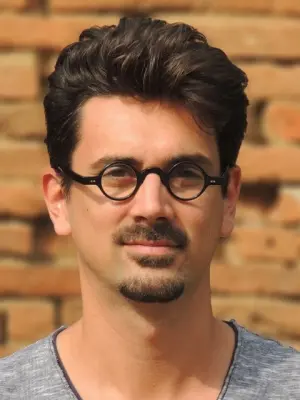
As a researcher in socio-ecological systems, I explore the dynamics of transition and the levers of change, notably through participatory modelling and serious games. I have applied these approaches in international projects such as adaptation to global warming in Madagascar, as well as in my partnership research on the sustainable and ethical transitions of food systems.
At APALA, I bring this expertise to combine a rigorous, operational scientific approach. The strength of the association lies in building bridges between research and entrepreneurship, helping to structure thinking and maximise impact.

A physicist by training, I developed my expertise at the ENS and the ESPCI before obtaining my doctorate in 2022. Passionate about sharing knowledge, I founded Veganalytic in 2020 to fill a gap: to build a bridge between academic research on the health and ecological effects of plant-based diets and the general public, who are often exposed to messages out of step with the state of the art in science.
By joining APALA’s scientific council, I am pursuing a twofold aim: to refine the analysis of scientific evidence by keeping up to date with the literature, and to make this knowledge more accessible to support informed and impactful choices.
The programme
THE PROGRAMME
Responding positively
to the quest for meaning

what does science
say about the state of the planet?
By revisiting scientific discourse on global warming, biodiversity loss and resource stocks, we show that the situation is far from hopeless and that research offers many opportunities to improve the state of the planet.

The errors
of the calls for desertion
With regard to the environmental situation, we show that calls for ‘desertion’ are not justified and that they potentially lead to a worse situation than the one they seek to escape.

restoring meaning
to commitment
Against discourse that decries human activity, we show that having an impact on the environment can be positive; in particular, that transformations of nature can benefit its inhabitants.
Engaged research
37 student projects carried out with APALA
Since 2016, students from Centrale Nantes, Polytech Nantes, Mines Saint-Étienne, Audencia, ENS Rennes, École de design Nantes Atlantique and ETH Zurich have been working on real-world transition topics. Reports, tools and posters are freely accessible.
- Masonry heater 5
- Low-tech thermal comfort 6
- Low-tech indicators 5
- Geodesic dome 6
- Food and agriculture 3
- Climate and carbon footprint 3
- Housing and eco-construction 2
- Business model 3
- Design and mediation 2
Applied low-tech indicators
A tool for measuring how sustainable a technology is, tested on the masonry heater, the raw earth brick and the solar oven.
Moving out of livestock farming: ‘transfarmation’
A tool for identifying the farms where a change of activity would have the greatest impact, developed by ETH Zurich students for TransiTerra.
Transition concepts in pictures
Growth, nature, biodiversity, planetary boundaries: posters and animated videos to make these topics accessible.
What our training offers
MAKING THE SCIENTIFIC APPROACH more accessible
The aim of the masterclasses is to shed light on the processes that improve society by identifying the best levers for doing so. They seek to encourage positive behaviour change while helping people prioritise their actions.
HELPING PEOPLE ADOPT A CONSTRUCTIVE STANCE TOWARDS OTHERNESS
The masterclasses also aim to avoid the soldier mindset of trying to convince, and to foster that of the explorer: learning as much as possible, adjusting one’s view of the world and sharing what seems to best reflect the reality we are trying to describe. They teach us to remain intrigued rather than threatened when we are confronted with information that runs counter to our beliefs.
GUIDING PEOPLE TOWARDS HIGH-IMPACT CAREERS
These masterclasses aim for effective means in the service of coherent ends.
They encourage people to invest their limited energy in a transformative and fulfilling future that will shape tomorrow’s world.
Request a quote
We can offer you tailor-made masterclasses and seminars, adapted to your needs. Do not hesitate to write to us so that we can think together about the best offer.
Contact form*