
In recent years, livestock farmers who are not in financial difficulty have been deciding to give up livestock farming, most often out of compassion for their animals. Nicolas Salliou, researcher and member of the scientific council of APALA, has studied their journeys: the obstacles they face, the paths they find, and what they can teach us.
An invention 10,000 years ago
Ten thousand years ago, a revolution took place in Mesopotamia, a region corresponding today to Iraq and Syria: humans began to domesticate cattle, goats and sheep. They invented livestock farming. Well, to be honest, it was not humans who invented livestock farming, it was ants, but that is another story. Be that as it may, this human invention spread rapidly across almost the entire planet and, today, apart from a few societies that get most of their meat from hunting, livestock farming dominates.
Raising domesticated animals to eat them is thus a millennia-old tradition, and it is quite logical that it should seem obvious and unavoidable to us. Yet for some time now, livestock farmers in the Western world, although heirs to this tradition, have been deciding to give it up. This conscious choice is sometimes called ‘transfarming’ (transfarmation in English).
Giving up livestock farming may seem commonplace: the media often talk about livestock farmers in financial difficulty, many of whom have to shut up shop. But transfarming is not that. These are farms that are not particularly struggling and that decide to stop because they no longer feel in tune with the practice.
The day when you can no longer do it
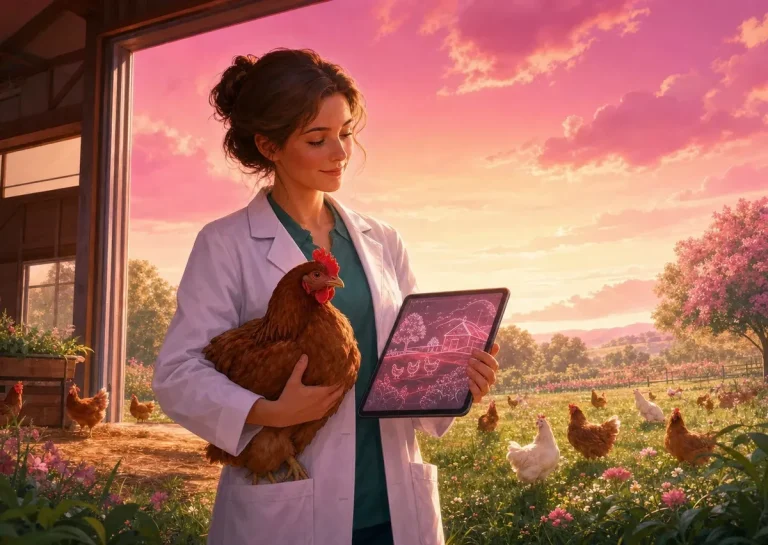
In my research, I have met these farmers and read what they say about their journeys. For most of them, the decision to stop stems from the compassion they feel for the animals they raise. One day, there is a cow to which you are particularly attached and, at the moment of setting her apart before taking her to the slaughterhouse, you simply cannot: you say no, you decide to stop.
In a study published in 2023 [1], I analysed the accounts of 27 farms that had left livestock farming, mainly in Switzerland and the United States. For 19 of them, compassion for the animals is the main motivation. The animals’ departure for the slaughterhouse and the separation of a cow from her calf recur as triggering moments.
And that is where the trouble begins
For it is not easy to stop. Most livestock farmers went into debt to acquire their farm and have sometimes invested in buildings, machinery and so on. When you suddenly decide that you will no longer take your animals to the slaughterhouse, you often find yourself, overnight, without income or any means of paying off all these costs. And that is not all: the animals living on the farm still have to be housed, fed and cared for, and all of that costs money. To top it all, these farmers often live in communities where this kind of decision is frowned upon: for many, questioning this age-old tradition is unimaginable, almost madness.
Sanctuaries, market gardening, mushroom farms: paths to a new livelihood
Despite all these difficulties, some livestock farmers find a way forward, with adaptations and transformations. Some transfarm towards a model of farm animal sanctuary (or refuge), where donations and sponsorships cover the costs. Others switch to growing plants, such as market gardening, or recycle former livestock buildings into mushroom farms or greenhouses.
On the farms I studied, the path depends on the starting point. Cattle or goat farms, which are rather extensive, most often become sanctuaries or market gardens. Intensive poultry or pig farms turn to mushrooms, hemp or market gardening, reusing their buildings. One Swiss farm even turned to ‘care farming’, where contact with animals is used for therapeutic activities.
In these transitions, there is often also mutual support: networks run by former livestock farmers who have successfully made the transition help others with financial and farming advice, and often provide psychological support. Two of these networks, the Rancher Advocacy Program in the United States and Hof Narr in Switzerland, both founded by women who had themselves been through transfarming, are at the heart of most of the stories studied: they find a place for the animals, organise a fundraiser to buy hay in an emergency, put people in touch with specialists and provide moral support. In France, the association Transiterra [5] supports livestock farmers towards other models.
A more political act than it seems
At this point, someone might say to me: all of this is very well, everyone does what they like with their farm and bears the consequences of their choices.
In reality, the significance of this move away from livestock farming goes far beyond individual change. We now know that meat consumption is linked to a great deal of damage to the environment and the climate, and that it has effects on public health. Ethics is also changing, with growing consideration for the suffering inflicted on animals. As a result, policies are appearing at the scale of entire countries that seek to sharply reduce the number of livestock farms.
The emblematic case is that of the Netherlands. In 2022, to limit nitrogen pollution, largely caused by animal waste, the government announced a reduction in livestock numbers of around 30% [3], followed by a buyout plan targeting up to 3,000 of the most polluting farms [2]. These announcements triggered a farmers’ revolt of unprecedented scale and propelled a new farming party, the Farmer–Citizen Movement (BBB), to first place in the 2023 provincial elections, leading to the emergence of a new populist government.
Transfarming is therefore a deeply political act. It is not merely a matter of individual preference for a few livestock farmers: it may be the beginning of a movement challenging the meat trade.
Conclusion: drawing inspiration from today’s transfarmers
If this questioning is confirmed, livestock farms will probably close, and the farmers who have not chosen the end of their farm will be increasingly numerous. Mutual support among farmers, which has already proved its worth in the switch to organic farming, could then play a key role. Knowing and understanding today’s transfarmers means giving ourselves the means to draw inspiration from their transitions to help those who, tomorrow, will have to make the same move under the pressure of a change in society. To see them at work, the RTS report ‘Élevage : paysans éthiques’ [4] is a good place to start.
References
[1] Salliou, N. (2023). ‘Quitting livestock farming: transfarmation pathways and factors of change from post-livestock farmers’ accounts’. Frontiers in Sustainable Food Systems, 7, 1122992. doi.org/10.3389/fsufs.2023.1122992
[2] NOS (24 March 2023). ‘Piekbelasters stikstof nauwelijks bereid zich te laten uitkopen’. NOS. nos.nl/l/2468636
[3] Reporterre (12 July 2022). ‘Aux Pays-Bas, les agriculteurs en rogne contre une mesure climatique’. Reporterre. reporterre.net/Aux-Pays-Bas-la-revolte-des-agriculteurs-se-poursuit
[4] RTS (10 April 2022). ‘Élevage : paysans éthiques’. Mise au point [video, at 31 min 54]. rts.ch/play/tv/mise-au-point/video/mise-au-point?urn=urn:rts:video:13009164
[5] Transiterra (n.d.). Transition agroécologique solidaire. An association that supports farmers in France in moving towards other models. transiterra.fr






0 comments