
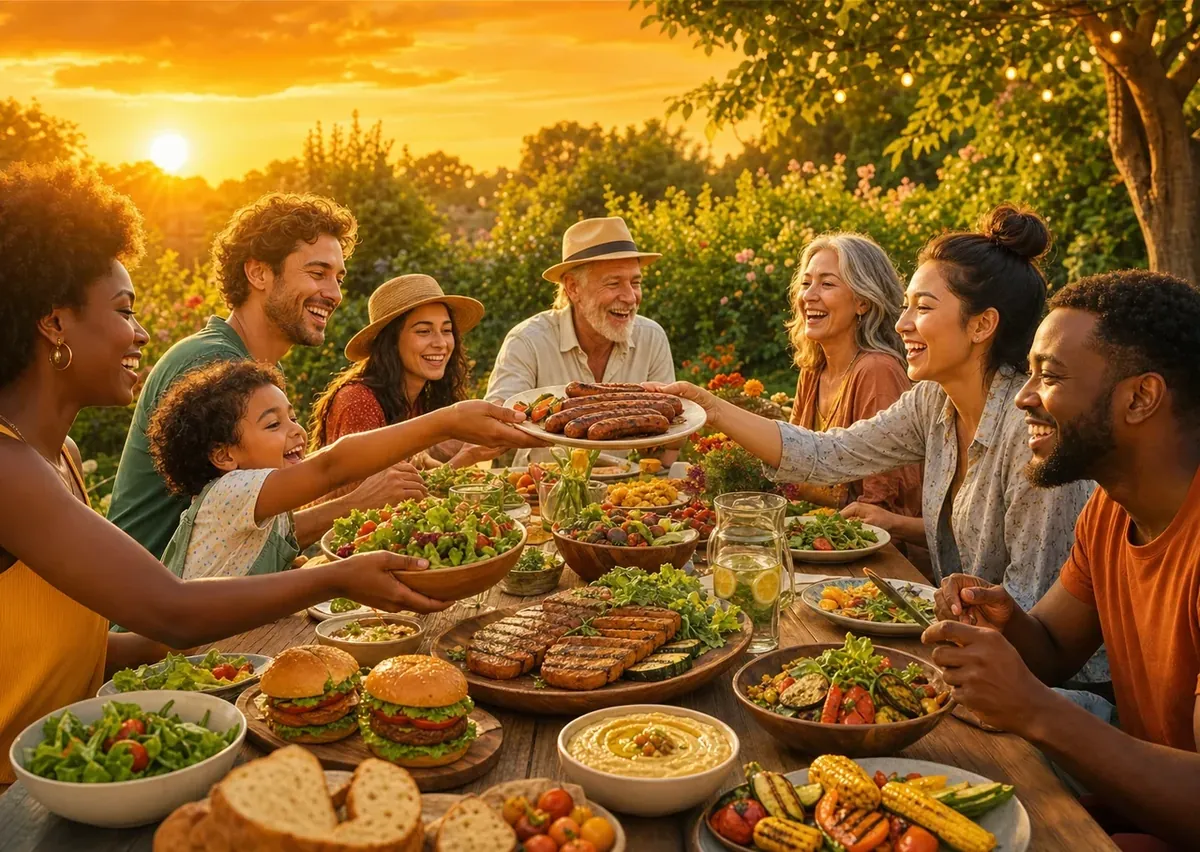
Beyond the prejudices about processed foods, we propose prioritising plant-based products which, when processed, represent our best hope for the necessary new food transition.
Pernicious preconceptions kept alive
Processed products are decried. They are singled out as supposedly too dangerous for health because of their many flaws: being of poor quality, they are said to contain too many chemicals and to be nutritionally unbalanced.
But what are processed products? Processing is, first and foremost, about changing the form of a product intended for food use. At the outset, a product is either of animal or of plant origin. Whether done by hand or industrially, the method differs according to the scale of production. Processing turns the product into a prepared food, made edible or more appealing to the consumer. The aim is to manufacture durable products that can be used to prepare a variety of enjoyable dishes and meals, and to alter or improve the sensory and nutritional qualities of foods [1].
Product classifications exist to sort foods into several groups according to their degree of processing on the one hand and their nutritional qualities on the other. The main ones are Nova [1], Siga [2] and the Nutri-score [3]. Nova proposes 4 food groups: group 1 comprises unprocessed or minimally processed foods, group 2 processed culinary ingredients, group 3 processed foods, and group 4 ultra-processed food and drink products. Siga details Nova’s degree of processing. It assesses the risks of ingredients and additives on the basis of opinions issued by recognised bodies (WHO [4], EFSA [5], ANSES [6]), while adding nutritional thresholds set by the FSA (Food Standards Agency, UK) where fat, sugar or salt has been added to the food. Finally, the Nutri-score takes into account, per 100 g of product, the content of nutrients and foods to be encouraged (fibre, protein, fruit and vegetables) as well as nutrients to be limited (energy, saturated fatty acids, sugars and salt).
Unfortunately, the average consumer does not have a clear picture of which classifications food products belong to, even though they were established to inform them. They can hardly be blamed, given the far too confusing way in which the information is handled.
Faced with this lack of information, the classification of foods on a scale of ‘naturalness’ often takes precedence. The idea that what is ‘more natural’ is necessarily better (held by most eco-minded consumers) is false. In fact, a diet perceived as natural is not necessarily better for health or for the environment than a diet based on processed plant-based products, which may be perceived as industrial and therefore artificial.
Processed foods are our daily bread
First of all, it should be said that almost all the food we eat is processed in one way or another. For example, oil, butter, cheese, soup, stock, salads, bread, tinned food, drinks and desserts are foods obtained through processes that include pressing, refining, grinding, milling, drying, various methods of preservation, cooking and non-alcoholic fermentation.
Moreover, we ourselves process our food through culinary preparations that we regularly make from ingredients and foods that are very often themselves processed. Even so, this does not in principle justify our mistrust; quite the contrary, in fact, as the more ingredients there are, the more appetising it often is! It all depends on the products used, and whether they are very fatty, sugary or salty. Obviously, if these foods are not prepared from raw products, we need to be sure that the ingredients they may contain, whether modified or not, are not harmful in the long term. If they are low in fibre and high in calories, saturated fat and refined carbohydrates, then it is well established that, for a healthy diet, their consumption should be limited.
Cooking, for example, is a means of processing food that has greatly increased its nutritional quality, since the amount of energy absorbed from the same volume of food is greater. This improvement allowed us to reduce the energy devoted to our digestive system in favour of the development of our brain [7]. By acting as a form of pre-digestion, fire allowed us to eat more meat by making it easier to digest, and to diversify our diet, for instance by making certain tubers edible. It also made our food more complex by giving rise to the very concept of cuisine [8].
In general, diets restricted to unprocessed foods are less varied and less safe. Doing without various harmless preservation methods and processes capable of improving nutritional quality (non-alcoholic fermentation, for example), they offer fewer available foods, which are also less bioavailable. Being poorer, less-processed diets are therefore less varied and less safe. Traditional cuisines established all over the world are based on dishes and meals prepared from unprocessed and minimally processed ingredients, but also from processed foods [9].
Experiments regularly illustrate this very well. In seeking to reduce their consumption of animal products (most often meat), some people come to feel a lack of energy and a need to increase their portion sizes at each meal, to the point of feeling that they are literally stuffing themselves. In reality, this is to be expected! Replacing rich, dense foods solely with raw foods, which are necessarily less dense and lower in protein in particular, is very likely to leave people unsatisfied. Quite often, in environmentalist circles, a well-intentioned but fallacious line of reasoning known as the appeal to nature underlies a prejudice that, in practice, prevents animal-based processed products from being replaced by plant-based processed ones (naturalness is not a relevant criterion in itself, and a diet perceived as unnatural may prove better for health and the environment [10]). The former benefit from a familiar prejudice in their favour, while the latter suffer from a conventional distrust. Take a public-service programme that claims to inform viewers about the nutritional quality of the latter, even though the products presented to a nutritionist are rated A on the Nutri-score: apparently, they do not deserve a place in our daily diet [11]. A shame, because their fibre content, for example, makes them valuable allies, and today there is already a comprehensive range of processed plant-based products that are better rated, and therefore nutritionally more balanced, than their animal-based counterparts.
Their forms are not original!
If animal products are sold in certain forms, such as ham for example, it is for practical reasons: it does not grow wild in slices! From aspirin to the refrigerator, not forgetting prescription glasses, let us acknowledge that a good part of our lives is proof that natural processes often work to our detriment. So why should we believe that a natural or basic form would necessarily be better? We observe the opposite every day, and food is no exception. Our lives in fact depend on our ability to defy these natural processes, which nevertheless constantly enjoy our trust. A more rational stance would be to keep them at arm’s length [12].
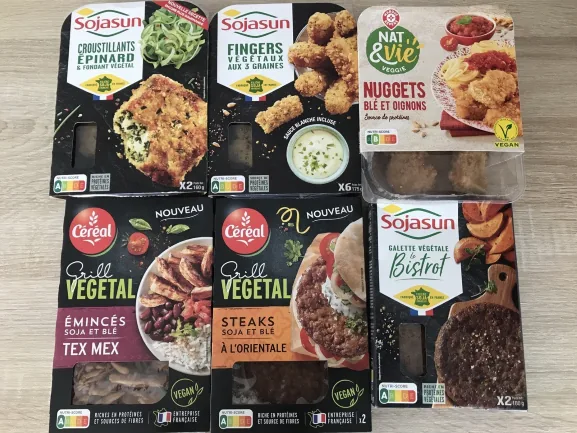
Processing makes the supply chain more complex!
If the length of the processing chain is a criterion used to favour some products over others, then plant-based products win out over their animal-based counterparts, because the latter depend on the former and not the other way round. Let us recall here that the base trophic level is that of autotrophs (plants), which are able to produce organic matter from solar energy, water and minerals. Heterotrophs (animals) draw their energy from organic matter. And yes, before being turned into food, an animal is selected, bred, reared, fed on plants that have been grown, cared for, transported, killed, skinned, prepared, processed, packaged and delivered. What is more, health restrictions are stricter, the cold chain is unavoidable, use-by dates are mostly shorter, and so on. In short, even when processed, simplicity lies more on the side of plant-based products.
Plant genetic manipulation raises questions!
Briefly, if genetic selection is an important criterion in choosing what to eat, animal products turn out to be at the cutting edge of the issue. The ‘home-grown’ chicken eaten by most people, without the prejudice reserved for vegan products (the usual disdainful pout), is nevertheless presented in this article from Science et avenir, for example [13], quite simply as a mutant on your table. Moreover, let us remember that genetic selection, first empirical and then scientific, is quite simply what produced the foods we know today and considerably improved yields. We have eagerly practised artificial selection ever since the beginnings of agriculture and livestock farming, 10,000 years ago.
In general, let us imagine for a moment our diet without processed products. Bread, jam, plant-based milk, tofu, seitan, and all those rich foods worked on to make them edible are the first in a long series that allow us to feed ourselves every day. Being less viable, diets based exclusively on unprocessed or raw products are not desirable, regardless of the (sometimes legitimate) reactance that has arisen in the face of the opacity of certain industrial sectors so decried in environmentalist circles. The criticism of processed foods is counter-productive because it does not consider them for what they are, processed products, but for what they are not, ultra-processed products.
Ultra-processed products are primarily of animal origin
In a cohort study of 44,551 French adults aged 45 and over, a 10% increase in the proportion of ultra-processed foods consumed was statistically significantly associated with a 14% higher risk of all-cause mortality [14]. Although further prospective research is needed to confirm these results, increased consumption of ultra-processed foods appears to be associated with a higher overall risk of mortality. But what is ultra-processing?
Here are some of the processes used to manufacture ultra-processed foods: the fractionation of whole foods into substances, the chemical modification of those substances, their assembly (both unmodified and modified), and the frequent use of additives and sophisticated packaging. They make it possible to create products that are highly profitable (low ingredient costs, long shelf life), convenient (ready to eat) and hyper-palatable.
A practical way to identify an ultra-processed product is to check whether its ingredients list contains food substances that are never or rarely used in kitchens (high-fructose corn syrup, hydrogenated oils, hydrolysed proteins), or classes of additives designed to make the final product more pleasant to taste or more attractive (such as flavourings, flavour enhancers, colourings, emulsifiers, emulsifying salts, sweeteners, thickeners, and anti-foaming, bulking, carbonating, foaming, gelling and glazing agents)4.
One study showed that the majority of consumers can recognise ultra-processed foods, which correspond to those in the Nova classification. Describing them as highly processed products of low nutritional quality, generally containing additives and other artificial ingredients, they consider them unhealthy, mostly rightly so. However, although they classify processed meats, fizzy drinks, snacks, burgers, and powdered and packaged soups and noodles in line with the classification system, some participants perceive processed foods, culinary ingredients and even some minimally processed foods as being ultra-processed. The researchers therefore recommend a clear definition of ultra-processed foods in educational campaigns aimed at changing consumers’ eating habits, by reducing the substitution of ultra-processed foods for meals based on processed or unprocessed foods [15].
In a new study [16] from January 2020, the Siga classification was used to characterise 24,932 packaged foods in French supermarkets (excluding baby food and alcohol), which were representative of the range of packaged foods on offer. Two-thirds were ultra-processed. Products with more than one marker of ultra-processing made up the most represented category, at 54% of products. Among foods containing more than five ingredients, 75% were ultra-processed products.
Among the food categories containing a high percentage of ultra-processed products (see graph C0.1+C0.2+C1): cured meats at 94%, ready meals at 95%, flavoured dishes and yoghurts and fromage blanc at 95%, energy and gourmet bars at 81%, breakfast cereals at 80% and vegetarian dishes at 87%. Here are the details in graph form:
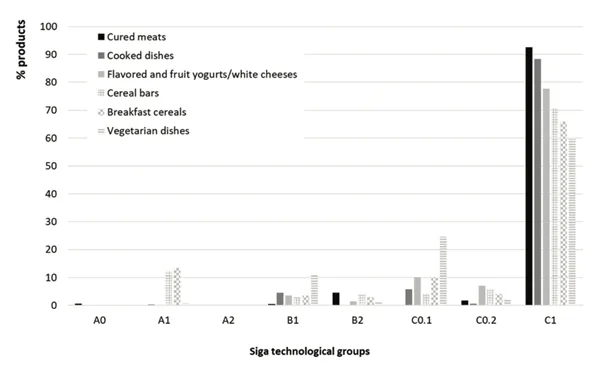
Percentage of foodstuffs by degree of processing according to the Siga classification, across six categories. A0: unprocessed, A1: minimally processed, A2: minimally processed culinary ingredients, B1: processed and nutritionally balanced, B2: processed with a high salt, sugar and/or fat content, C0.1: ultra-processed and nutritionally balanced, C0.2: ultra-processed with a high salt, sugar and/or fat content, C1: ultra-processed with several markers of ultra-processing and/or a risky additive.
First of all, we can see that, among these food categories, vegetarian dishes have the lowest percentage in C1, the category in which several markers of ultra-processing and/or an additive posing a safety concern are identified. In addition, sub-categories C0.1 and C0.2 contain only one marker of ultra-processing (not assessed as being a risk), the difference being that the former is nutritionally balanced whereas the latter contains too high a level of salt, sugar and/or fat. Note that nearly a quarter (25%) of ultra-processed vegetarian dishes are classed in the nutritionally balanced category, well above the other food categories. In the category of nutritionally balanced processed products, nearly 12% of vegetarian dishes are classified there. It is as if the more animal products there are in ultra-processed products, the higher the percentage in the at-risk category. And yes, although flavoured yoghurts and fromage blanc do not seem, a priori, to be criticised by consumers, they are ultra-processed animal products, 78% of which are classed in the at-risk category C1, compared with 59% for vegetarian dishes. Ready meals are ultra-processed products of animal origin, 88% of which are classed in this category.
The most prevalent at-risk additive is sodium nitrite (E250, ≈5%). It is a preservative widely used in processed meats, both untreated and heat-treated, and in various local and traditional charcuterie products [17]. Classified as a probable carcinogen, according to the Institut National du Cancer, it is thought to increase the risk of colorectal cancer by 18% on average for each additional 50 g portion of charcuterie eaten per day [18], consumption of which, according to ANSES, should be limited to 25 g per day. That is equivalent to one large slice of cooked ham per day, beyond which the increase in risk is statistically significant [19]. According to the European Food Safety Authority (EFSA), although the authorised levels of use are supposed to be sufficiently protective [20], if all dietary sources of nitrites are taken into account, the acceptable daily intake may be exceeded for all population categories following a conventional diet. Let us nonetheless remember that colorectal cancer, whose risk is known to be increased by excess nitrites, is the second leading cause of cancer death in France [21].
However, let us not forget that processing is desirable! It makes it possible to produce a wide variety of edible, tasty and healthy foods. It is ultra-processing that is not necessarily so. Overall, it produces unhealthy foods, except for special nutritional purposes, such as foods designed for athletes, sick people or certain older people, or simply for certain occasions, with convenient foods when time is short or for convivial events out of indulgence. We should no doubt keep in mind that the dose makes the poison. This category of food can perfectly well meet legitimate needs, but it must not form the foundation of our daily diet.
The fractionation of complex foods, also known as cracking, followed by the reassembly of nutrients and ingredients, reflects a reductionist approach that appears to have shown its limits. Scientific studies appear to support, for the most part, a holistic approach built on the 3V rule (Végétal, Vrai, Varié) [22]. First, they recommend thinking from holism to reductionism (from the global to the local, or from macronutrients to micronutrients, for example). Including the characteristics of the physical structure of the food matrix makes it possible to tackle effectively the growing development of chronic diseases. There is a need for more targeted primary preventive nutrition, as opposed to the widespread curative nutrition that stems from unhealthy diets. Moreover, fibres, vitamins, minerals, trace elements and antioxidants are the bioactive nutritional elements that form the first line of prevention against the development of multifactorial chronic diseases11. We have also seen, then, that reductionism is not without use. However, it must be set within the framework of holistic scientific questions. Future research on processing and nutrition should focus on the effect of minimal processing and plant-based foods on people’s health in real-life conditions [23].
Following the previous dietary transition, the steady increase in the share of animal products in our diets has dramatically fuelled epidemics of obesity, type 2 diabetes and cardiovascular disease, to the point that these chronic diseases are now more significant in some developing countries than infectious diseases [24], of which around 60% are of animal origin and which cause 43.7% of deaths in low-resource countries (zoonoses alone account for around 2.5 billion cases a year worldwide) [25]! Conversely, all diets based on minimally processed plant-based calories are healthy and protective.
Let us call for sophisticated technical means of processing (low-tech, for example!) to promote nutritional quality through pre-fermentation, soaking and germination, but also through the use of ultraviolet-C [26], modified atmospheres [27], thermal shocks and ozone treatments. Although some traditional processing methods offer genuine solutions for the future, no return to the past will be able to meet the health requirements of our time.
To sum up, the new food transition must steer us towards processed plant-based products rather than ultra-processed animal products. Fortunately, a growing range of varied plant-based products is now available in supermarkets around the world. By deliberately singling out processed plant-based products, ‘traditionalist ecologists’ are actively opposing this new food transition, whose pressing necessity, from the health as well as the environmental and ethical points of view, is increasingly recognised.
Processed plant-based products and climate change
A scientific article entitled ‘Ruminants, climate change and climate policy’ [28] was published in 2014 in the prestigious journal Nature Climate Change. It analyses the greenhouse gas emissions of protein-rich foods on the basis of full life-cycle assessments that include the direct and indirect environmental effects from farm to fork (enteric fermentation, manure, animal feed, fertiliser, processing, transport and land-use change). The carbon equivalent footprint of ruminant meat consumption is on average 19 to 48 times higher than that of protein-rich foods obtained from plants. For meats that do not come from ruminants (pork, poultry, fisheries), the carbon equivalent footprint remains on average 3 to 10 times higher than that of protein-rich plant foods (meat substitutes and pulses). For this category, the authors point out that it uses foods that could be consumed more efficiently directly. From farm to plate, the production phase is the most significant in the life cycle, with animal feed production and livestock farming by far the main contributors to environmental impacts.
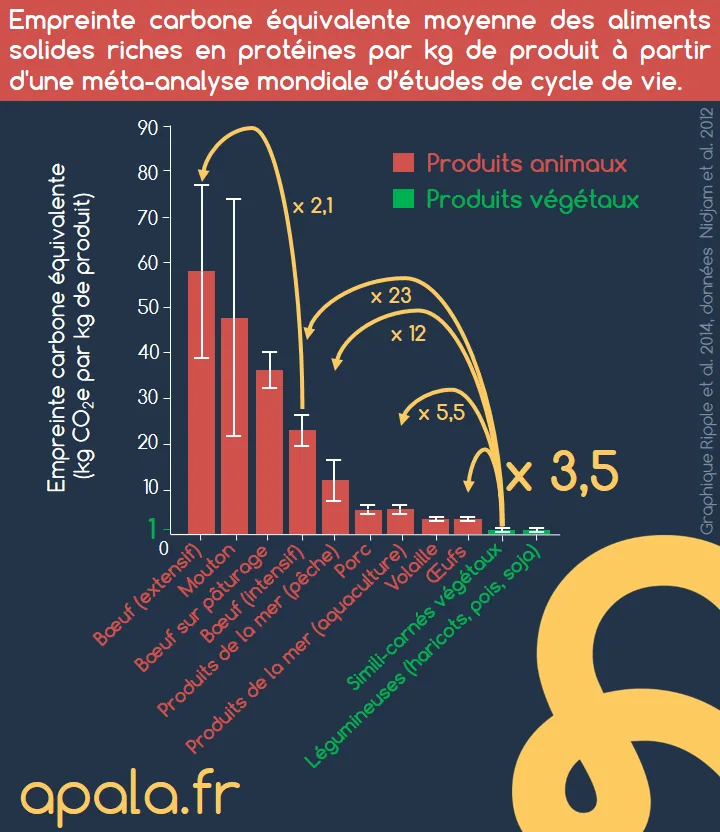
These figures may be revised downwards given the lower digestibility of plant proteins compared with animal proteins [29]. As a result, the authors, who draw on a large-scale meta-analysis [30], state that a vegetarian diet requires a protein intake 20% higher, and a vegan diet 30% higher, according to the Health Council of the Netherlands (2001). Yet the modern Western diet contains far more protein than necessary [31], and in France, at 0.8g of protein per kilogram, we consume on average twice too much for a 70kg man and 2.5 times too much for a 55kg woman [32]. Even with this correction, the orders of magnitude remain the same.
Moreover, when this digestibility is taken into account, the greatest difference observed lies in moving from the mass of product as the functional unit (used here in the infographic) to the mass of protein [33]. Joseph Poore and Thomas Nemecek thus confirm these ratios [34], through the largest meta-analysis carried out on the subject, which brings together 1,530 studies covering 38,700 farms in 119 countries and 40 products that represent 90% of global protein and calorie consumption.
Note also that we do not consume proteins directly but rather the food that contains them, protein serving only as a reference point. Compared with tofu, which has the highest emission rate of the plant-based products considered here, the ratios are:
- 2.1 for eggs
- 2.9 for chicken
- 3 for fish
- 3.8 for pork
- 5 for cheese
- 10 for lamb
- and 25 for beef
The action with the greatest potential for reduction is still the replacement of animal products with plant-based products, regardless of farming systems and specific methods, transport or packaging. The finding is unequivocal: the emissions of most plant-based products are 10 to 50 times lower than those of most animal products [35].
In general, producing 1 kg of boneless meat requires on average 2.8 kg of human-edible feed in ruminant systems and 3.2 kg in monogastric systems [36]. From both an energy and a protein standpoint (the latter favourable to livestock farming), animal farming is largely wasteful and a net consumer of resources. Although it is a net contributor of protein in 18.67% of cases, and so can be said to contribute to food security only to that extent, it is a net consumer of protein in 81.33% of cases:
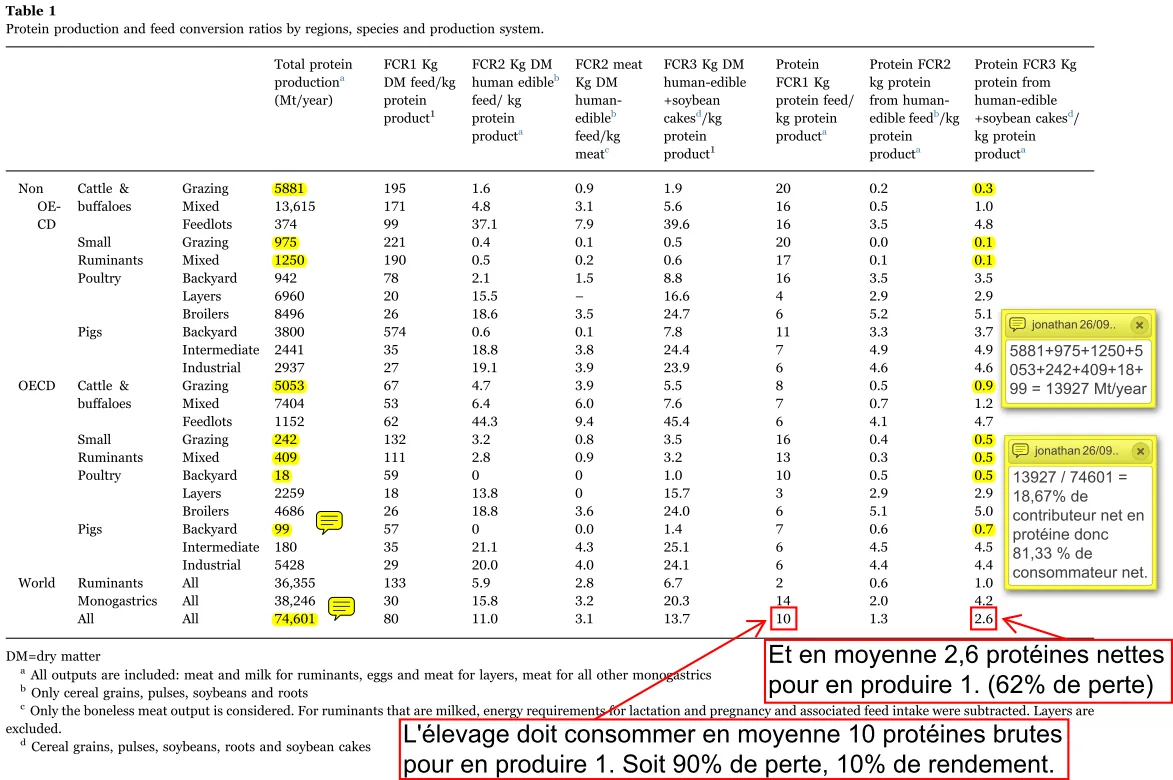
Livestock farming is therefore first and foremost a leak of resources, even in the case of protein, where it fares best. As a reminder, living beings are open dissipative systems that lose their energy mainly through the heat they constantly emit. Even though the study stresses that most animal feed cannot be eaten by humans, the net conversion efficiency [37], the ratio of outputs to inputs considering only the edible portion, tells us that livestock farming is a net consumer, with 62% losses. Note that more than 99% of the net contributors identified are in fact ruminants, which are responsible for the majority of greenhouse gas emissions (65% according to the Institut de l’élevage but 80% according to this leading scientific study [38]). Although livestock farming is able to make use of resources unfit for human consumption, it contributes only marginally to food security (grazing on non-arable land, for example). While from an energy standpoint livestock farming is clearly inefficient, contributing only 18% of calories worldwide, it is less so in terms of protein intake, as it would cover 37% of global protein [39].
Ethically, to kill fewer individuals, it is preferable to eat cattle rather than hens or fish, whereas from an environmental point of view the opposite would be true. That said, for general public health, the coronavirus crisis caused by a new zoonosis urges us as far as possible to reduce domestic animal populations by ending their breeding and by reconsidering our interactions with those we must now call our cohabitants.
Note that in the overwhelming majority of scientific studies, the focus is always on optimising livestock farming, reducing it and improving its management. Unfortunately, there is rarely any discussion of possible ways of optimising the use of plant proteins intended directly for human consumption. The following infographic is directly inspired by Figure SPM.3, ‘Potential global contribution of response options to mitigation, adaptation, combating desertification and land degradation, and enhancing food security.’, p. 28 of the IPCC (Intergovernmental Panel on Climate Change) special report for policymakers [40]:
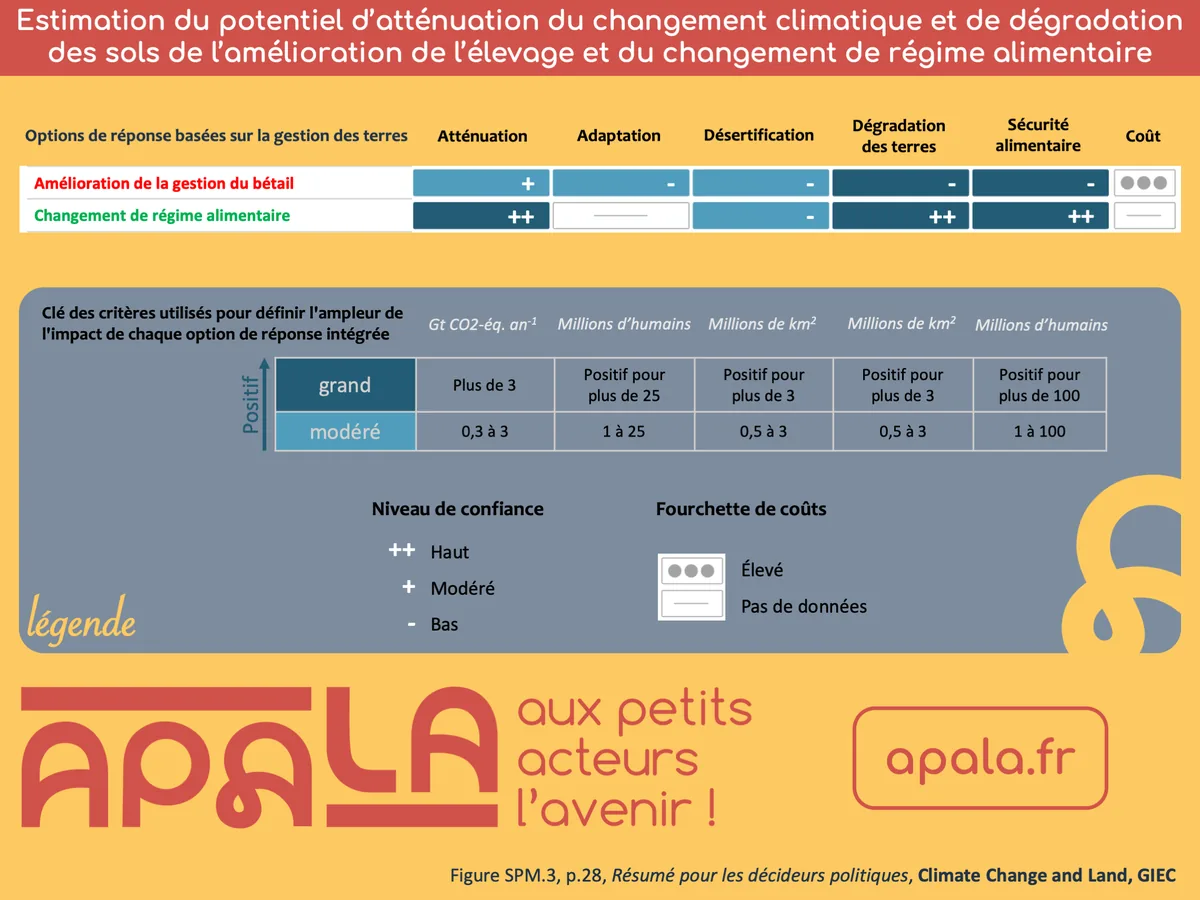
We can see that the measure of improved livestock management is rated as having a moderate impact on the first 3 criteria and a high impact on the next 2. However, the level of confidence attributed to these potentials is judged medium for the first and low for the other 4. Moreover, it is the only measure to reach the maximum cost index (see the report for further details). So, in short, improving livestock management techniques involves measures that are expensive and unreliable in the fight against unprecedented environmental problems.
Moreover, dietary change is the only measure to achieve 3 high levels of confidence, and across 3 strong impact potentials at that! This is information that The Shift Project, a public-interest association which campaigns nonetheless for the voluntary decarbonisation of the economy, does not mention in its emergency report entitled « Crise(s), climat : plan de transformation de l’économie française » of May 2020 [41]. It is not as if the IPCC, which reviews and synthesises what is published in the scientific literature on the question of human influence on the climate, were the very institute that Jean-Marc Jancovici himself insists we must trust [42]! And therefore refer to. When we spoke of the blind spot of climate experts…
Update of 3 November 2026: the table above comes from the IPCC’s 2019 special report. Its 6th Assessment Report (Working Group III, 2022) now quantifies these levers: the shift to a healthy and sustainable diet has a technical potential of around 3.6 billion tonnes of CO2 equivalent per year, compared with 0.8 for reducing enteric methane from ruminants and 0.3 for better management of livestock manure, i.e. around three times more than these two technical levers combined (IPCC, 6th Assessment Report, Working Group III, Chapter 7, sections 7.4.3 and 7.4.5 [43]).
Let us add here that, as George Monbiot [44], the environmentalist columnist at the Guardian who is committed to these issues, points out, the IPCC’s analysis is problematic. The fact is that it focuses solely on the greenhouse gas emissions produced each year by agriculture as a whole. These are estimated at around 23% (point A3, p. 7 of the special report for policymakers [40]), or almost a quarter of our total anthropogenic emissions. Although this figure is huge, it is not representative of the overall impact of food production. He describes this approach as the current account of agriculture. It counts the amount of greenhouse gases emitted each year by, broadly speaking, livestock farming, spreading, buildings and farm machinery. Yet a second approach consists in considering the potential that follows from the measures undertaken. He calls it ‘the capital account’. This takes into account land-use change: the fact that natural ecosystems are converted into arable land. This approach therefore considers the carbon that would be stored if this land had not been used for agriculture or if it were ‘freed up’. This is called the carbon opportunity cost. Researchers have published an article [45] on this subject in the prestigious journal Nature, and they state:
We find that these choices can have much larger implications for the climate than previously thought, because standard methods for assessing the effects of land use on greenhouse gas emissions systematically underestimate the capacity of land to store carbon if it is not used for agriculture.
To get a sense of this, land use by livestock farming amounts to 40 million km² (pastures and fields), which is 4 times more than crops intended for plant-based food and 26 times more than all built-up areas and roads combined. It accounts for 77% of agricultural land (cultivable farmland), or 27% of the planet’s land surface [46]. It is by far the largest land grab of any sector. By comparison, built-up areas and infrastructure represent 1% of land use! As a result, the researchers estimate that for a single kilogram of beef protein, we have lost the opportunity to store in the soil the equivalent of 1,250 kg of CO2, which is as much as two return trips between Paris and Moscow by car, or three flights between Paris and Montréal. The lack of carbon storage due to the use of land for agriculture would double the carbon footprint of a French person, making food as impactful as everything else that a northern European consumes. An article [47] published in Libération provides additional information that makes the issue in question easier to understand.
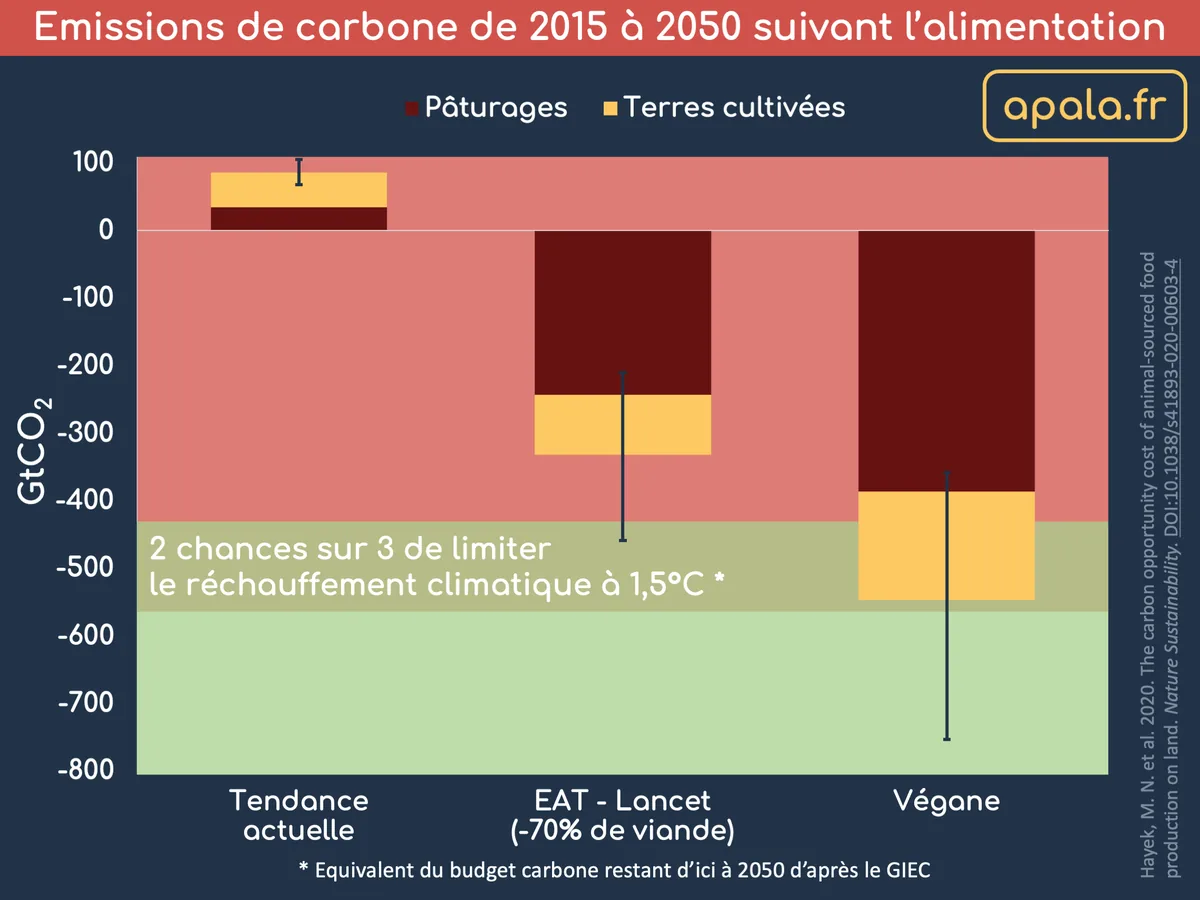
In a new study [48] published in Nature Sustainability in early September 2020, the opportunity cost of switching to a vegan diet was calculated. It represents the equivalent of the last 16 years of fossil fuel emissions. By going as far as tripling the remaining carbon budget needed to stay below 1.5°C of global warming by 2100, this opportunity cost represents an unexpected windfall that we all have a collective interest in considering seriously. Here too, an article published in Libération [49] provides insights into this study, which inspired the following graph:
To crown it all, while some worry about the supply of nitrogen to crops without livestock farming, meat and dairy production alone emit more nitrogen than the Earth can bear [50]. Just published in July 2020 in the journal Nature Food, the study tells us that most emissions come from animal-based foods produced locally [51]. Given the scale of its impacts and its central role in the challenges we are addressing, a state of emergency has been declared on this front too.
We have already been through a dietary transition!
The lecture by Pierre Combris, economist, research director at INRA and specialist in the evolution of dietary practices, allows us to observe the major trends in food consumption across the world [52]. All the countries in the world (except perhaps Mongolia) follow the same trend: the richer a country is, the more animal fat it consumes and the fewer carbohydrates (starchy foods) it consumes, following an inevitable dynamic directly linked to the country’s GDP. Dietary transitions take place on different timescales.
Subsistence farming is in fact based on starchy foods (cereals, pulses and tubers), which make up the staple diets of all the world’s populations. They are quite simply the cheapest calories for feeding as many people as possible. It is worth noting that the vegan diet is based on similar trophic levels (the tiers of what we see as the food chain) while offering a diversity that ensures a viable diet, beneficial for health and above all very economical in terms of resources. In a subsistence economy, the population adapts to the available resources, and people who do not work in agriculture can only be very few in number given the very small surplus. Moreover, subsistence equilibrium concretely means regular famines (Malthus’s law).
Let us look at the evolution of energy intake in France from 1780 to 1960, which is thus representative of the dietary transitions observed in all countries of the world, albeit with a different timeline.
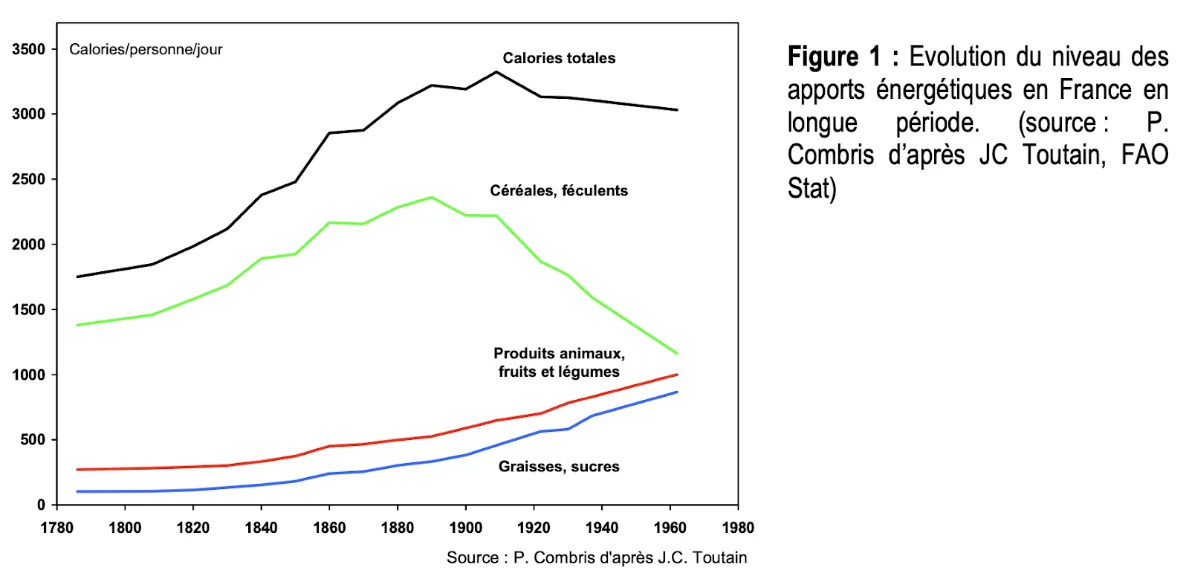
Over the first 100 years, we see very steady calorie growth up to 1880: from 1,750 kilocalories/person/day with high energy needs (a mainly rural population) to 3,000 kilocalories/person/day thanks to the industrial revolution of the 19th and 20th centuries, with lower energy needs (which would fall as lifestyles became more sedentary). The enormous productivity gain brought by the means of production (mechanisation) took output from 1 tonne/worker/year (8,800 kcal/day, 5 people at 1,760 kcal/day) to 2,000 tonnes/worker/year (17,600,000 kcal/day, 10,000 people at 1,760 kcal/day). In 3 centuries, at the minimum wage, the average time worked to buy 1 kg of wheat has fallen from 2 hours 30 minutes to 1 minute!
In a century, we go from the bare minimum to saturation. The structure of diet changes accordingly, because starchy foods are not the most pleasant foods: they do not provide the satisfaction of richer, fattier and saltier products, namely processed animal products. As soon as they could, humans varied their diet in that direction.
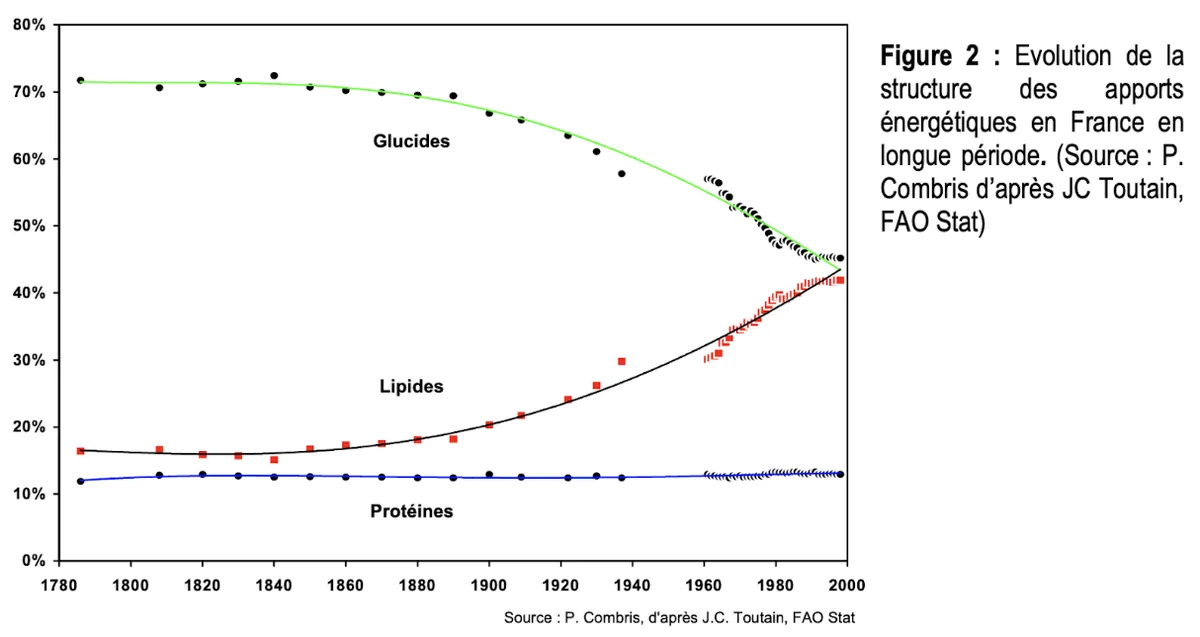
In terms of nutrients, protein intake remains constant. In the phase of quantitative growth in food consumption during the 1st century, people mainly ate complex carbohydrates, found in bread, pasta, rice, cereals, certain fresh vegetables and pulses. Then came the 2nd phase, from 1880, when the nutritional transition took place: the share of carbohydrates fell and the share of lipids rose, as animal proteins replaced plant proteins. According to Pierre Combris, this marked a shift in the food model, in resource requirements and in the health status of populations. It has only stabilised very recently, a little over 30 years ago. We are the first generation in the whole history of humanity to experience this recent food model.
[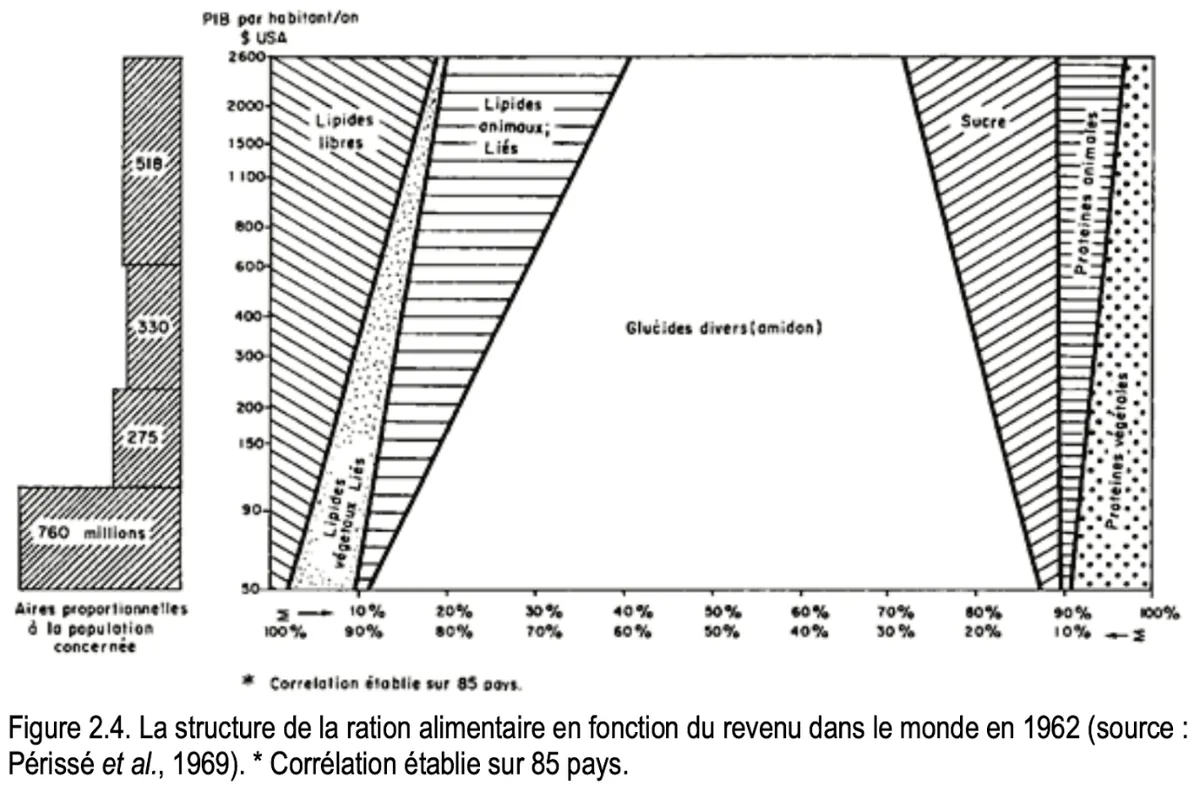
Like the previous graph, this one (which is a working graph) [53] once again presents the structure of the diet according to GDP, with population masses, but this time for the period 2007–2009. It confirms the inevitable dynamic of the dietary transition under way in several countries, through the shift of the majority of the population from the first tier to the second (which represents the rise in GDP of the population in general).
We have seen that the change in the structure of the diet is directly linked to the increase in consumption of animal products as income rises. Yet, to produce animal calories, one must produce plant calories, and not the other way round, it bears repeating. The inevitable dietary transition will not be limited by the structure of the diet but by the quantity of plant calories that can be mobilised to sustain that diet for a population whose demand keeps growing [54]. We already know that the projections are catastrophic: the study by GRAIN and the Institute for Agriculture and Trade Policy (IATP) tells us that if growth in the meat and dairy sector continues as expected, the livestock farming sector alone could absorb 80% of the annual greenhouse gas emissions ‘budget’ compatible with limiting global warming to 1.5°C by 2050, i.e. 4/5 of permissible emissions…
Hope remains, because we can see that, for a constant calorie share, there can be more or fewer calories of animal origin. There is therefore a certain heterogeneity. Here, according to this study, France is the worst performer, which gives it additional responsibility and a major role to play as an example in this long-awaited new transition. Is it not renowned for its culinary heritage, recognised around the world?
Moreover, the example of Finland proves that putting nutrition policies in place is effective. While it was experiencing an unsustainable rate of cardiovascular mortality, national campaigns informed people about the role of cholesterol, animal fats and red meat. These incentives brought about a 20% reduction in calories of animal origin, which was beneficial from a public health perspective but insufficient in terms of resources and the environment (not to mention those most concerned: the animals).
While productivity gains have lifted part of humanity out of famine, they have also exposed developing countries to what is known as the double burden of malnutrition, the inevitable rise in obesity through malnutrition without having resolved undernutrition [55]. The phenomenon of obese people with nutritional deficiencies, a form of malnutrition through overnutrition, is no less costly in terms of health, and exposes populations to considerable health risks. Worldwide, 16% of adults were obese in 2024, compared with 13% in 2016 (WHO) [56]; in France, the figure has reached 17% [57].
Yet a vegan diet made up entirely of plant-based foods can be recommended for losing weight and lowering cholesterol, without necessarily requiring more exercise [58] (although this is advised), the main advantage being that it allows people to feel full without having to limit the amount of food they eat. Improvements in several risk factors for chronic disease and in quality of life were observed and largely sustained at 12 months. Given the low cost and relative benefits of this new dietary transition, policy makers and practitioners should offer this weight-loss measure in hospitals. Further research is needed to identify the people most likely to succeed in changing their diet, in order to reduce dropout rates and thereby increase effectiveness.
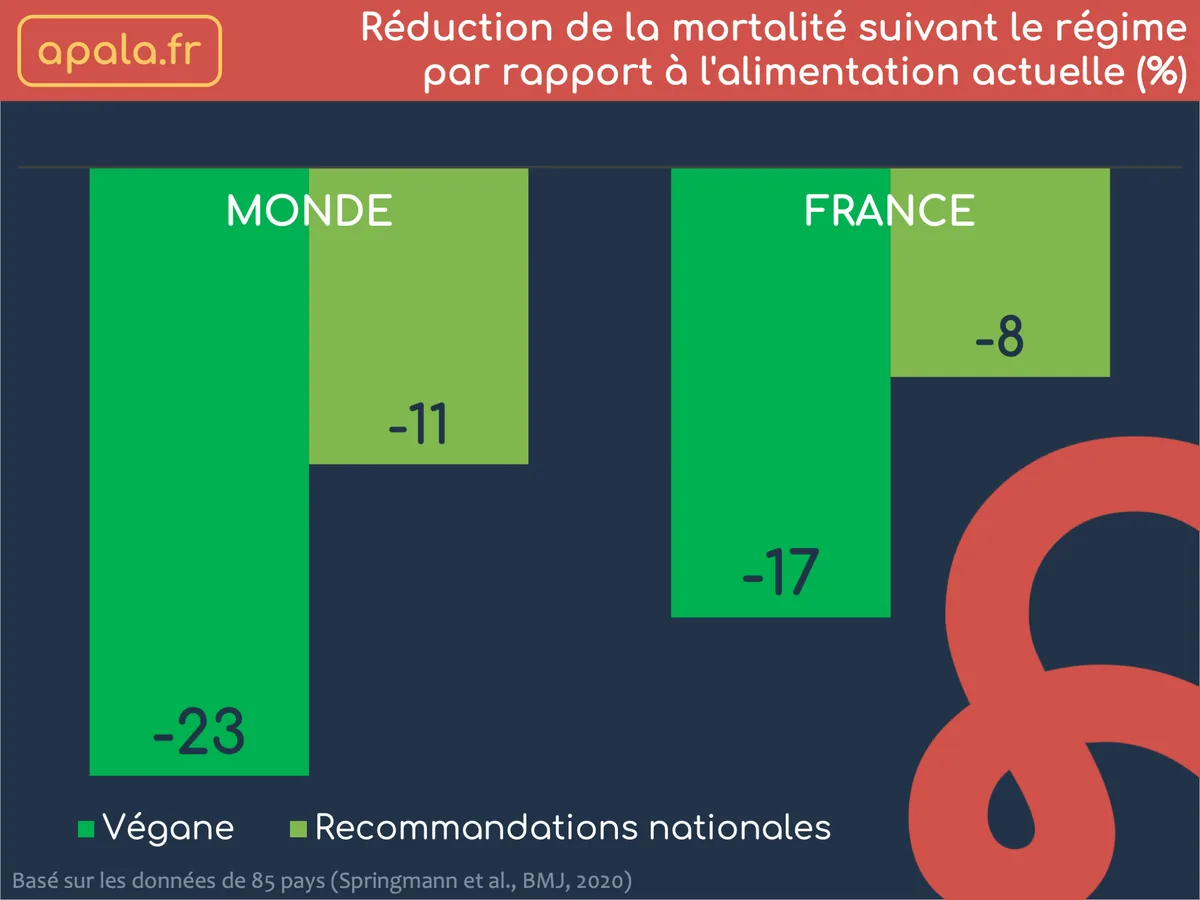
We must recognise just how much is at stake in healthy eating from a public health point of view. Unhealthy diets carry a greater risk of morbidity and mortality than unprotected sex, alcohol, drugs and tobacco combined [59]. In this respect, the vegan diet was analysed in a study published in July 2020 in the BMJ (British Medical Journal) [60]. Its aim was to analyse the health and environmental implications of adopting national dietary guidelines at national level and to compare them with global health and environmental targets, for the populations of 85 countries. Its results support the health potential of the vegan diet, which achieved the greatest reduction in mortality, more than twice as much as the rate achieved by national recommendations.
 For its part, the French National Research Institute for Agriculture, Food and the Environment (INRAE) worked on the forward-looking scenario ‘agrimonde’, which aims to improve the global food system by anticipating the future in terms of arrangements and priorities for public research and of strategic positioning at international level. It proposes a maximum of 500kcal of animal calories in the average diet. In France, we crossed this threshold in 1880. At the very least, we will therefore need to drastically reduce our consumption of animal products.
The livestock farmers’ way out
From a dietary, environmental, ethical and health point of view alike, plant-based eating offers guarantees of wholesomeness in our wealthy countries, and it seems essential today to encourage it as much as possible. But what about livestock farmers, who in particular depend directly on livestock farming?
Culturally and traditionally, dominating the animal is a way of symbolically marking membership of a higher rank. Violent activities are the tip of the iceberg around which a mostly male population gravitates (hunting is reportedly 98% male). It is the defence of a superior social position, one that is master of itself and can allow itself absolute power over others through a chain of appropriation: tracking, killing, butchering [61]. Although not all livestock farmers are hunters, it is with people who mostly consider that they can profit from animals through a process of reification that we must build.
From a planetary perspective, this is what the FAO says in the report entitled ‘Livestock’s Long Shadow’ (‘L’ombre portée de l’élevage’) [62] p. 20:
_Although it does not play a major role in the global economy, the livestock sector is of great social and political importance. It accounts for 40 per cent of agricultural gross domestic product (GDP). It employs 1.3 billion people and supports the livelihoods of 1 billion vulnerable people worldwide. Livestock products account for a third of the world population’s protein consumption and are both one of the causes of obesity and a possible remedy for malnutrition.
Of course, situations will differ depending on the country, its economic situation and its capacity to support the transition, but let us dwell on the French case, which interests us particularly. Here, livestock farming goes hand in hand with subsidies, to the point that without support, 87% of beef cattle farmers, 80% of sheep and goat farmers, 63% of those practising mixed crop-livestock farming and 41% of dairy cattle farmers would quite simply have no income (on average, half of farmers would have a negative current result before tax) [63]. For its part, the Institut national de la statistique et des études économiques (Insee) points to an inexorable rise in the weight of subsidies in farm results, exceeding 100% in some sectors owing to their chronic deficit [64].
Moreover, according to the agronomy researcher Nicolas Salliou (whom we thank in passing for his invaluable help), it is very often the subsidies paid to farmers in our part of the world that impoverish the poorest farmers in developing countries. Beyond the rather unoriginal solution he proposes in his blog article ‘Koc’honiñ en Breizh? Rien foutre al païs !’ [65] (Pollution in Brittany? Do nothing in the country!) to tackle effectively the pollution caused by green algae in Brittany by paying farmers to do nothing, we can argue for subsidies to be redirected towards the local conversion of livestock farmers into processors of plant-based products with high added value and distinctive know-how, specific to each farm, particular to each region, and passed down from generation to generation…
The example of Christophe Favrot, who developed the ‘Nomad-yo’ yoghurts in La Feuillée, a commune of 638 inhabitants in northern Finistère, illustrates the point perfectly. Made from cereals, his specialities are produced by hand, under an open licence [66]. He offers to teach people how to make them at home so as to become self-sufficient, and for budding producers, he sells a licence to use the know-how while guaranteeing their independence [67].
On a more industrial scale, ‘les nouveaux fermiers’ are a French example of processed plant-based products (steak, chicken-style strips and nuggets) that are enjoying great success. They state the ambition of becoming the French ‘Beyond Meat’. They emit 11 times fewer greenhouse gases, use 4 times less water than their animal-based counterparts and have a Nutri-Score of B. Unfortunately, the lobbyists Anvol, Inaporc and Interbev, the trade bodies of the meat industry, have decided to take them to court. The challenge concerns the words ‘fermiers’ (farmers’) and ‘viande’ (meat), which the start-up, about to set up in France a factory producing plant-based foods similar to meat, is said to have used in breach of the regulations. They even wrote directly to the Prime Minister asking the Government to take action [68].
Yet it is through this kind of product that the long-awaited food transition is truly and lastingly getting under way! Admittedly, an important issue lies in giving livestock farmers the possibility of maintaining relationships with animals, but if all the externalities and the resulting costs, from both a moral and a material point of view, favour plant-based products, then we can reasonably bet that rationality will prevail over a certain conservatism motivated by the pursuit of an unsustainable tradition. Let us seize this unprecedented opportunity for humanity to develop relationships of mutual aid that consider the interests of individuals no longer only through the maxim ‘do not do to others what you would not want done to you’ but rather ‘do to others what you know can help them’, in a spirit of animal solidarity.
The possibilities are still largely underestimated and therefore untapped. For example, the increase in plant consumption brought about by consumer awareness generates flows of by-products and waste from the processing industries. These by-products can be extremely varied. Take fruit, from which we obtain peel, seeds and flesh that are mostly used as fertiliser: it is possible to make much more of this waste by turning it into high-value-added by-products. They contain biomolecules such as vitamins, proteins, minerals, antioxidants and aromatic oil. These bioactive compounds have great potential for use in the food industry as functional ingredients (those with a beneficial effect on health) or in pharmaceutical and cosmetic applications. This promising alternative is highlighted by this study, which argues that, in addition to solving the problems of managing fruit residues, it makes it possible to obtain, through non-thermal processes, high-value-added products that are beneficial to health [69].
Working together in good faith, if a local processor teams up with a production unit capable of turning its residues into beneficial, high-value products, a field of possibilities opens up in a sustainable way and without hidden costs.
Beyond posturing and against the status quo
We have seen that, from the point of view of health as well as of the environment and ethics, replacing animal-based processed products with plant-based processed products is an obvious solution.
Like the previous dietary transition, processed products are our best chance for the new transition, which a large proportion of scientists agree is necessary if we wish to achieve a sustainable diet. They are also our best weapon against climate change, as they allow us to avoid the highly wasteful system that is livestock farming. If feeding fewer mouths is a concern, we must plan the exit from livestock farming, which inevitably adds new ones. This obvious solution, though far from commanding unanimous support, is proving increasingly desirable in the eyes of a growing number of people. Like ever more numerous consumers [70] and investors [71], make no mistake: meat without its drawbacks is the future, a very near future, whose welcome emergence we are witnessing first-hand.
We cannot afford to be dogmatic. While improving the health potential of foods, this food transition must move with the times. Making healthy, low-cost cooking easier must be a priority so that everyone can readily adopt the techniques, perhaps at first as tips and tricks, but above all as a brilliant new culinary art [72]. There is no need to reinvent the wheel, and industry is a means we cannot do without. Rather than stigmatising certain categories of products, it is wiser to highlight those that are most interesting from a nutritional standpoint. Let us keep in mind the 3V rule (Végétal, Vrai, Varié) and the conviviality of eating together. Here again, the plant-based meal is the most inclusive, as everyone can eat it, especially when allergies are taken into account, which is often the case.
Real expertise in food processing needs to be developed to better distinguish everyday products from those that are best limited to festive occasions, for example. Let us start by recognising the difference between processed and ultra-processed products, and by following rule no. 2 of the Vrai principle: limiting consumption of the latter to a maximum of two portions a day [73].
As regards health, scientific reports have established a link between dietary fibre consumption and a reduced risk of colorectal cancer. Yet according to the Programme National Nutrition Santé (PNNS), only 13% of people reach the recommended minimum threshold of 25 g/day of fibre, a threshold which, moreover, has not changed in 10 years [74]. Fibre is also recognised as helping to reduce the risk of overweight and obesity, a factor involved in the occurrence of many other cancers [75].
Ultimately, the main harmfulness of a food is not in itself the length of its list of ingredients or the number of processing stages (although these are indicators) but rather the fact that the processed food is low in fibre and high in calories, saturated fats, refined carbohydrates and salt. Even though we know the dangers of certain cooking methods, such as barbecuing, we still salivate at the mere smell of it. Rather than banning its use, it is up to us to optimise how we use it, starting by cooking healthier plant-based sausages on it, which contain fibre and less saturated fat, for example!
Unfortunately, active ‘cornerisation’ (marginalisation through deliberate exclusion) is still at work and seems to be intensifying. Like the appropriation of everyday words such as ‘sausage’ and ‘steak’, the privatisation of terms used to slow the progress of plant-based processed products is under way [76]. Should we see in this the desperate last gasp of livestock farmers, most of them loss-making, the level of reactance of the ayatollahs of livestock farming, or simply a final conservative attempt to halt the relentless progress of veganism? One thing is certain: the zeal of our former Minister of Agriculture and Food is pushing him to seek to enshrine this measure (against the general interest) at European level…
Indeed, at that level, an article in the New York Times [77] denounces practices of modern feudalism that seem inherent to the agricultural subsidies that nonetheless form the foundation of the European Union. By providing €58 billion to farmers every year, it is the European Union’s largest subsidy scheme and one of the biggest programmes in the world.
The rule is that everyone is paid according to the area of land they farm. Yet the system is designed in such a way that subsidies follow land area. In practice, small farmers are therefore beholden to politically connected land barons, so that 80% of the safety net essential to small farmers is captured by the largest 20% of beneficiaries [78].
This system, which is supposed to help hard-working farmers and ensure the Union’s food security by stabilising supply, in fact enriches oligarchs and a few mafia-like figures.
Let us seize upon the call by 3,600 scientists [79] for a reform of the Common Agricultural Policy (CAP), who denounce an unfair distribution among farmers that ‘fails to address the socio-economic challenges of rural areas’ and condemn a ‘central driver of the climate and biodiversity crises’, and use it to create a means of massive wealth redistribution, a bulwark for a desirable biodiversity and a weapon against climate change.
_A visionary agri-food policy requires not only defending the economic interests of yesterday, but also and above all bringing forth those of tomorrow [80]._ On this subject, if you would like to know more, we recommend the excellent talk “Véganomics”, by the Association Végétarienne de France (AVF), given by researcher Nicolas Treich, research director at INRAE and head of the environmental economics laboratory at the Toulouse School of Economics [81].
Correction of 2 November 2026: two typos corrected in the comparison with tofu (2.9 for chicken and 3.8 for pork, instead of 85 and 8); figure for obesity worldwide updated (16% of adults in 2024, according to the WHO); clarification on diseases transmitted by animals.
References
[1] Open Food Facts (n.d.). ‘Classification NOVA pour la transformation des aliments’. Open Food Facts. fr.openfoodfacts.org/nova
[2] Siga (n.d.). ‘Siga, une démarche scientifique pour améliorer la qualité des aliments’. Siga. siga.care/
[3] Santé publique France (n.d.). ‘Nutri-Score’. Santé publique France. santepubliquefrance.fr/determinants-de-sante/nutrition-et-activite-physique/articles/nutri-score
[4] Organisation mondiale de la santé (OMS) (n.d.). Site officiel de l’Organisation mondiale de la Santé. who.int/fr
[5] Autorité européenne de sécurité des aliments (EFSA) (n.d.). EFSA. Science, sécurité des aliments, durabilité [official website]. efsa.europa.eu/fr
[6] Agence nationale de sécurité sanitaire de l’alimentation, de l’environnement et du travail (Anses) (n.d.). Anses [official website]. anses.fr/fr
[7] Aiello, L. C. and Wheeler, P. (1995). ‘The Expensive-Tissue Hypothesis: The Brain and the Digestive System in Human and Primate Evolution’. Current Anthropology, 36(2), 199-221. doi.org/10.1086/204350
[8] Tofu Critique (2020). Que mangeaient les Hommes préhistoriques ? [video]. YouTube. youtu.be/Ed-x51znX3g
[9] Monteiro, C. A., Cannon, G., Levy, R. B. et al. (2019). ‘Ultra-processed foods: what they are and how to identify them’. Public Health Nutrition, 22(5), 936-941. doi.org/10.1017/S1368980018003762
[10] Mesguich, F. (10 May 2020). ‘Pour une alimentation sur-naturelle’. L’Amorce. lamorce.co/pour-une-alimentation-sur-naturelle/
[11] France 2 (2020). Tout compte fait. Alimentation, l’offensive de la malbouffe continue ! [video]. France.tv. web.archive.org/web/20220519142526/https://www.france.tv/france-2/tout-compte-fait/1356595-alimentation-l-offensive-de-la-malbouffe-continue-nutella-les-secrets-d-une-passion-francaise.html
[12] Malik, K. (10 May 2020). ‘Let’s stop romanticising nature. So much of our life depends on defying it’. The Guardian. theguardian.com/commentisfree/2020/may/10/lets-stop-romanticising-nature-so-much-of-our-life-depends-on-defying-it
[13] Chauveau, L. (22 April 2019). ‘Le poulet : un mutant à votre table’. Sciences et Avenir. sciencesetavenir.fr/nature-environnement/agriculture/le-poulet-un-mutant-a-votre-table_132539
[14] Schnabel, L., Kesse-Guyot, E., Allès, B. et al. (2019). ‘Association Between Ultraprocessed Food Consumption and Risk of Mortality Among Middle-aged Adults in France’. JAMA Internal Medicine, 179(4), 490. doi.org/10.1001/jamainternmed.2018.7289
[15] Ares, G., Vidal, L., Allegue, G. et al. (2016). ‘Consumers’ conceptualization of ultra-processed foods’. Appetite, 105, 611-617. doi.org/10.1016/j.appet.2016.06.028
[16] Davidou, S., Christodoulou, A., Fardet, A. and Frank, K. (2020). ‘The holistico-reductionist Siga classification according to the degree of food processing: an evaluation of ultra-processed foods in French supermarkets’. Food & Function, 11(3), 2026-2039. doi.org/10.1039/C9FO02271F
[17] Que Choisir (n.d.). ‘E250 Nitrite de sodium’ [food additives comparison sheet]. Que Choisir. quechoisir.org/comparatif-additifs-alimentaires-n56877/e250-nitrite-de-sodium-p223337/
[18] Institut national du cancer (INCa) (2015). Nutrition et prévention primaire des cancers : actualisation des données. reseaunacre.eu/le-reseau-nacre/outils-pour-professionnels/rapport-inca-nutrition-et-prevention-primaire-des-cancers
[19] Agence nationale de sécurité sanitaire de l’alimentation, de l’environnement et du travail (Anses) (2016). Actualisation des repères du PNNS : révision des repères de consommations alimentaires. Avis de l’Anses. Rapport d’expertise collective. anses.fr/fr/system/files/NUT2012SA0103Ra-1.pdf
[20] Autorité européenne de sécurité des aliments (EFSA) (15 June 2017). ‘L’EFSA confirme les niveaux de sécurité pour les nitrites et les nitrates ajoutés aux aliments’ [press release]. efsa.europa.eu/fr/press/news/170615
[21] Institut national du cancer (INCa) (2019). ‘Le cancer colorectal’. cancer.fr/professionnels-de-sante/statistiques-et-chiffres-sur-les-cancers/epidemiologie-des-cancers/cancer-colorectal
[22] Fardet, A. and Rock, E. (2018). ‘Perspective: Reductionist Nutrition Research Has Meaning Only within the Framework of Holistic and Ethical Thinking’. Advances in Nutrition, 9(6), 655-670. doi.org/10.1093/advances/nmy044
[23] Fardet, A. (2018). ‘Characterization of the Degree of Food Processing in Relation With Its Health Potential and Effects’. Advances in Food and Nutrition Research, 85, 79-129. doi.org/10.1016/bs.afnr.2018.02.002
[24] Le Monde (3 January 2014). ‘L’obésité, un phénomène en pleine explosion dans les pays en développement’. Le Monde. lemonde.fr/sante/article/2014/01/03/l-obesite-un-phenomene-en-pleine-explosion-dans-les-pays-en-developpement_4342775_1651302.html
[25] Salyer, S. J., Silver, R., Simone, K. and Barton Behravesh, C. (2017). ‘Prioritizing Zoonoses for Global Health Capacity Building—Themes from One Health Zoonotic Disease Workshops in 7 Countries, 2014–2016’. Emerging Infectious Diseases, 23(13). doi.org/10.3201/eid2313.170418
[26] Perraut, S. (17 December 2018). ‘Un traitement UV-C pour les végétaux frais contaminés par des pesticides’. Process Alimentaire. processalimentaire.com/brevets/un-traitement-uv-c-pour-les-vegetaux-frais-contamines-par-des-pesticides
[27] Bourgade, H., Chartier, O., Cluzel, E., Hémon, N., Dole, P. and Zuber, F. (2015). ‘Les innovations technologiques, leviers de réduction du gaspillage dans le secteur agroalimentaire : enjeux pour les consommateurs et les entreprises’. Notes et études socio-économiques, 39, 83-106. agriculture.gouv.fr/telecharger/71974
[28] Ripple, W. J., Smith, P., Haberl, H., Montzka, S. A., McAlpine, C. and Boucher, D. H. (2014). ‘Ruminants, climate change and climate policy’. Nature Climate Change, 4(1), 2-5. doi.org/10.1038/nclimate2081
[29] Suárez López, M. M., Kizlansky, A. and López, L. B. (2006). ‘Evaluación de la calidad de las proteínas en los alimentos calculando el escore de aminoácidos corregido por digestibilidad’. Nutrición Hospitalaria, 21(1), 47-51. scielo.isciii.es/scielo.php?script=sci_arttext&pid=S0212-16112006000100009
[30] Nijdam, D., Rood, T. and Westhoek, H. (2012). ‘The price of protein: Review of land use and carbon footprints from life cycle assessments of animal food products and their substitutes’. Food Policy, 37(6), 760-770. doi.org/10.1016/j.foodpol.2012.08.002
[31] Westhoek, H., Rood, T., van den Berg, M. et al. (2011). The Protein Puzzle. The consumption and production of meat, dairy and fish in the European Union. PBL Netherlands Environmental Assessment Agency. pbl.nl/en/publications/the-protein-puzzle-the-consumption-and-production-of-meat-dairy-and-fish-in-the-european-union
[32] Roser, M., Ritchie, H. and Rosado, P. (2013). ‘Food Supply’. Our World in Data. ourworldindata.org/food-supply#world-map-of-protein-supply
[33] Sonesson, U., Davis, J., Flysjö, A., Gustavsson, J. and Witthöft, C. (2017). ‘Protein quality as functional unit – A methodological framework for inclusion in life cycle assessment of food’. Journal of Cleaner Production, 140, 470-478. doi.org/10.1016/j.jclepro.2016.06.115
[34] Poore, J. and Nemecek, T. (2018). ‘Reducing food’s environmental impacts through producers and consumers’. Science, 360(6392), 987-992. doi.org/10.1126/science.aaq0216
[35] Guéguen, J. (2019). ‘Émissions de gaz à effet de serre des aliments en fonction de la chaîne d’approvisionnement’ [figure]. APALA. cloud.apala.fr/index.php/s/GESAlimentsSuivantChaineAppro
[36] Mottet, A., de Haan, C., Falcucci, A., Tempio, G., Opio, C. and Gerber, P. (2017). ‘Livestock: On our plates or eating at our table? A new analysis of the feed/food debate’. Global Food Security, 14, 1-8. doi.org/10.1016/j.gfs.2017.01.001
[37] Baudouin, N. (25 March 2019). ‘Dix protéines végétales pour une protéine animale, vraiment ?’. The Critical Vegan. criticalvegan.home.blog/2019/03/25/dix-proteines-vegetales-pour-une-proteine-animale-vraiment/
[38] Garnett, T., Godde, C., Muller, A. et al. (2017). Grazed and confused? Ruminating on cattle, grazing systems, methane, nitrous oxide, the soil carbon sequestration question – and what it all means for greenhouse gas emissions. Food Climate Research Network (FCRN). tabledebates.org/publication/grazed-and-confused
[39] Our World in Data (n.d.). ‘Daily protein supply from animal and plant-based foods’ [figure]. ourworldindata.org/grapher/daily-protein-supply-from-animal-and-plant-based-foods
[40] Intergovernmental Panel on Climate Change (IPCC) (2019). Climate Change and Land. An IPCC Special Report on climate change, desertification, land degradation, sustainable land management, food security, and greenhouse gas fluxes in terrestrial ecosystems. Summary for Policymakers. ipcc.ch/site/assets/uploads/2019/08/Edited-SPM_Approved_Microsite_FINAL.pdf
[41] The Shift Project (2020). Crise(s), climat : plan de transformation de l’économie française. theshiftproject.org/wp-content/uploads/2020/05/Crises-climat_chantier-du-Plan_Shift-Project.pdf
[42] Jancovici, J.-M. (1st December 2008). ‘Qu’est-ce que le GIEC ?’. jancovici.com. jancovici.com/changement-climatique/croire-les-scientifiques/quest-ce-que-le-giec/
[43] Nabuurs, G.-J., Mrabet, R., Abu Hatab, A. et al. (2022). ‘Agriculture, Forestry and Other Land Uses (AFOLU)’. In IPCC, Climate Change 2022: Mitigation of Climate Change. Contribution of Working Group III to the Sixth Assessment Report of the Intergovernmental Panel on Climate Change (pp. 747-860). Cambridge University Press. doi:10.1017/9781009157926.009. ipcc.ch/report/ar6/wg3/downloads/report/IPCC_AR6_WGIII_Chapter07.pdf
[44] Monbiot, G. (8 August 2019). ‘We can’t keep eating as we are – why isn’t the IPCC shouting this from the rooftops?’. The Guardian. theguardian.com/commentisfree/2019/aug/08/ipcc-land-climate-report-carbon-cost-meat-dairy
[45] Searchinger, T. D., Wirsenius, S., Beringer, T. and Dumas, P. (2018). ‘Assessing the efficiency of changes in land use for mitigating climate change’. Nature, 564(7735), 249-253. doi.org/10.1038/s41586-018-0757-z
[46] Ritchie, H. and Roser, M. (2019). ‘Land Use’. Our World in Data. ourworldindata.org/land-use
[47] Mesguich, F. (21 August 2019). ‘Planète : de l’urgence de changer d’alimentation’. Libération. liberation.fr/debats/2019/08/21/planete-de-l-urgence-de-changer-d-alimentation_1746086
[48] Hayek, M. N., Harwatt, H., Ripple, W. J. and Mueller, N. D. (2020). ‘The carbon opportunity cost of animal-sourced food production on land’. Nature Sustainability, 4(1), 21-24. doi.org/10.1038/s41893-020-00603-4
[49] Gancille, J.-M., Mesguich, F., Zylberman, W. and Lavelle, C. (22 September 2020). ‘Changer d’alimentation pour limiter le réchauffement climatique’. Libération. web.archive.org/web/20201101024240/https://www.liberation.fr/debats/2020/09/22/changer-d-alimentation-pour-limiter-le-rechauffement-climatique_1800220
[50] Schmidt, S. (9 July 2020). ‘La production de viande et de produits laitiers émet plus d’azote que la Terre ne peut en supporter’. Trust My Science. trustmyscience.com/production-viande-produits-laitiers-emission-azote-pollution-plus-que-terre-peut-supporter/
[51] Uwizeye, A., de Boer, I. J. M., Opio, C. I. et al. (2020). ‘Nitrogen emissions along global livestock supply chains’. Nature Food, 1(7), 437-446. doi.org/10.1038/s43016-020-0113-y
[52] Combris, P. (2013). Pierre Combris : Les grandes tendances de l’alimentation dans le monde (1/3) [video]. TerrEthique. YouTube. youtu.be/25iWDfO_Yao
[53] Combris, P. and Martin, P. (n.d.). ‘Structure de l’alimentation en fonction du PIB (2007-2009)’ [figure]. In Les grandes tendances de l’alimentation dans le monde [lecture]. cloud.apala.fr/index.php/s/StructureAlimentationFonctionPIB
[54] Combris, P. (2013). Pierre Combris : Les grandes tendances de l’alimentation dans le monde (2/3) [video]. TerrEthique. YouTube. youtu.be/cqmiUsweJ-c
[55] Combris, P. (2013). Pierre Combris : Les grandes tendances de l’alimentation dans le monde (3/3) [video]. TerrEthique. YouTube. youtu.be/acr52ZUMS0g
[56] World Health Organization (WHO) (2025). Obésité et surpoids [fact sheet]. WHO. who.int/fr/news-room/fact-sheets/detail/obesity-and-overweight; WHO series by year (13% in 2016, 16% in 2024): Our World in Data. ‘Share of adults who are obese’. ourworldindata.org/grapher/share-of-adults-defined-as-obese
[57] Inserm (22 November 2019). ‘Obésité. Une maladie des tissus adipeux’. Dossier produced with K. Clément and N. Viguerie. Inserm. web.archive.org/web/20200904083340/https://www.inserm.fr/information-en-sante/dossiers-information/obesite
[58] Wright, N., Wilson, L., Smith, M., Duncan, B. and McHugh, P. (2017). ‘The BROAD study: A randomised controlled trial using a whole food plant-based diet in the community for obesity, ischaemic heart disease or diabetes’. Nutrition & Diabetes, 7(3), e256. doi.org/10.1038/nutd.2017.3
[59] Willett, W., Rockström, J., Loken, B. et al. (2019). ‘Food in the Anthropocene: the EAT–Lancet Commission on healthy diets from sustainable food systems’. The Lancet, 393(10170), 447-492. doi.org/10.1016/S0140-6736(18)31788-4
[60] Springmann, M., Spajic, L., Clark, M. A. et al. (2020). ‘The healthiness and sustainability of national and global food based dietary guidelines: modelling study’. BMJ, 370, m2322. doi.org/10.1136/bmj.m2322
[61] Playoust-Braure, A. and Bonnardel, Y. (2020). Nourrir son homme : le bon steak et le joli morceau (2/2) [video]. Les Couilles sur la table. YouTube. youtu.be/UWYLRcJtbtk
[62] Steinfeld, H., Gerber, P., Wassenaar, T., Castel, V., Rosales, M. and de Haan, C. (2009 [2006]). L’ombre portée de l’élevage. Impacts environnementaux et options pour leur atténuation. Food and Agriculture Organization of the United Nations (FAO). fao.org/3/a-a0701f.pdf
[63] Thomas, A. (3 January 2019). ‘Subventions. Un agriculteur sur deux s’en tire grâce aux aides’. Ouest-France. ouest-france.fr/europe/france/agriculture-un-agriculteur-sur-deux-s-en-tire-grace-aux-aides-6157640
[64] Baruch, J. and Laurent, S. (22 July 2015). ‘Crise de l’élevage : comprendre la fixation des prix, des marges et des subventions’. Le Monde. lemonde.fr/economie-francaise/article/2015/07/22/comprendre-la-fixation-des-prix-des-marges-et-des-subventions-dans-l-agriculture_4694321_1656968.html
[65] Salliou, N. (7 January 2010). ‘Koc’honiñ en Breizh? Rien foutre al païs!’ [blog post]. Jardinons la planète. jardinons.wordpress.com/2010/01/07/kochonin-en-breizh-rien-foutre-al-pais/
[66] Ouest-France (8 April 2016). ‘Nomad-yo : un “yaourt” bio, en pleine expansion’. Ouest-France. ouest-france.fr/bretagne/finistere/nomad-yo-un-yaourt-bio-en-pleine-expansion-4154878
[67] Homery, T. (25 May 2020). ‘Bretagne. Ses yaourts sans lait essaiment en France’. Ouest-France. ouest-france.fr/bretagne/la-feuillee-29690/bretagne-ses-yaourts-sans-lait-essaiment-en-france-6845582
[68] Carré, M.-A. (30 September 2020). ‘“Viande végétale” : Anvol, Inaporc et Interbev attaquent “Les Nouveaux Fermiers” en justice’. Réussir. reussir.fr/articles/viande-vegetale-anvol-inaporc-et-interbev-attaquent-les-nouveaux-fermiers-en-justice
[69] Dimou, C., Karantonis, H. C., Skalkos, D. and Koutelidakis, A. E. (2019). ‘Valorization of Fruits by-products to Unconventional Sources of Additives, Oil, Biomolecules and Innovative Functional Foods’. Current Pharmaceutical Biotechnology, 20(10), 776-786. doi.org/10.2174/1389201020666190405181537
[70] Gully, H. (28 April 2020). ‘En pleine crise de coronavirus, la viande sans viande cartonne’. Les Echos. lesechos.fr/industrie-services/conso-distribution/en-pleine-crise-de-coronavirus-la-viande-sans-viande-cartonne-1198761
[71] Vegan Magazine (21 May 2020). ‘L’Union Européenne veut investir 10 milliards d’euros dans le végétal et les protéines alternatives’. Vegan Magazine. veganmagazine.fr/actualites/21-05-2020-union-europeenne-veut-investir-10-milliards-deuros-dans-le-vegetal-et-les-proteines-alternatives/
[72] Laforêt, M. (n.d.). 100 % Végétal. 100-vegetal.com/
[73] Fardet, A., Christodoulou, A., Frank, K. and Davidou, S. (2019). ‘La classification holistico-réductionniste Siga des aliments en fonction de leur degré de transformation’. La revue des industries agro-alimentaires. cloud.apala.fr/index.php/s/ClassificationAlimentsDegreTrans
[74] Réseau national alimentation cancer recherche (NACRe) (2020). ‘Fibres alimentaires et risque de cancer, les principales données’. reseaunacre.eu/prevention-primaire/facteurs-nutritionnels/fibres-alimentaires-et-cancer
[75] Réseau national alimentation cancer recherche (NACRe) (2020). ‘Surpoids, obésité et risque de cancer, les principales données’. reseaunacre.eu/prevention-primaire/facteurs-nutritionnels/surpoids-obesite-et-cancer
[76] Alteroche, F. (28 May 2020). ‘Les mots “saucisses” et “steaks” réservés aux seuls produits carnés’. Réussir Bovins Viande. reussir.fr/articles/les-mots-saucisses-et-steaks-reserves-aux-seuls-produits-carnes
[77] Gebrekidan, S., Apuzzo, M. and Novak, B. (3 November 2019). ‘The Money Farmers: How Oligarchs and Populists Milk the E.U. for Millions’. The New York Times. nytimes.com/2019/11/03/world/europe/eu-farm-subsidy-hungary.html
[78] Utrecht University of Applied Sciences (23 May 2019). ‘True: “80 percent of the European money for agriculture goes to the 20 percent largest farmers”’. EUfactcheck. eufactcheck.eu/factcheck/true-80-percent-of-the-european-money-for-agriculture-goes-to-the-20-percent-largest-farmers/
[79] Paquay, M. (9 March 2020). ‘3600 scientifiques interpellent la “désastreuse” politique agricole européenne’. RTBF. rtbf.be/article/3600-scientifiques-interpellent-la-desastreuse-politique-agricole-europeenne-10450393
[80] Association végétarienne de France (AVF) (19 May 2020). ‘Coronavirus – Faut-il maintenir un modèle agricole dysfonctionnel ?’. vegetarisme.fr. web.archive.org/web/20220627213859/https://www.vegetarisme.fr/communiques/coronavirus-modele-agricole-dysfonctionnel/
[81] Treich, N. (29 February 2020). Véganomics : économie, véganisme et condition animale [conference, video]. Association végétarienne de France (AVF). YouTube. youtu.be/hwReXBiK3vo




0 comments