

Like farm animals, we have just lost our freedom to move about freely: we are confined (or semi-confined, depending on the country). The difference is that we are confined for our own good, for our health. Do we wish to allocate more resources to managing epidemic crises, or would we rather reorient our diets to maximise our chances of avoiding them? At this unprecedented moment in the whole of human history, when more than half of the world’s population has seen its freedom of movement drastically reduced, this appeal is an invitation to cooperate. Together, let us take the steps needed for the advent of new worlds, so that our inventiveness can find lasting expression!
A tragic crisis that may prove salutary
Is there a treatment that could cure us? Could a miracle drug or remedy heal us for good? Would it even spare us the relapse that has already been forecast [1]? Good news! The answer is yes, and it is within reach. We know it, it carries no risk, and it holds the seeds of human progress in the noblest sense of the term. But as with vaccines, each of us must be able to take it up in order to protect the whole population. It is a collective game, and current events are there to remind us of it.
While a majority of Chinese people appear to be opposed to the consumption of wild animals [2], a minority has caused a global pandemic. Clearly identifying what has once again brought us to a public health crisis will allow us to turn away genuinely from consumption patterns that are dangerous for humanity [3] [4].
Although zoonotic infectious diseases have been a major concern [5] for more than 10,000 years (the origin of livestock farming), this pandemic has caught us off guard, as if we had not been prepared for it [6]. While a consortium of climate scientists and statisticians has calculated the probability that global warming is of human origin at 99.9995% [7], we seem to be in the same situation, waiting for upheavals that promise to be unprecedented. The cause? Mainly livestock farming, which we can easily do without today. Each of us, at our own level, can act. What sense would there be in urging certain countries to change their dietary habits without taking part ourselves? As well as minimising the risk of zoonoses, planning a phase-out of livestock farming would give us the opportunity to cut greenhouse gas emissions by 28% [8], more than a quarter of the climate problem.
The animal trade in the dock
75% of emerging infectious diseases have an animal origin [9]. For example, the Spanish flu, of avian origin [10], alone killed more people than the First World War, which is sadly better known. Five centuries earlier, smallpox and influenza (originating in domestic animals) had wiped out 90% of the Amerindian population.
Currently, around 60% of known infectious diseases are of animal origin. Infectious diseases as a whole cause 15.8% of deaths worldwide and 43.7% in low-resource countries; zoonoses alone cause around 2.5 billion cases and 2.7 million deaths every year [11]. This credible threat to humanity makes it one of the most important research subjects [12] today.
The recent multiplication of epidemics reminds us that we are caught in a vicious spiral. Scientists on the Global Virome project tell us that wildlife currently harbours 1.7 million as yet unknown viruses, 50% of which could be dangerous to humans. Understanding the mechanisms at work [13] is essential, but it seems illusory to believe that the emergence of diseases transmissible to humans can be controlled.
Other scientific research reveals the central role of the animal trade, through capture, transport and slaughter [14], in the transmission of pathogens. While the reservoir of infectious diseases is significant, it is indeed the hunting, farming and trading of animals intended for food that catalyse transmission to humans. This is why the WHO representative in China, Dr Gauden Galea, states that ‘as long as we eat meat, there will be a risk of infection’. To that end, the Chinese government banned all transport or trade of wild animals [15] on 26 February, in the hope of limiting this risk. Consequently, the reduction in the number of animals that will follow the end of their artificial breeding appears to be the action with the greatest potential to reduce epidemic risk.
Horror against a backdrop of ecological crisis
The total number of animals killed by humans is incalculable. Every year, 150 times more farmed land animals [16] are killed than the number of people who died in all of humanity’s wars. Our ways of living therefore mean that in two and a half days, we count more land animals dead from livestock farming than the wars have claimed victims. For fish, the figures soar: from 1,100 to 2,200 billion wild fish caught each year (2000-2019 average) [17], and around 124 billion farmed fish killed in 2019 [18], while an estimated 255 to 605 billion farmed crustaceans are killed [19] each year. There is no estimate for cephalopods and gastropods, but one thing is certain: the worst toll is at sea [20].
Let us recall here that each individual has subjective experiences, such as feeling emotions. All sentient beings have interests and preferences, unlike plants for example, which are governed by their environment [21]. Being non-sentient, they have not developed this capacity to suffer, which would serve no purpose in their evolution.
The astronomical figures cited above reflect an unsurpassable mass extermination that deserves to be called zoocide [22] and that has the particularity of being perpetual. Dizzying as they are, they reflect as many realities as there are individuals. Yet each deserves to be considered for what it is, and not for what it would be once turned into food.
Moreover, since the link [23] between animal abuse and human violence was established, it is all the more sensible to protect ourselves as far as possible against all violence, however insidious. So that, in this world after the crisis, ordinary cruelty becomes extraordinary, as a precaution for the most vulnerable.
From an ecological point of view, animals depend on plants and not the other way round. The fundamental law governing the transfer of energy from the lower link to the higher link is called the 10% law, because 90% of energy is lost at each link. Living beings are open dissipative systems, and no trick will make it possible to reduce this energy chasm other than at the margins (anaerobic digestion, for example). This law is borne out on a global scale [24] according to FAO data. Such a waste of resources is no longer sustainable today. We need to redirect our agricultural produce to feed ourselves directly rather than livestock that will be turned into meat. Besides, fortunately, there is no magic ingredient that farmed animals provide that we could not do without. For the climate as for biodiversity [25], the absolute priority is therefore to reduce the share of animal products in our diets.
Plant-based food for all to nourish ourselves
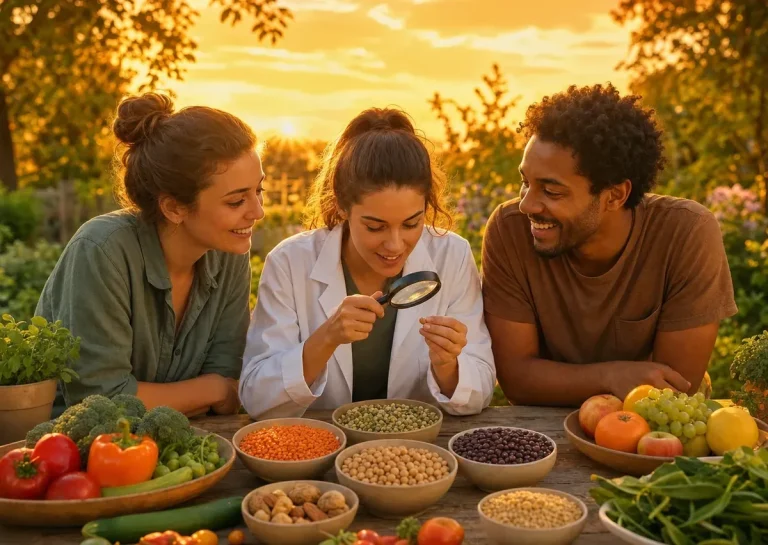
Too many people [26] still believe that a vegan diet is liable to cause deficiencies. Science has proved the opposite, and in these times of fighting the coronavirus, it seems wise to rely on it. In reality, no animal [27] is able to synthesise vitamin B12. Since its discovery in 1948, humans have been able to bypass the entire animal part of the food chain thanks to the original source of this nutrient: bacteria [28].
We have known this more officially since nutritionists demonstrated that a well-planned vegan diet [29] is suitable for every stage of the life cycle, including pregnancy, breastfeeding, infancy, childhood, adolescence and adulthood, as well as for athletes. A growing body of scientific studies even suggests that it may be better than our Western diet (1 [30], 2 [31], 3 [32]). The WHO’s meta-analyses also show a 7 to 18% reduction in premature mortality when moving towards a balanced vegetarian or vegan diet.
In a time of widespread lockdown, food as salvation
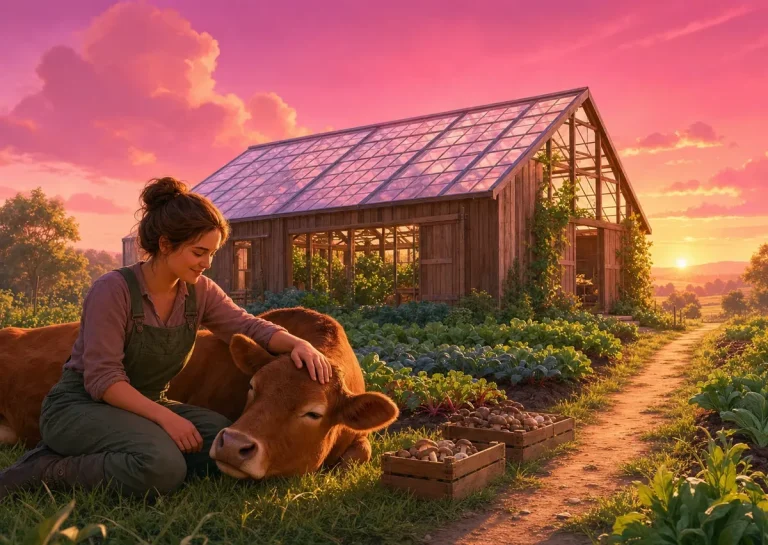
‘I am a livestock farmer, I am dying [33]’. Although we in no way condone the exploitation of animals, we think of the livestock farmers abandoned by a system that is nonetheless so quick to claim them as its own. Make no mistake: these situations exist because of successive governments. To govern is to foresee and to take responsibility.
In France, dairy cattle farmers are the socio-professional category with the highest suicide rate [34]. What kind of government, supposedly supportive, lets personal situations deteriorate to the point where some commit the irreparable? The repressive arsenal deployed within the Demeter unit will change absolutely nothing, even though the resources committed could instead fund promising career transitions for these professionals who, like anyone, do not deserve to be abandoned. This creative period is an opportunity to consider escape routes. Encouraging livestock farmers to become local processors of high-value plant-based products, for example, could help ward off this fate. Thanks to preserved traditional know-how [35], a new culinary culture, already rich and vibrant, could then emerge.
Amended on 3 November 2026: an infographic placed here claimed that farmers die by suicide ‘20 to 30 times more’ than other occupational categories and that ‘a farmer dies by suicide every 2 days’. These figures were wrong; we have removed it. According to the latest data from the Mutualité sociale agricole (MSA, 2022), for the same age and sex, the risk of death by suicide is 57% higher among farm owners aged 15 to 64 and 40% higher among farm employees of the same age, compared with all insured persons; it reaches +77% among farm owners aged 65 and over, and dairy cattle farmers are among those most at risk. In 2015, 372 farm managers took their own lives, or roughly one per day (MSA, 2025 [36]; MSA, 2019, according to AFP [37]).
Call to action
Let’s wake up!
Let us be drivers of change, starting today. So that animal ethics is no longer the bête noire of our philosophy but the key to our humanity. So that food, the main cause of climate change and biodiversity loss, becomes its bulwark.
We, responsible vegans, are ready to co-create tomorrow’s world, based on consideration for everyone.
We, attentive vegans, are committed to greater social justice, including for livestock farmers.
We, consistent vegans, are determined to lead the world out of this unprecedented public health crisis for good.
Correction of 2 November 2026: error corrected regarding infectious diseases (the 15.8% of deaths relates to all of these diseases, not only those of animal origin); number of fish killed each year updated based on the most recent estimates.
References
[1] Williams, F. (2013). ‘La pandémie qui vient’ (trans. D. Veaudor). Books, (10), 42-45. books.actualitte.com/la-pandemie-qui-vient-2/
[2] Zhang, L. and Yin, F. (2014). ‘Wildlife consumption and conservation awareness in China: a long way to go’. Biodiversity and Conservation, 23(9), 2371-2381. doi.org/10.1007/s10531-014-0708-4
[3] Gertler, A. and the 80,000 Hours team (April 2020, updated May 2026). ‘Preventing catastrophic pandemics’. 80,000 Hours. 80000hours.org/problem-profiles/global-catastrophic-biological-risks/
[4] Yassif, J. (2017). ‘Reducing Global Catastrophic Biological Risks’. Health Security, 15(4), 329-330. doi.org/10.1089/hs.2017.0049
[5] Gebreyes, W. A., Dupouy-Camet, J., Newport, M. J. et al. (2014). ‘The Global One Health Paradigm: Challenges and Opportunities for Tackling Infectious Diseases at the Human, Animal, and Environment Interface in Low-Resource Settings’. PLoS Neglected Tropical Diseases, 8(11), e3257. doi.org/10.1371/journal.pntd.0003257
[6] Urvoy, M. (6 April 2020). ‘Comme si c’était la première pandémie’ [opinion piece]. Ouest-France. ouest-france.fr/sante/virus/coronavirus/point-de-vue-comme-si-c-etait-la-premiere-pandemie-6801051
[7] Leyes, J. (30 July 2018). ‘Les activités humaines dérèglent le climat et c’est sûr à 99,9995%’. Sciences et Avenir. sciencesetavenir.fr/nature-environnement/les-activites-humaines-dereglent-le-climat-et-c-est-sur-a-99-9995_126206
[8] Science (2019). ‘Erratum for the Research Article “Reducing food’s environmental impacts through producers and consumers” by J. Poore and T. Nemecek’. Science, 363(6429), eaaw9908. doi.org/10.1126/science.aaw9908
[9] Kurpiers, L. A., Schulte-Herbrüggen, B., Ejotre, I. and Reeder, D. M. (2016). ‘Bushmeat and Emerging Infectious Diseases: Lessons from Africa’. In F. M. Angelici (ed.), Problematic Wildlife. A Cross-Disciplinary Approach (pp. 507-551). Springer. doi.org/10.1007/978-3-319-22246-2_24
[10] Hoag, H. (16 February 2014). ‘Study revives bird origin for 1918 flu pandemic’. Nature. doi.org/10.1038/nature.2014.14723
[11] Salyer, S. J., Silver, R., Simone, K. and Barton Behravesh, C. (2017). ‘Prioritizing Zoonoses for Global Health Capacity Building—Themes from One Health Zoonotic Disease Workshops in 7 Countries, 2014–2016’. Emerging Infectious Diseases, 23(13), S55-S64. doi.org/10.3201/eid2313.170418
[12] World Health Organization (WHO) (2009). Pandemic influenza preparedness and response: a WHO guidance document. WHO. iris.who.int/handle/10665/44123
[13] Schlegel, T. (27 March 2020). ‘Didier Sicard: “Il est urgent d’enquêter sur l’origine animale de l’épidémie de Covid-19”’. France Culture. radiofrance.fr/franceculture/didier-sicard-il-est-urgent-d-enqueter-sur-l-origine-animale-de-l-epidemie-de-covid-19-9414732
[14] Sciences et Avenir with AFP (26 January 2020). ‘Le commerce des animaux sauvages, terreau fertile des épidémies’. Sciences et Avenir. sciencesetavenir.fr/animaux/le-commerce-des-animaux-sauvages-un-risque-croissant-d-epidemies_140882
[15] Daly, N. (31 January 2020). ‘Coronavirus: la Chine interdit définitivement la consommation d’animaux sauvages’. National Geographic. nationalgeographic.fr/sciences/2020/01/coronavirus-de-plus-en-plus-de-chinois-se-mobilisent-contre-les-marches-danimaux
[16] Côté-Boudreau, F. (12 March 2014). ‘Chaque année, on tue plus d’animaux qu’il y a eu de morts durant toutes les guerres de l’humanité’ [blog post]. coteboudreau.com/2014/03/12/morts-danimaux-par-annee-et-morts-durant-guerres/
[17] Mood, A. and Brooke, P. (2010). Estimating the number of fish caught in global fishing each year. Fishcount. fishcount.org.uk/published/std/fishcountstudy.pdf; updated estimate (2000-2019): Mood, A. and Brooke, P. (2024). ‘Estimating global numbers of fishes caught from the wild annually from 2000 to 2019’. Animal Welfare, 33, e6. doi.org/10.1017/awf.2024.7
[18] Mood, A., Lara, E., Boyland, N. K. and Brooke, P. (2023). ‘Estimating global numbers of farmed fishes killed for food annually from 1990 to 2019’. Animal Welfare, 32, e12. doi.org/10.1017/awf.2023.4
[19] Fishcount (n.d.). ‘Numbers of farmed decapod crustaceans’. Fishcount. fishcount.org.uk/fish-count-estimates-2/numbers-of-farmed-decapod-crustaceans
[20] Mood, A. (2010). Worse things happen at sea: the welfare of wild-caught fish. Fishcount. fishcount.org.uk/published/standard/fishcountfullrptSR.pdf
[21] Jonas, H. (1996). ‘Les fondements biologiques de l’individualité’ (trans. D. Lories). Études phénoménologiques, 12(23-24), 99-130. doi.org/10.5840/etudphen19961223/245
[22] Wikipedia (n.d.). ‘Matthieu Ricard’, section ‘Concept du “zoocide”’. fr.wikipedia.org/wiki/Matthieu_Ricard#Concept_du_«_zoocide_»
[23] Linzey, A. (ed.) (2009). The Link Between Animal Abuse and Human Violence. Sussex Academic Press. French translation: Le lien. Violences sur les animaux et les humains. One Voice. agir.one-voice.fr/fr/boutique/produits/le-lien
[24] Mottet, A., de Haan, C., Falcucci, A., Tempio, G., Opio, C. and Gerber, P. (2017). ‘Livestock: On our plates or eating at our table? A new analysis of the feed/food debate’. Global Food Security, 14, 1-8. doi.org/10.1016/j.gfs.2017.01.001
[25] Le Hir, P. (6 May 2019). ‘Biodiversité: “La priorité est de réduire la part des produits animaux dans l’alimentation”’. Le Monde. lemonde.fr/planete/article/2019/05/06/biodiversite-la-priorite-est-de-reduire-la-part-des-produits-animaux-dans-l-alimentation_5458801_3244.html
[26] Collective of health professionals (25 October 2017). ‘“L’alimentation végane est saine et viable, à tous les âges de la vie”, défendent des professionnels de santé’. France-Soir. francesoir.fr/societe-sante/lalimentation-vegane-est-saine-et-viable-tous-les-ages-de-la-vie-defendent-des
[27] Martens, J.-H., Barg, H., Warren, M. J. and Jahn, D. (2002). ‘Microbial production of vitamin B12’. Applied Microbiology and Biotechnology, 58(3), 275-285. doi.org/10.1007/s00253-001-0902-7
[28] Fédération végane (22 December 2014). ‘D’où vient la B12?’. Vive la B12! vivelab12.fr/dou-vient-la-vitamine-b12/#fn1
[29] Melina, V., Craig, W. and Levin, S. (2016). ‘Position of the Academy of Nutrition and Dietetics: Vegetarian Diets’. Journal of the Academy of Nutrition and Dietetics, 116(12), 1970-1980. doi.org/10.1016/j.jand.2016.09.025
[30] Song, M., Fung, T. T., Hu, F. B. et al. (2016). ‘Association of Animal and Plant Protein Intake With All-Cause and Cause-Specific Mortality’. JAMA Internal Medicine, 176(10), 1453-1463. doi.org/10.1001/jamainternmed.2016.4182
[31] Orlich, M. J., Singh, P. N., Sabaté, J. et al. (2013). ‘Vegetarian Dietary Patterns and Mortality in Adventist Health Study 2’. JAMA Internal Medicine, 173(13), 1230-1238. doi.org/10.1001/jamainternmed.2013.6473
[32] Allen, N. E., Appleby, P. N., Davey, G. K., Kaaks, R., Rinaldi, S. and Key, T. J. (2002). ‘The associations of diet with serum insulin-like growth factor I and its main binding proteins in 292 women meat-eaters, vegetarians, and vegans’. Cancer Epidemiology, Biomarkers & Prevention, 11(11), 1441-1448. cebp.aacrjournals.org/content/11/11/1441
[33] AFP (27 February 2016). ‘“Je suis éleveur, je meurs”: les agriculteurs crient leur détresse au Salon’. L’Obs. web.archive.org/web/20230924081409/https://www.nouvelobs.com/societe/20160227.AFP8208/je-suis-eleveur-je-meurs-les-agriculteurs-crient-leur-detresse-au-salon.html
[34] Jocteur Monrozier, A. (5 February 2018). ‘Le suicide des agriculteurs en chiffres’. France Bleu Vaucluse. ici.fr/infos/societe/le-suicide-des-agriculteurs-en-chiffres-1517491824
[35] Nouvo (2020). Fondue végane, fondue du futur? (épisode 2) [video]. RTS. rts.ch/play/tv/nouvo/video/fondue-vegane-fondue-du-futur--episode-2?urn=urn:rts:video:11015686
[36] Mutualité sociale agricole (MSA) (2025). La mortalité par suicide au régime agricole. Dernières données disponibles issues du Système national des données de santé [fact sheet]. statistiques.msa.fr/wp-content/uploads/2025/10/FT2025-SANTE-MORTALITE-PAR-SUICIDE-RA.pdf
[37] AFP (18 September 2019). ‘Un agriculteur se suicide chaque jour selon la MSA’. Terre-net. terre-net.fr/suicide/article/152192/un-agriculteur-se-suicide-chaque-jour-selon-la-msa


0 comments
Trackbacks/Pingbacks