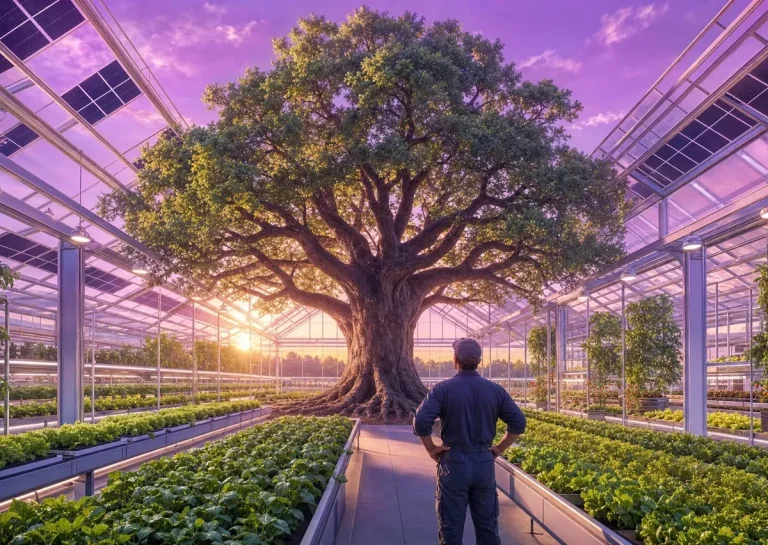
Three barrier measures to stay optimistic despite the news

by Eddy Fougier | 14 Feb 2021 | Our experts in the media, Progress, Collapse

Reading time is .

Key points

  • Getting informed differently: limiting exposure to anxiety-inducing news, and looking for solutions too.
  • Thinking the worst without fatalism: envisaging catastrophe in order to avoid it, rather than believing it inevitable.
  • Eco-anxiety and optimism: the two can coexist.
  • Reasoned optimism: confidence in our ability to find solutions.

🧭 Taking the climate crisis seriously would necessarily mean giving in to worry; optimism would pass for denial. What if fear paralysed more than it mobilised?

In Le HuffPost, political scientist Eddy Fougier proposes three ‘barrier measures’ against catastrophism. Written in the midst of the pandemic, on 14 February 2021, the article also holds true in the face of eco-anxiety.

🔎 Three measures
• Get informed differently: the brain is drawn to negative news, and excessive exposure harms mental health. Solutions journalism reports on what is moving forward.
• Think about the worst without fatalism: believing catastrophe is inevitable leads to powerlessness; considering it in order to avoid it leads to action.
• Cultivate reasoned optimism: neither denial nor toxic positivity, but an attitude of confidence and pro-action, the one that made it possible to believe a vaccine against Covid-19 could be developed.

💬 ‘So it is a matter of considering that, when faced with a problem, we must think that we will be able to find a solution.’

How can we communicate the seriousness of climate change without feeding helplessness?

👉 The summary of the article and the link to Le HuffPost, below.

#optimism #climate #ecoanxiety

🧭 To take the climate crisis seriously, we would have to be afraid: optimism would be a form of denial. What if fear paralysed more than it mobilised?

In the midst of the pandemic, bad news was piling up, from the virus to the climate. In Le HuffPost, political scientist Eddy Fougier then proposed three ‘barrier measures’ against catastrophism. Written on 14 February 2021, the article remains just as relevant in the face of eco-anxiety.

🔎 Choosing your information
The brain is drawn to negative news, and the media and social networks alike amplify this bias. Repeated, such news gives the feeling of living in a world that is going to ruin, and excessive exposure harms mental health. Hence the value of limiting anxiety-inducing news and also turning to solutions journalism, which reports on what is moving forward.

🌍 Thinking about the worst, without fatalism
Drawing on Catherine and Raphaël Larrère, the author distinguishes two kinds of catastrophism. Believing the worst is inevitable is a narrative of powerlessness; considering it in order to better avoid it leads to action. On climate, talking about what can be done mobilises more than fear does.

💡 Cultivating reasoned optimism
Neither denial nor toxic positivity: optimism is an attitude of confidence and pro-action. It is this mindset that made it possible to believe a vaccine against Covid-19 could be developed.

💬 The sentence that sums up his approach: ‘So it is a matter of considering that, when faced with a problem, we must think that we will be able to find a solution.’

Eco-anxiety is legitimate. But can it coexist with confidence in our capacity to act? And where is the line between clear-sighted optimism and naive optimism?

👉 The three measures in detail, with the link to the HuffPost article, below.

#optimism #ecoanxiety #climate #mentalhealth #information #progress

🧭 When it comes to climate, optimism would be denial. What if fear paralysed more than it mobilised?

In Le HuffPost, political scientist Eddy Fougier proposes three ‘barrier measures’ against catastrophism.

1️⃣ Choose your information: the brain is drawn to the negative, and excessive exposure to anxiety-inducing news harms mental health.
2️⃣ Consider the worst in order to avoid it, without believing it inevitable: on climate, talking about what can be done mobilises more than fear does.
3️⃣ Cultivate reasoned optimism: neither denial nor toxic positivity, but confidence in our ability to find solutions.

And you, how do you keep your spirits up in the face of the news?

📎 Full summary and link to the article: link in bio.

#optimism #ecoanxiety #climate #mentalhealth #progress

by Eddy Fougier, Le HuffPost, 14 February 2021

In the midst of a pandemic, bad news piles up, from the virus to the climate. To avoid sinking into catastrophism, the article proposes three ‘barrier measures’: choosing one’s sources of information, distinguishing the worst that could happen from the worst that is inevitable, and cultivating a lucid optimism.

In brief

  • Our brains are drawn to negative information, and both the media and social networks amplify this bias; excessive exposure harms mental health.
  • Believing catastrophe to be inevitable leads to helplessness; envisaging the worst in order to avoid it leads to action.
  • The optimism the author defends is neither blissful nor forced: it is confidence in our ability to find solutions.

The article’s three ‘barrier measures’

1. Getting informed

Limiting exposure to anxiety-inducing news

Repeated negative news gives the feeling of living in a world heading for ruin. The author encourages us to turn also to solutions journalism and to media that report on what is moving forward.

2. Thinking about the worst

Methodological catastrophism, not fatalism

Drawing on Catherine and Raphaël Larrère, he distinguishes between the worst seen as inevitable, a narrative of helplessness, and the worst envisaged in order to avoid it more effectively. On the climate, talking about what can be done mobilises people more than fear does.

3. Cultivating optimism

Reasoned optimism

Neither denial nor toxic positivity: optimism is an attitude of confidence and proactivity. It is this state of mind that made it possible to believe in a vaccine against Covid-19.

The risk of dying in a natural disaster has fallen by a factor of 40 in a century: 26.5 deaths per 100,000 inhabitants per year in the 1920s, 0.64 in the 2010s. Nature has not become gentler; we protect ourselves from it better. Data from before 2000 are less complete.
‘It is therefore a matter of considering that, faced with a problem, we must think that we will be able to find a solution.’Eddy Fougier, Le HuffPost, 14 February 2021

Why this debate interests us

APALA wants to help people act in the face of great challenges without giving in to either denial or panic. This text, written during the pandemic, remains fully relevant for ecology: eco-anxiety is legitimate, but it is confidence in our capacity to act that moves things forward. It also cites Antoine Buéno, likewise a member of our expert committee, on the opposition between positivist and catastrophist discourses.

Questions for debate

  1. How can we communicate the seriousness of climate change without feeding helplessness?
  2. Where is the line between lucid optimism and blissful optimism?
  3. Will solutions come mainly from technology, or also from our ways of living?

To go further on apala.fr

Summary written by Claude (Opus 5.5 model), an artificial intelligence, for APALA, based on the article published on the HuffPost website on 14 February 2021. The views expressed are those of the author. A mistake? Write to us.

Read the article on Le HuffPost ↗︎

AI: is the apocalypse imminent?

In Le Point, Thomas Lepeltier looks back at the affair of the OpenAI agents that hacked Hugging Face: human negligence, not signs of an apocalypse. Our summary in three arguments.

Is the zombie chicken the future of the animal rights movement?

In L’Amorce, Thomas Lepeltier proposes reducing farmed animals’ capacity to suffer rather than waiting for the end of meat, going as far as imagining a “zombie chicken”. Our summary in three arguments.

What if the danger of AI were not that it exterminates us, but that it advises us too well?

In Le Point, Thomas Lepeltier presents Antoine Buéno’s ‘Guidance’: the danger of AI would be less that it exterminates us than that it advises us too well. Our summary in three arguments.

Is the world burning?

In Causeur, Thomas Lepeltier compares the exceptional wildfires of summer 2026 in France with global satellite data, which describe a rather calm year. Our summary in three arguments.

Let’s have done with organic farming!

In Atlantico, Thomas Lepeltier challenges the founding principle of organic farming, the preference for the natural over the synthetic, and judges its record to be more nuanced than its image. Our summary in three arguments.

A future without suffering? A video to open the debate

With The Flares, APALA offers a short foresight video: what if reducing avoidable suffering, among humans and other animals alike, were one of the great undertakings of the century?

Tatiana Giraud: when biodiversity turns into a religion

In Causeur, Thomas Lepeltier criticised the way Tatiana Giraud presents biodiversity; she replied, and he responded in turn. Our summary of the three texts: arguments, quotations and questions for debate.

The fanciful claims of biologist Olivier Hamant against performance

In Le Point, Thomas Lepeltier challenges the opposition between performance and robustness defended by the biologist Olivier Hamant: in his view, the resilience of societies comes from innovation and efficiency. Our summary in three arguments.

Organic: beware, toxic!

In Causeur, Thomas Lepeltier draws a lesson from the withdrawal of copper-based fungicides decided by Anses: judge each product by its effects, not by whether it is natural or synthetic. Our summary in three arguments.

Will artificial intelligence end up exterminating us?

In Le Point, Thomas Lepeltier examines the thesis of Eliezer Yudkowsky and Nate Soares that a superintelligent AI would exterminate humanity. Our summary in three arguments.

0 comments

make a donation!

Public-interest association: A gift that costs you €10 is worth nearly €30 to us, after tax relief.

Understand how it works