The ‘revolution of the positive’: the four families of optimists

by Eddy Fougier | 25 Apr 2018 | Our experts in the media, Progress, Collapse

Reading time is .

Key points

  • A paradox: French people reputed to be pessimistic, and a ‘positive’ more fashionable than ever.
  • Hedonists and solutionists: personal well-being and technological innovation.
  • The benevolent: an economy and a form of consumption in search of meaning.
  • Transitioners: the ‘joyful transition’ through social innovation and concrete solutions.

😊 Are the French really pessimistic?

In Le HuffPost, Eddy Fougier, political scientist, founder of the Observatoire du Positif and member of APALA’s expert committee, notes a paradox: a people reputed to be gloomy, and a ‘positive’ more fashionable than ever.

🔎 His thesis
We are witnessing a genuine ‘revolution of the positive’, which is not a school of thought but a state of mind.

🧭 Four families of ‘positivisers’
1. The hedonists: personal development, positive psychology.
2. The solutionists: start-ups and innovations, from digital technology to FoodTech.
3. The well-wishers: social and solidarity economy, responsible brands and consumption.
4. The transitioners: the ‘joyful transition’, through social innovation and concrete solutions.

💬 Why we are sharing this
APALA recognises itself in several of these families. This mapping shows that optimism is not a monolith, and invites us to look for what brings people together rather than what sets them apart.

👉 Our structured summary and the link to the original article:

Are the French really pessimistic? 😊

In Le HuffPost, Eddy Fougier, a member of our expert committee, describes a ‘positive revolution’ and its four families: hedonists, solutionists, well-wishers and transitioners.

Our summary, with a link to the original article 👇

Are the French really pessimistic? 😊

Eddy Fougier, political scientist and member of APALA’s expert committee, describes a ‘positive revolution’ in Le HuffPost.

Four families of ‘positivisers’:
1️⃣ The hedonists
2️⃣ The solutionists
3️⃣ The well-wishers
4️⃣ The transitioners

Full summary and link to the article: link in bio.

#APALA #thinktank #transitions #optimisme #positif #innovation #transition #ESS #débat #HuffPost

by Eddy Fougier, Le HuffPost, 25 April 2018

The French are considered one of the most pessimistic peoples in the world; yet the ‘positive’ has never been so fashionable. The article describes a genuine ‘revolution of the positive’, driven by four families: hedonists, solutionists, the benevolent and transitioners.

In brief

  • For almost ten years, distrust, weariness and gloom have been the words that come up most often when the French are asked about their state of mind.
  • At the same time, an underlying trend celebrates optimism and happiness: it is not a school of thought so much as a state of mind.
  • The author identifies four families, ranging from personal development to ecological and social transition initiatives.

The four families of ‘positivisers’

1. Hedonists and solutionists

Well-being and innovation

The former rely on personal development and positive psychology, the ‘science of happiness’. The latter, often young entrepreneurs, count on digital technology and innovation, from FoodTech to AgTech, to solve problems.

2. The benevolent

An economy that wants meaning

Entrepreneurs, brands and consumers want to take account of their impact on society, health and the environment: the social and solidarity economy, brands regarded as positive, and committed consumption.

3. The transitioners

The joyful transition

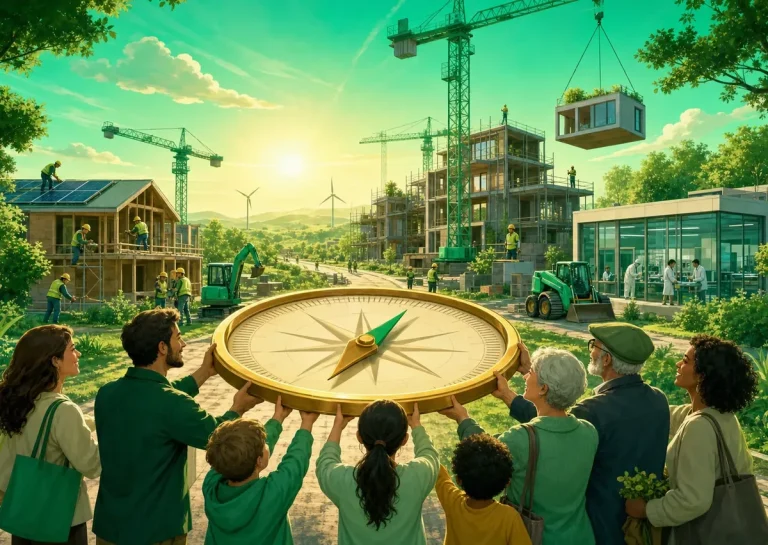
Citizens and associations want to break with mass consumption and dependence on oil, through social innovation and concrete solutions in agriculture, energy, housing and education.

‘And yet, and this is the great paradox of the present period, the positive has never seemed to be so fashionable in France.’Eddy Fougier, Le HuffPost, 25 April 2018

Why this debate interests us

APALA recognises itself in several of these families: we believe in innovation, in corporate commitment and in concrete transition initiatives. This map helps us see that optimism is not a monolith: it can rely on technology, on responsible consumption or on sufficiency. It also invites us to reflect on what brings these families together rather than on what sets them apart.

Questions for debate

  1. How can we explain that a people reputed to be pessimistic should also have such an appetite for the ‘positive’?
  2. Can solutionists and transitioners work together, or are their visions opposed?
  3. Can optimism become a driving force for the ecological transition?

To go further on apala.fr

Summary written by Claude (Opus 5.5 model), an artificial intelligence, for APALA, based on the article published on the HuffPost website on 25 April 2018. The positions expressed are those of the author. A mistake? Write to us.

Read the article on HuffPost ↗

Guidance: what if AI governed us through good advice?

In Le Point, Thomas Lepeltier presents Antoine Buéno’s ‘Guidance’: the danger of AI would be less that it exterminates us than that it advises us too well. Our summary in three arguments.

Wildfires of summer 2026: what the global data say

In Causeur, Thomas Lepeltier compares the exceptional wildfires of summer 2026 in France with global satellite data, which describe a rather calm year. Our summary in three arguments.

Does organic farming keep its promises? Naturalness put to the test of the facts

In Atlantico, Thomas Lepeltier challenges the founding principle of organic farming, the preference for the natural over the synthetic, and judges its record to be more nuanced than its image. Our summary in three arguments.

A future without suffering? A video to open the debate

With The Flares, APALA offers a short foresight video: what if reducing avoidable suffering, among humans and other animals alike, were one of the great undertakings of the century?

Biodiversity: a public exchange with Tatiana Giraud

In Causeur, Thomas Lepeltier criticised the way Tatiana Giraud presents biodiversity; she replied, and he responded in turn. Our summary of the three texts: arguments, quotations and questions for debate.

Performance or robustness? Olivier Hamant’s thesis challenged

In Le Point, Thomas Lepeltier challenges the opposition between performance and robustness defended by the biologist Olivier Hamant: in his view, the resilience of societies comes from innovation and efficiency. Our summary in three arguments.

Natural or synthetic? What the ban on copper says about organic farming

In Causeur, Thomas Lepeltier draws a lesson from the withdrawal of copper-based fungicides decided by Anses: judge each product by its effects, not by whether it is natural or synthetic. Our summary in three arguments.

AI and extinction: Yudkowsky and Soares’s thesis in question

In Le Point, Thomas Lepeltier examines the thesis of Eliezer Yudkowsky and Nate Soares that a superintelligent AI would exterminate humanity. Our summary in three arguments.

Climate: why Bill Gates’s change of tone deserves to be welcomed

In Causeur, Thomas Lepeltier analyses Bill Gates’s change of tone on climate: not a repudiation of science, but a reminder that poverty and disease remain the greatest threats. Our summary in three arguments.

Sufficiency: a critique of Philippe Bihouix’s vision

In Le Point, Thomas Lepeltier responds to Philippe Bihouix: choosing sufficiency from today underestimates our capacity to innovate, and abundance would be the condition for sustainability. Our summary in three arguments.

0 comments

make a donation!

Public-interest association: €10 from you means nearly €30 for us, after tax relief.

Understand how it works